

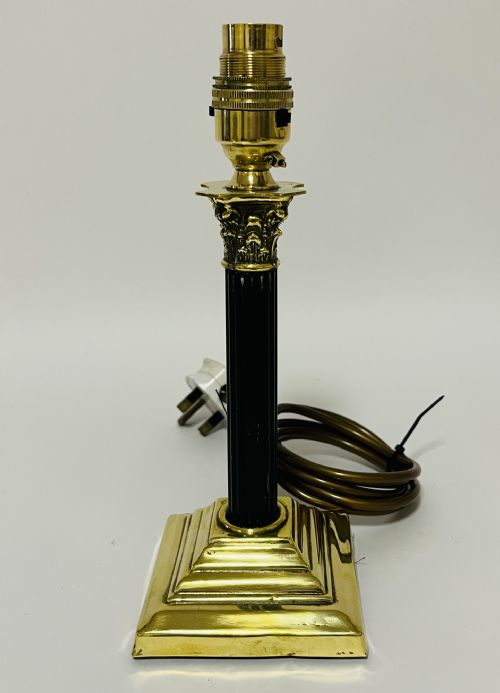
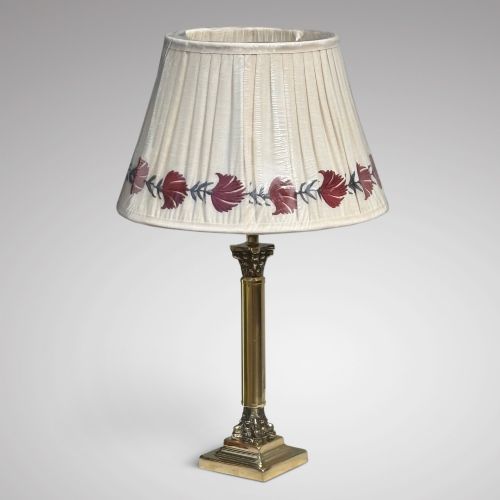


Corinthian Capital Desk Lights
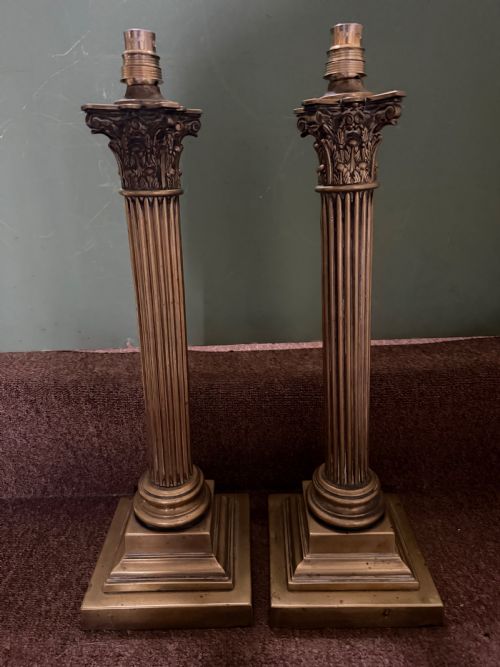
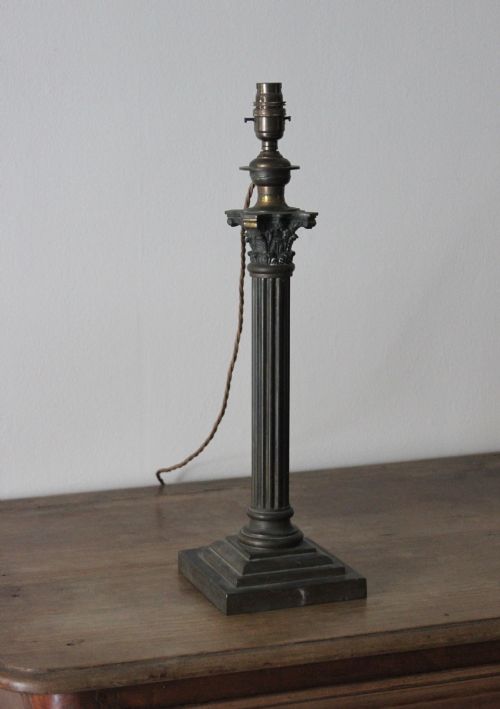
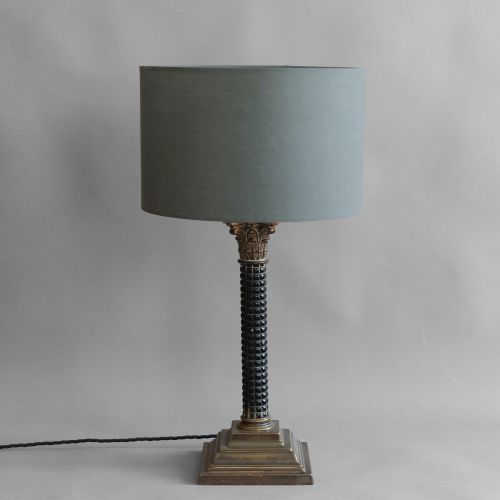
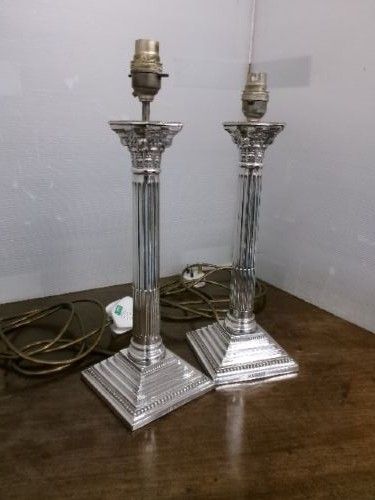
These corinthian capital desk lights bring classical architectural dignity to a workspace through towering fluted columns and detailed acanthus leaf tops.
Corinthian Capital Desk Lights
When you search for corinthian capital desk lights, you encounter table lamps fashioned from classical columns in brass, silver plate and patinated metal. These pieces date from the nineteenth century, the Victorian era, the Edwardian period and the early decades of the twentieth century.
The form adapts ancient architectural orders to domestic and study illumination, predominantly taking the shape of table lamps with square stepped bases and fluted shafts. Neoclassical and Victorian classical revival styles dominate the selection, bringing stately proportions to desks and tables.
How they were made
The construction relies heavily on cast brass, silver plate and electroplated metal, forming the substantial columns and ornate capitals. Selected examples incorporate cut glass reservoirs and ormolu mounted onyx to add textural contrast to the metallic foundations.
Makers utilised patination techniques on brass surfaces to achieve deep tonal variation, whilst skilled metalworkers cast intricate acanthus leaves for the capital summits. Fabric components appear in modern shade pairings that complement the antique metalwork.
Corinthian Capital Desk Lights Retail Price Guide 2026
Typical asking prices for corinthian capital desk lights among the pieces listed under this phrase on Sellingantiques today, from the lower quarter to the upper quarter. They describe what is for sale here now, not the wider market.
Materials recorded across the inventory include brass, silver plate, cut glass, onyx and patinated metal.
What varies in quality
The fidelity of the cast metalwork defines the upper tier, where the acanthus leaf details of the capital remain sharp and deeply undercut rather than smooth and generalised. Crisp fluting along the column shaft and satisfying weight in the stepped base indicate superior production standards.
Materials create a clear distinction in character, with heavy cast brass and substantial silver plating holding greater presence than lighter electroplated alternatives. The inclusion of decorative elements like cut glass reservoirs or onyx mounts elevates specific examples above standard brass iterations.
The Corinthian Capital Desk Lights Glossary
- Corinthian capital
- The uppermost member of a classical column, decorated with carved acanthus leaves and scrolls. This ornamentation forms the defining visual feature of these desk lights.
- Fluted shaft
- The vertical surface of the column cut with shallow parallel grooves. This classical detail draws the eye upward toward the capital.
- Ormolu
- Gilded bronze or brass applied to decorative objects. This finish provides a rich golden lustre on specific nineteenth-century mounts.
- Patinated brass
- Metal treated to age the surface colour artificially or naturally. This process deepens the tone and subdues bright metallic glare.
- Neoclassical revival
- A decorative style reviving classical Greek and Roman architecture and art. It informs the stately architectural proportions seen across these lamp designs.
Corinthian Capital Desk Lights: Frequently Asked Questions
What periods do these lights come from?
The pieces span the nineteenth and early twentieth centuries, encompassing Victorian, Edwardian and nineteen-twenties production.
Maker methods and material choices shifted across these decades, moving from heavy cast brass foundations to silver plate and electroplated finishes.
How were these columns originally used?
These pieces originate as domestic or study table lamps designed to provide focused illumination for reading and writing.
Many adapted architectural forms to hold oil reservoirs before undergoing later conversion to electrical wiring for modern desks.
What materials make up the columns?
Construction primarily involves brass, silver plate and electroplated metal formed into solid columns and detailed capitals.
Some examples introduce cut glass reservoirs, onyx bases and patinated metal surfaces to vary the visual weight and texture.
How do I identify a Victorian example?
Victorian pieces often display heavier cast brass construction, rich silver plating or nineteenth-century patination.
They frequently embrace classical revival styles with substantial stepped bases and carefully chased acanthus leaf capitals.