
Fluted Column Table Lights
Fluted column table lights bring classical architectural form to domestic interiors, offering warm illumination through polished metal and glass.
Fluted Column Table Lights
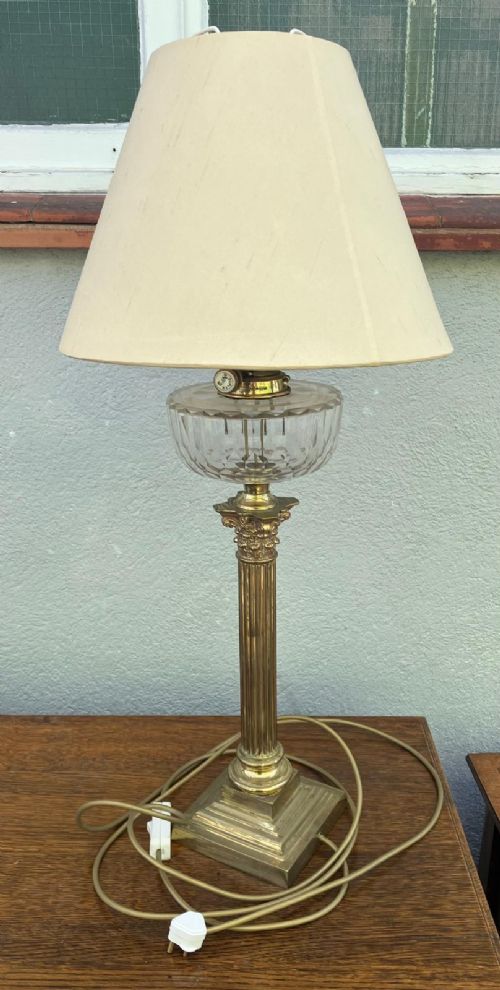
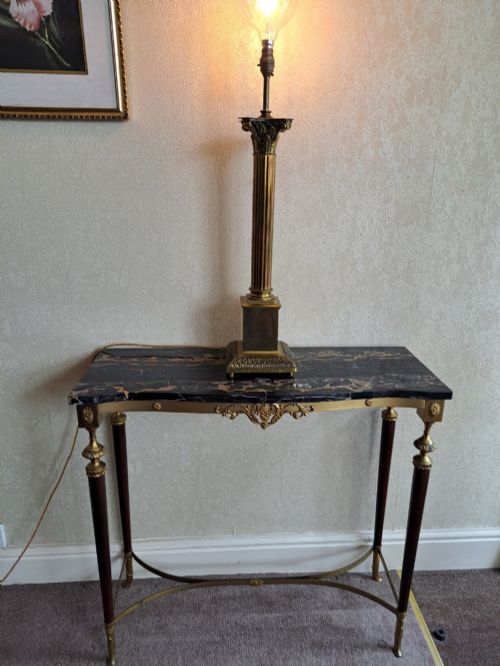
When you search for fluted column table lights, you encounter a selection of architectural standards adapted for illumination across the nineteenth and early twentieth centuries.
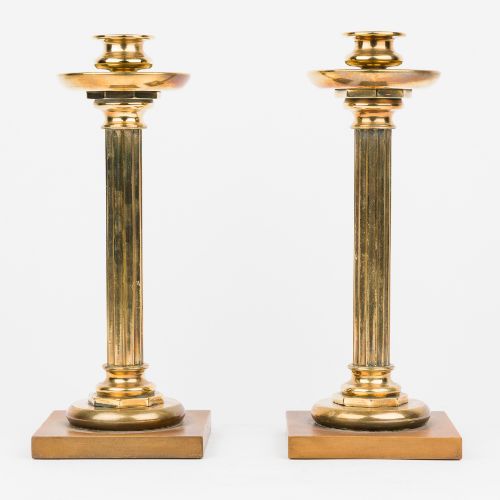
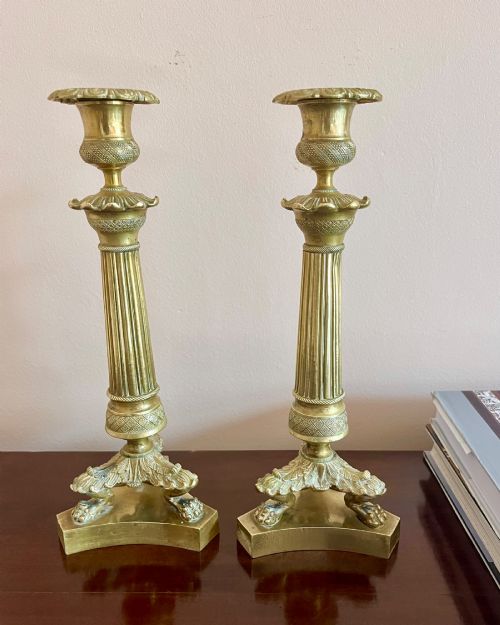
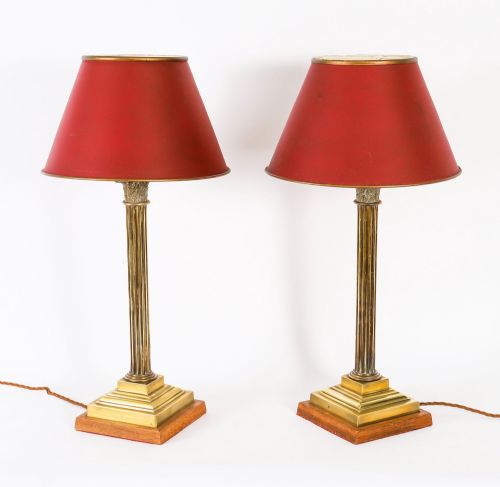
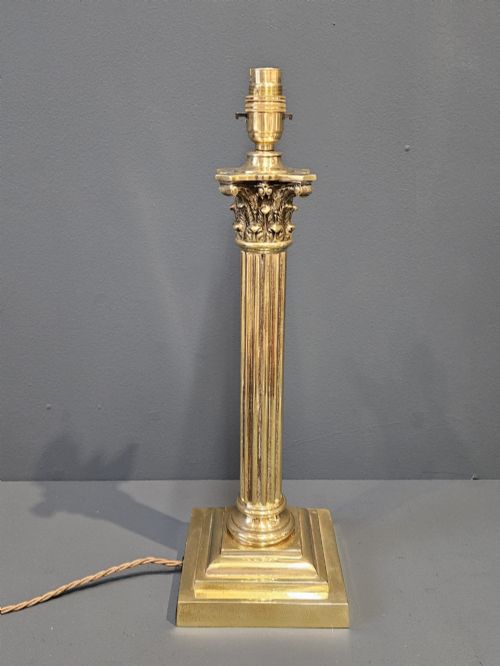
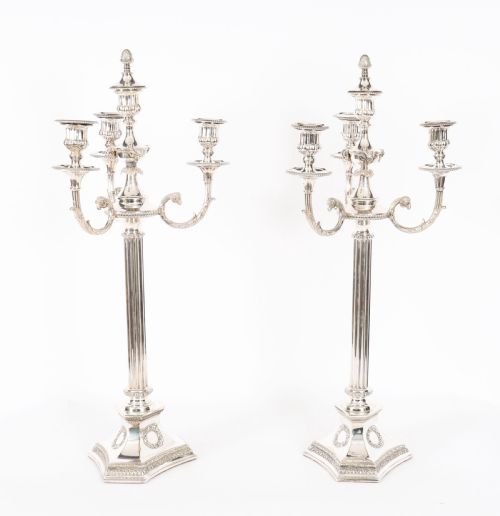
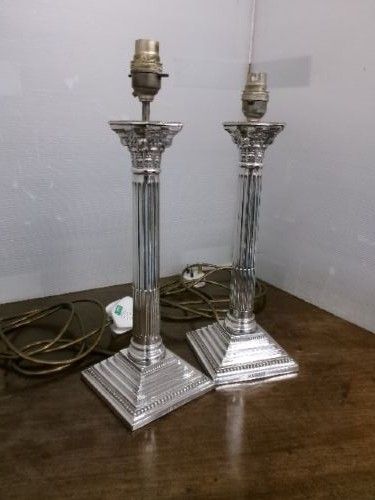
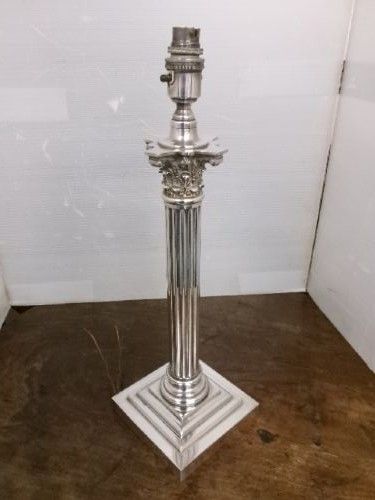
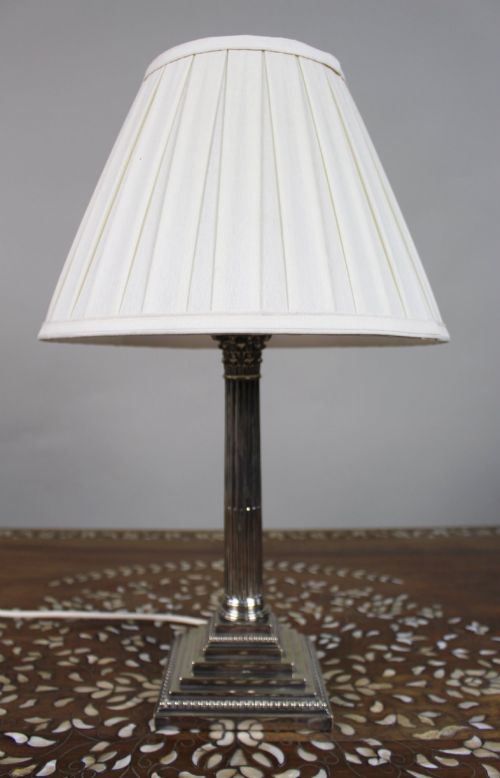
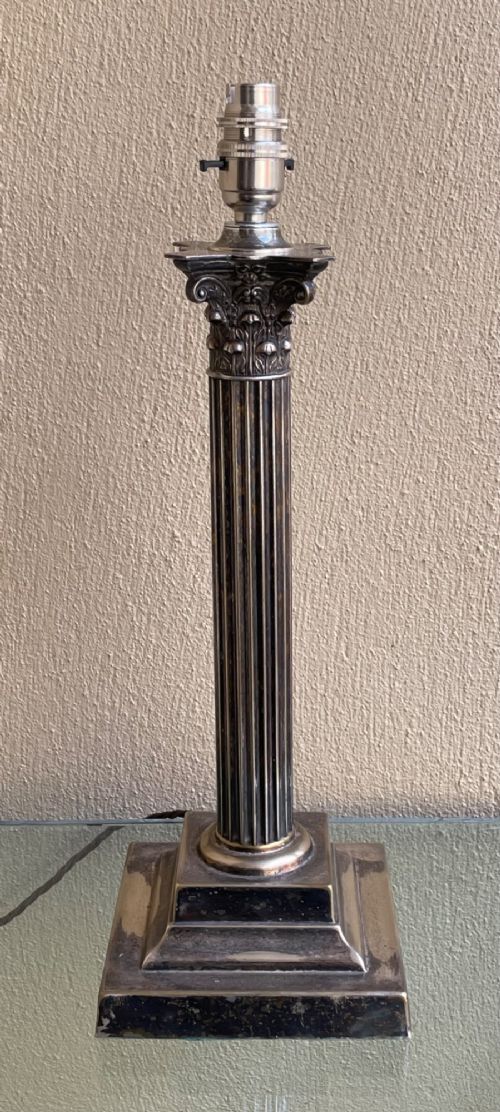
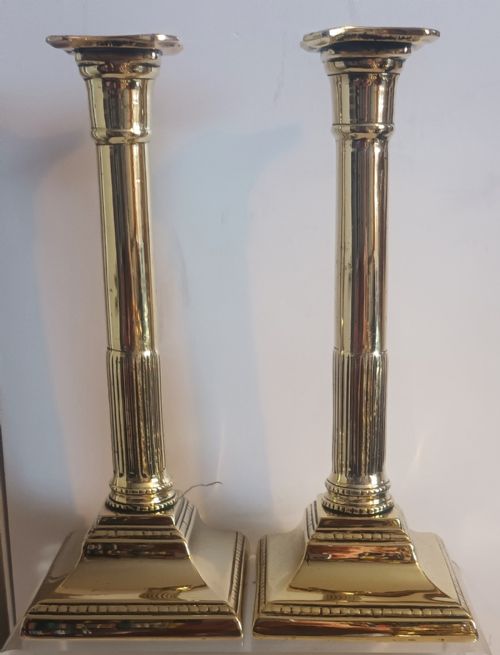
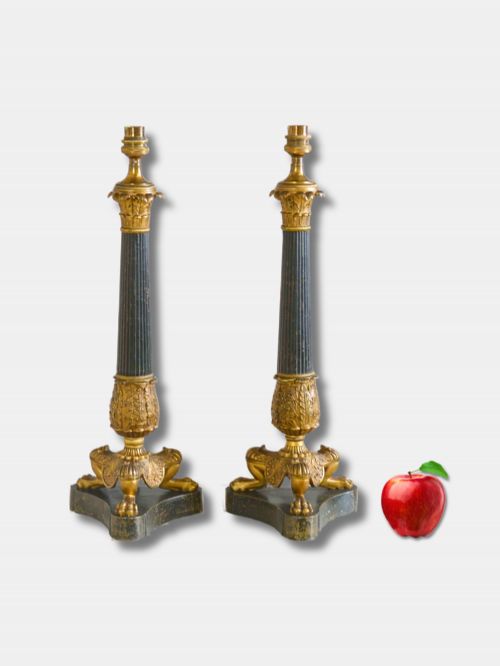
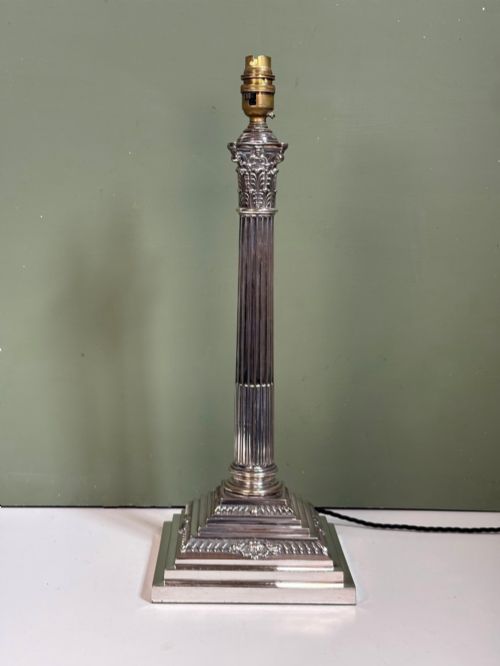
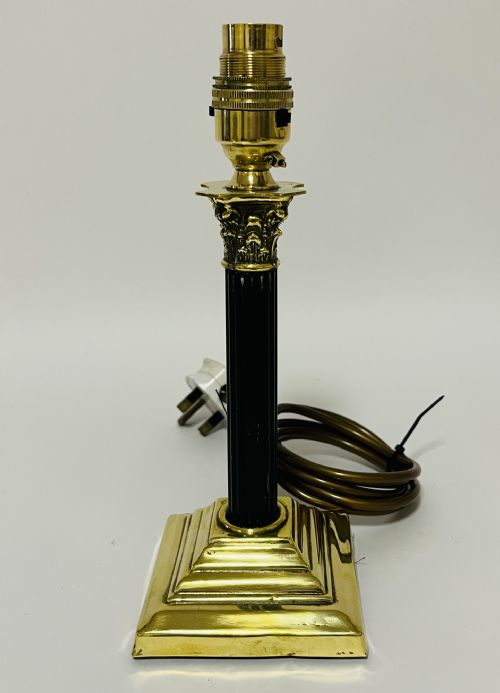
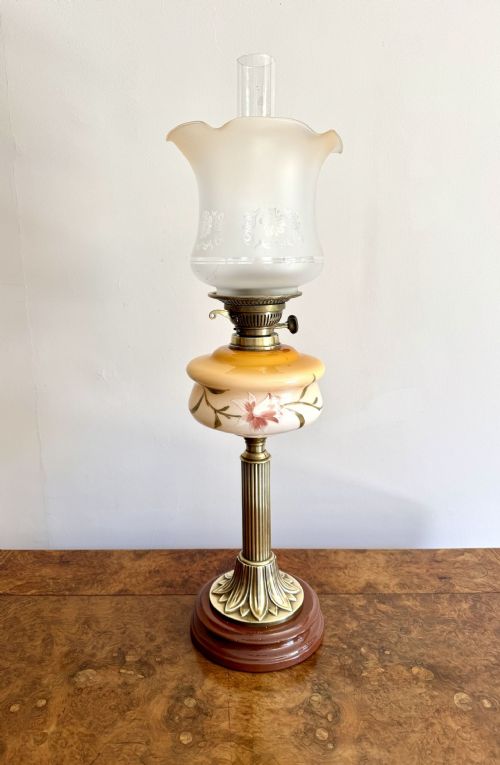
The most common examples on this page are Victorian and Edwardian brass or silver-plated Corinthian column lamps, alongside converted oil lamps and French Empire designs.
These pieces draw inspiration from classical antiquity, translating stone temple columns into domestic lighting fixtures constructed from cast metal.
Materials and construction methods
Maker workshops utilised brass, bronze, and ormolu for the structural columns, often casting the detailed acanthus leaf capitals separately before assembly.
Silver plating was applied over base metals to achieve a brighter finish, while oil lamps incorporated opaline glass reservoirs and shades.
Heavy weighted bases, sometimes featuring lion's paw feet, were cast to provide stability for taller column forms and multi-light candelabra.
The listings on this page span the 19th century through the Edwardian era, featuring brass, bronze, silver plate, and glass materials.
Distinctions in craftsmanship
Quality rests in the crispness of the casting, particularly within the fine details of the Corinthian or ionic capitals rather than smooth shaft surfaces.
Weight distribution matters greatly, as superior examples utilise heavy gauge metals that prevent tipping and feel solid to the touch.
The integration of original components, such as matching burners or well-preserved silver plating, elevates the integrity of the piece.
JOSEPH HINKS
The Fluted Column Table Lights Glossary
- Corinthian capital
- The ornate top section of a column decorated with carved acanthus leaves and scrolls. This motif frequently appears on nineteenth-century table lights.
- Ormolu
- Gilt bronze created by applying a mercury and gold amalgam to cast bronze. French Empire pieces often utilise this rich surface finish.
- Opaline glass
- A pale, translucent milk glass used for shades and reservoirs on period oil lamps. It diffuses light softly across a room.
- Ionic column
- An architectural order featuring scroll shapes known as volutes on the capital. These appear alongside Corinthian designs in lamp bases.
- Candelabra
- A branched candlestick holding multiple lights. Larger antique examples are frequently converted into impressive table lamps.
Fluted Column Table Lights: Frequently Asked Questions
How do I date a brass column lamp?
Examine the construction methods, base weights, and switch mechanisms used on the fitting. Earlier nineteenth-century examples often show hand-finishing marks beneath the base.
Stylistic shifts also help narrow the period, moving from heavy Georgian proportions toward ornate Victorian silver plating and later Edwardian simplicity.
Were these originally electric lamps?
Almost none of these pieces started life with electric wiring. The majority began as oil lamps, heavy candlesticks, or fluid lamps before later conversion.
Conversion work is standard for lighting of this age, allowing period columns to function safely with modern electrical standards.
What is the difference between brass and ormolu?
Brass is an alloy of copper and zinc, polished to a warm metallic sheen that darkens naturally over time if left unlacquered. Ormolu involves a layer of gold applied to bronze.
Ormolu provides a brighter, more luxurious golden finish associated with French Empire pieces, whereas standard brass offers a domestic utility aesthetic.
How do I clean a silver-plated lamp base?
Silver plate requires gentle treatment with a non-abrasive cloth and specialist polish to preserve the thin metal layer over the base brass. Avoid harsh scrubbing that wears away the plating at high points.
Leave a light patina in recessed fluting to maintain the antique character of the column.