

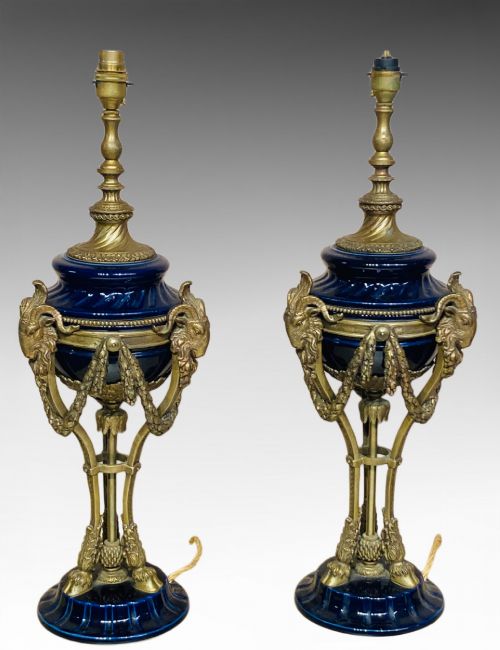
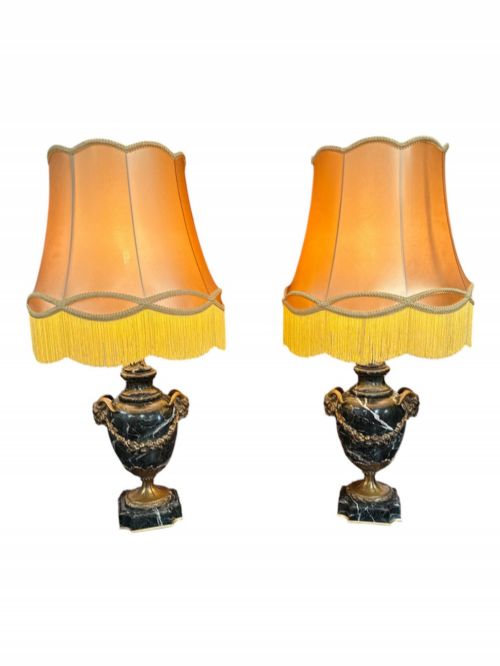
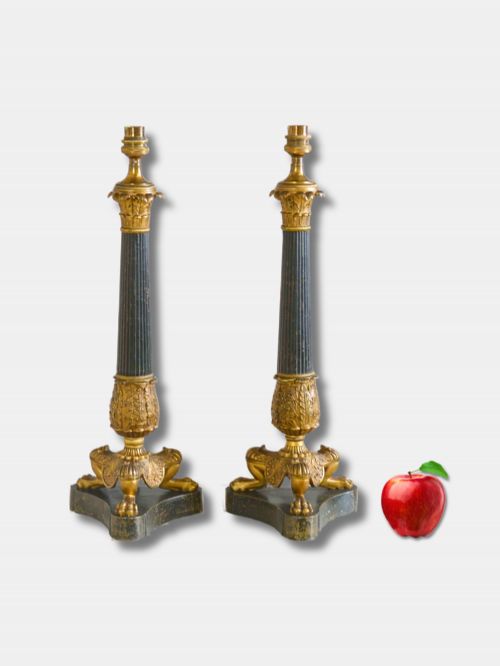
Pair Neoclassical Table Lamps
Pair neoclassical table lamps bring symmetrical architectural gravity and formal balance to an interior scheme through classical motifs.
Pair Neoclassical Table Lamps
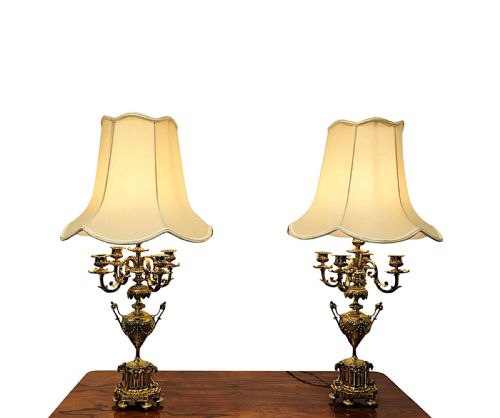
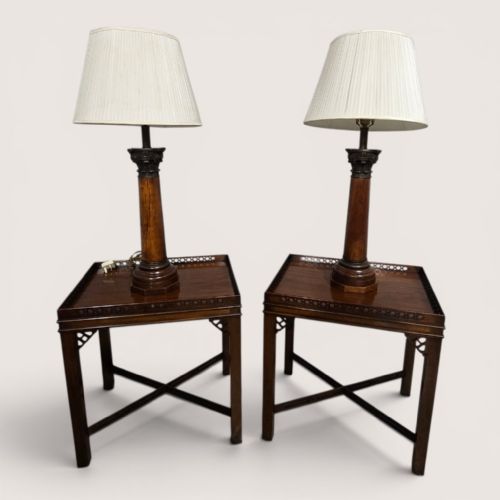
Pair neoclassical table lamps draw upon classical antiquity, borrowing structural orders and decorative motifs from Greek and Roman architecture. When searching for pair neoclassical table lamps, buyers encounter diverse forms ranging from slender classical columns to substantial urns and converted candelabra.
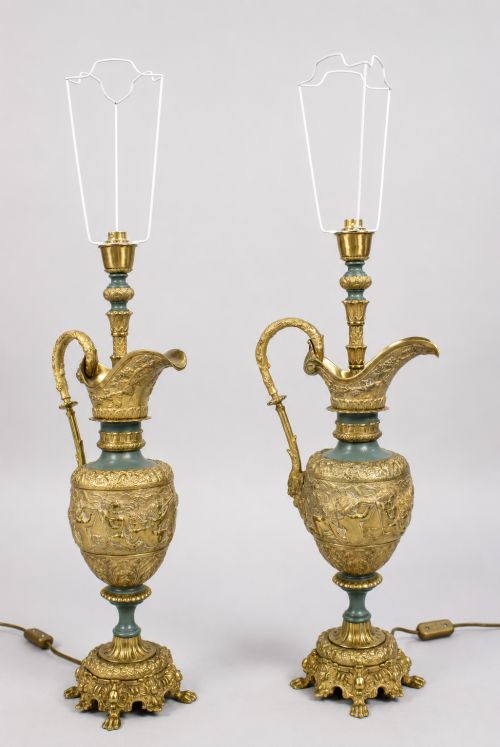
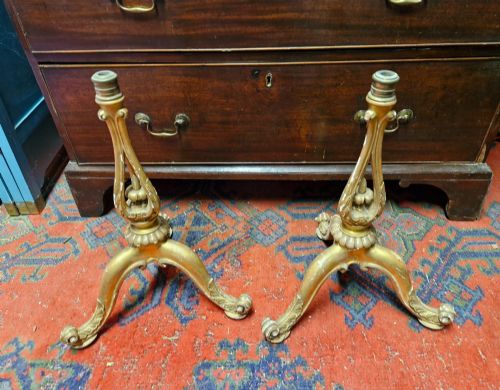
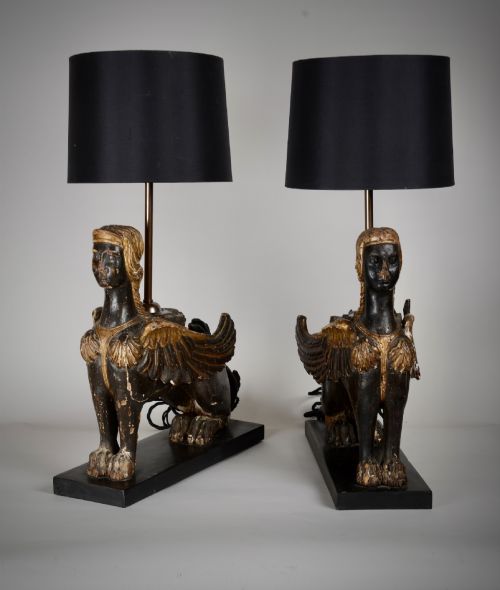
The pieces on this page span the eighteenth, nineteenth, and early twentieth centuries, reflecting revivals such as Louis XVI style, French Empire, and Victorian neoclassical movements. Alongside actual lamp bases, the selection includes converted cassolettes, ewers, and sphinx figures adapted for domestic lighting.
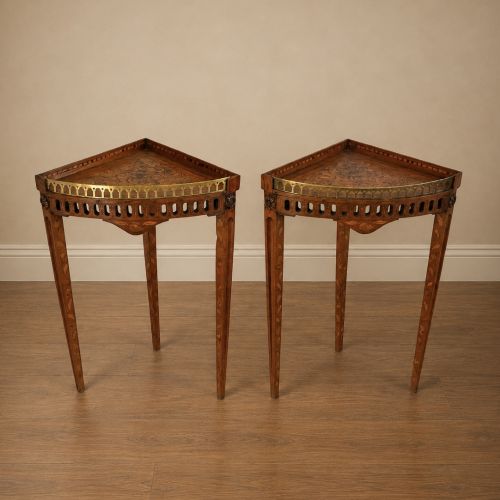
Most examples originate from British and continental workshops, demonstrating how classical symmetry was adapted for domestic settings. These matched sets provide deliberate visual weight to sideboards, pedestals, and mantlepieces.
How they were made
Metalwork dominates the construction of these lamps, utilising cast bronze, brass, silver plating, and gilded ormolu to achieve crisp architectural detail. Foundries employed lost-wax casting and detailed chasing to render acanthus leaves, fluting, and figural mounts with sharp precision.
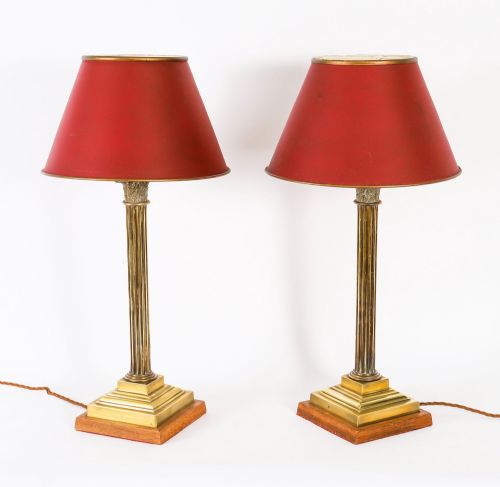
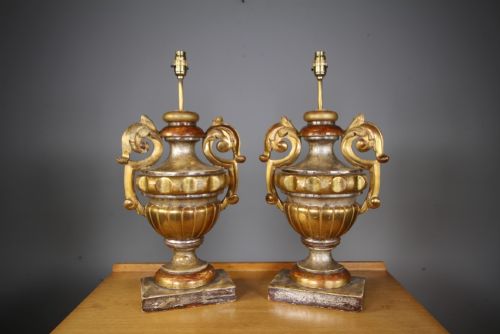
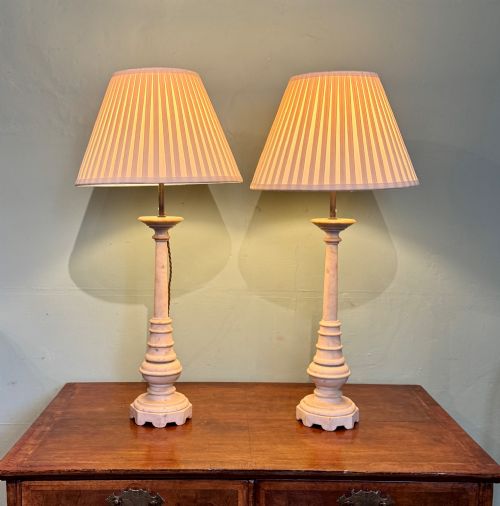
Natural stone provides substantial weight and contrast, with white, rouge, and pink varieties of marble turned into columns and urn bodies. Wood also appears in carved pine and giltwood formats, alongside painted tole-peinte surfaces.
Many lighting pieces began as functional oil lamps, candelabra, or decorative cassolettes before receiving electrical conversion. These adaptations preserve the original metal mounts and stone bodies while updating internal wiring for modern use.
Sphinx figures occasionally stand in for standard columns, bringing an unexpected mythological guard to the sideboard.
What varies in quality
The standard of chasing and metal finishing distinguishes superior castings from utilitarian production. Finer examples display deeply undercut foliage, crisp fluting along column shafts, and hand-chiselled details that catch the light.
Material selection and matching within the pair dictate overall refinement, particularly in the figuring of marble and the richness of mercury gilding. Uniformity in height, turning, and patination ensures the two pieces sit in true visual harmony.
Mallett
The Pair Neoclassical Table Lamps Glossary
- Ormolu
- Gilded bronze, where finely ground gold is amalgamated with mercury and applied to a bronze base through heat. This technique creates a durable, warm metallic lustre characteristic of fine French decorative arts.
- Cassolette
- A decorative vessel shaped like a perfume burner or covered urn, often featuring a reversible lid that transforms it into a candleholder. In lighting conversions, these vessels retain their classical proportions.
- Corinthian column
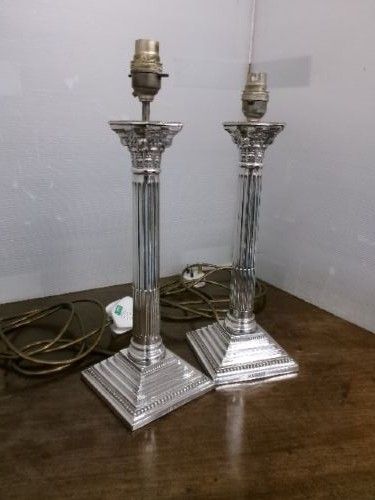
- An architectural support featuring an ornate capital decorated with carved acanthus leaves. This order appears frequently in brass and marble lamp bases.
- Ewer
- A large jug with a wide spout and arched handle, historically used for pouring water. Converted ewer lamps translate this classical vessel form into a vertical lighting base.
- Tole-peinte
- Painted sheet metal, typically iron or steel, finished with decorative pigments and protective varnishes. This technique allowed makers to introduce rich colour into classical lighting designs.
Pair Neoclassical Table Lamps: Frequently Asked Questions
How do I style pair neoclassical table lamps?
Place them symmetrically on a wide sideboard, a pair of matching side tables, or a console to anchor a room with classical balance. Their architectural height and formal detailing work best when allowed breathing space away from cluttered displays.
Pair them with simple fabric shades to soften the metallic or stone body and direct light downward. They suit both traditional period rooms and clean modern spaces that benefit from historical contrast.
Are these lamps converted from older objects?
Many examples began life as oil lamps, candelabra, cassolettes, or decorative urns before receiving electrical fittings. Such conversions are standard practice for antique lighting of this period and preserve decorative mounts that would otherwise be lost.
Inspect the wiring routes and internal weighted bases to understand how the conversion was achieved. Expert adaptations maintain the structural integrity of the original antique object while ensuring safe modern operation.
How do I tell nineteenth century from eighteenth century pieces?
Eighteenth-century originals display the hand-wrought assembly methods, heavier mercury gilding, and distinct tool marks characteristic of period artisan production. Materials tend to show authentic age patination and wear consistent with continuous domestic use.
Nineteenth-century revival pieces often utilise machine-assisted casting and standardised threading for components while closely copying earlier Louis XVI or Empire models. Stylistic details and mounting techniques help date the piece accurately.
What maintenance do bronze and ormolu lamps require?
Dust metal surfaces gently with a soft, dry cloth to prevent the accumulation of grime in recessed chasing and decorative mounts. Avoid harsh chemical polishes that strip away original fire gilding or patination.
Marble sections benefit from occasional wiping with a damp cloth followed by immediate drying. Protect the stone from acidic spills and heavy impacts to preserve the polished surface.