

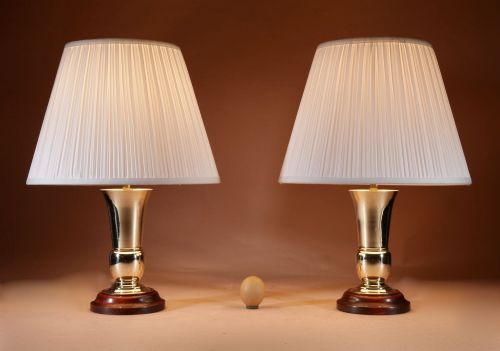
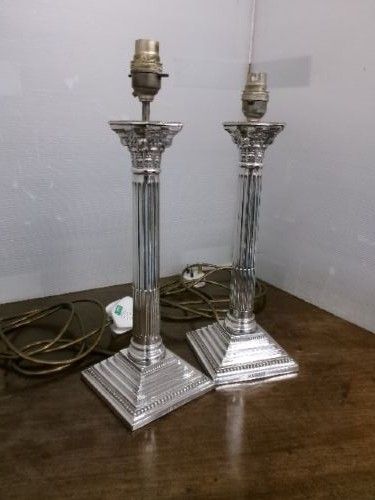
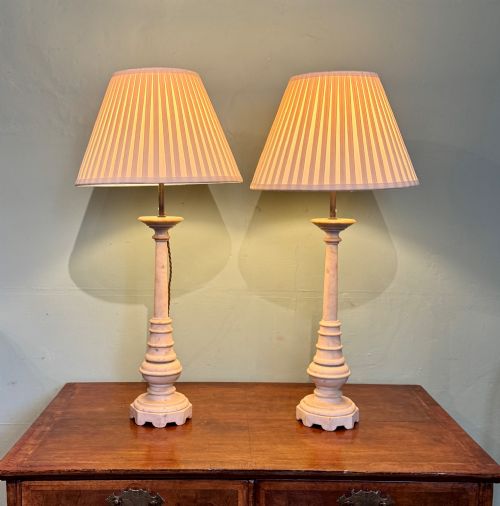
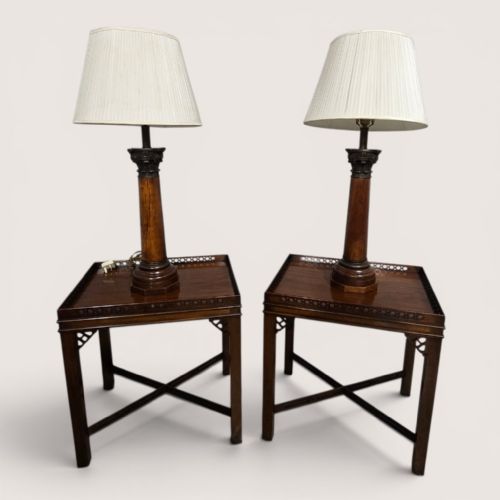
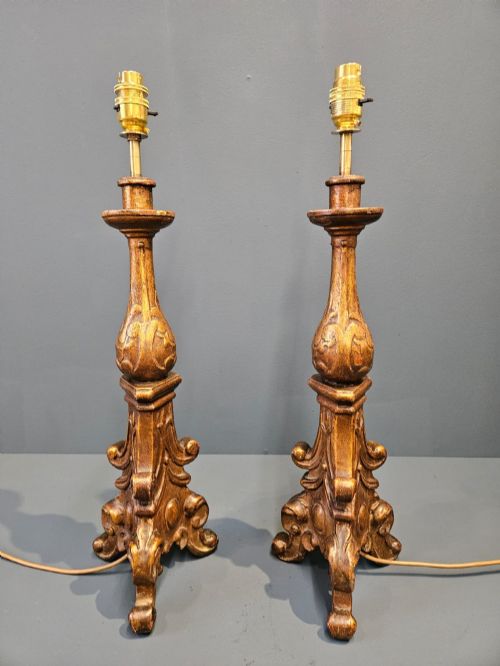
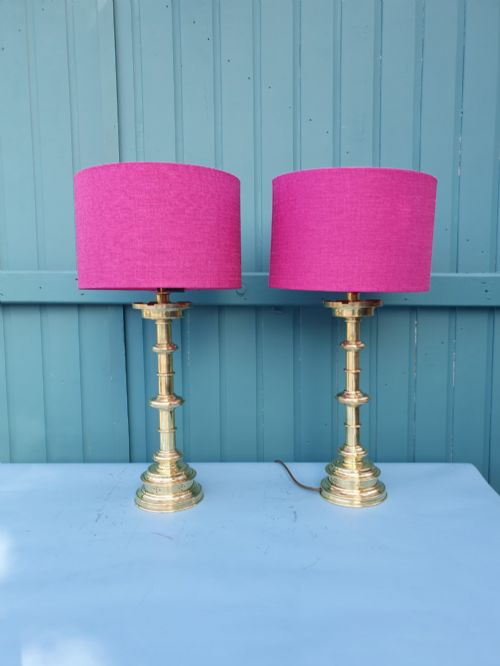


Pair Column Bedside Lamps
These pair column bedside lamps bring architectural presence to a bedroom, offering symmetrical lighting scaled for reading and quiet spaces.
Pair Column Bedside Lamps
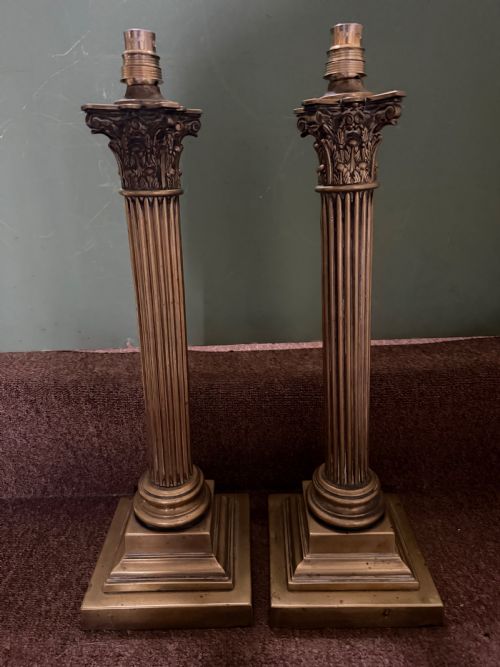
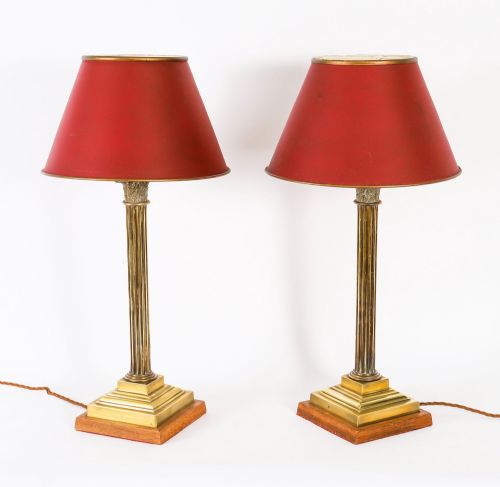
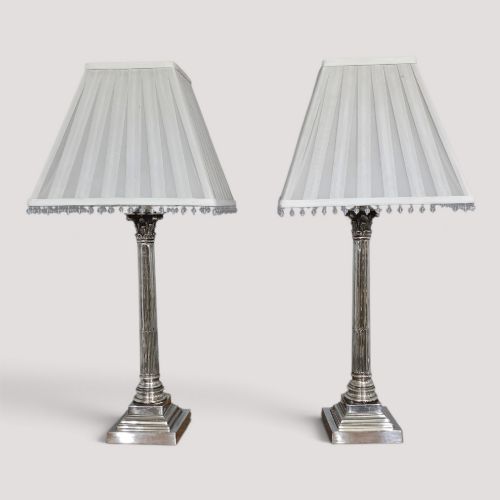
A pair column bedside lamps search delivers matched pairs of vertical supports adapted from classical and architectural precedents to hold electrical fittings. These pieces draw heavily on nineteenth century and early twentieth century manufacturing, spanning Victorian, Edwardian, and Art Deco periods.
The form frequently takes inspiration from classical architectural orders, notably Corinthian columns, alongside ecclesiastical altar candlesticks and French Empire designs. While many originate as converted candlesticks, others are built specifically as table lamps from the outset.
Materials range from cast brass and silver plate to marble, oak, mahogany, and ormolu, often paired with fabric shades. The scale suits bedside cabinets or small tables, providing balanced illumination across a room.
How they were made
Makers utilised heavy casting techniques for brass, bronze, and ormolu components, yielding crisp capital details and fluted shafts that mimic stone architecture. Silver plating was applied over base metals to achieve a polished finish, while marble and timber sections were turned and polished on lathes.
Glass and crystal elements were cut and combined with metal mounts, employing threaded rods and nuts to secure the vertical structure. Later conversions incorporated internal wiring channels, adapting older candlesticks and oil lamps for electrical use.
Pair Column Bedside Lamps Retail Price Guide 2026
Typical asking prices for pair column bedside lamps among the pieces listed under this phrase on Sellingantiques today, from the lower quarter to the upper quarter. They describe what is for sale here now, not the wider market.
Listings span the nineteenth century through the 1930s, featuring brass, marble, silver plate, oak, and glass materials across styles from Victorian to Art Deco.
What varies in quality
Quality rests upon the crispness of the casting detail in the column capitals and bases, where sharper acanthus leaves and fluting distinguish superior work. The weight of the metal and the purity of the marble or timber provide structural stability and tactile presence.
Matching consistency between the two pieces determines visual success in a pair, as hand-finished surfaces and older conversions often reveal subtle variations in height, patina, or proportion upon close inspection.
The Pair Column Bedside Lamps Glossary
- Corinthian column
- A classical architectural column style distinguished by ornate capitals decorated with acanthus leaves. This motif appears frequently on nineteenth century brass and silver plated lamp bases.
- Ormolu
- Gilt bronze mounted or cast decorative elements popular in French and Art Deco lighting designs. The technique involves applying a gold amalgam to bronze.
- Altar candlestick
- A tall, heavy candleholder originating from ecclesiastical settings, often adapted into a table lamp. These pieces typically feature substantial brass or bronze construction.
- Gothic Revival
- A nineteenth century design style drawing on medieval ecclesiastical architecture. Lamps in this style incorporate pointed arches and heavy foliate detailing.
- Empire style
- A neoclassical design movement rooted in nineteenth century France, utilising military motifs, classical columns, and gilt bronze mounts. This aesthetic lends significant monumentality to lamp pairs.
Pair Column Bedside Lamps: Frequently Asked Questions
Are these lamps converted from old candlesticks?
Many examples began life as candlesticks or oil lamps before receiving electrical fittings during later periods.
Conversion methods vary, with some retaining original weighted bases and threaded stems while accommodating modern internal wiring.
How do I date a brass column lamp?
Dating relies on manufacturing techniques, base weight, and stylistic clues within the capital ornamentation and metal composition.
Victorian and Edwardian pieces often display heavier casting sand textures, whereas later twentieth century examples show different machining marks.
What size shade do I need?
Proportion depends on the height and visual weight of the column, balancing the vertical shaft with the width of the base.
Fabric shades should complement the metal tone without overwhelming the architectural detail of the capital.
How do I clean brass and ormolu?
Maintenance requires gentle dusting with a soft cloth to protect patinated surfaces from abrasive damage.
Harsh chemical polishes should be avoided on antique gilt bronze and ormolu to preserve the original finish.