


Copper Water Dispenser Urn
These copper water dispenser urn vessels offer genuine historic utility, bringing striking metallic warmth and period craftsmanship to modern interiors.
Copper Water Dispenser Urn
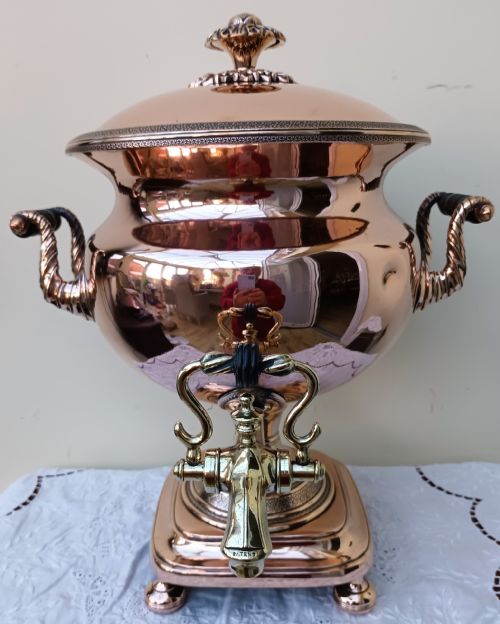
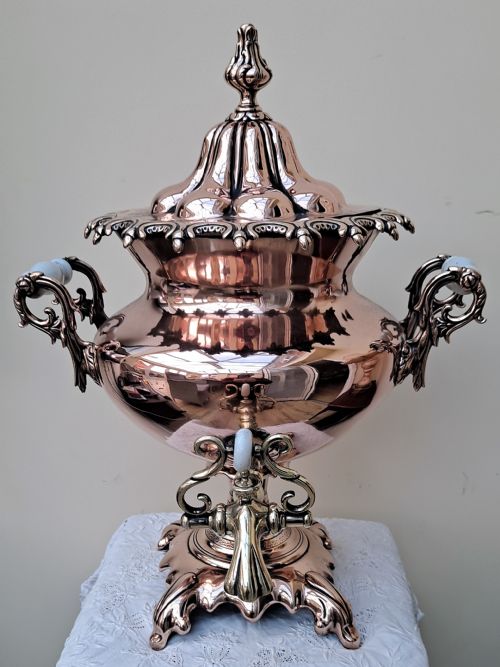
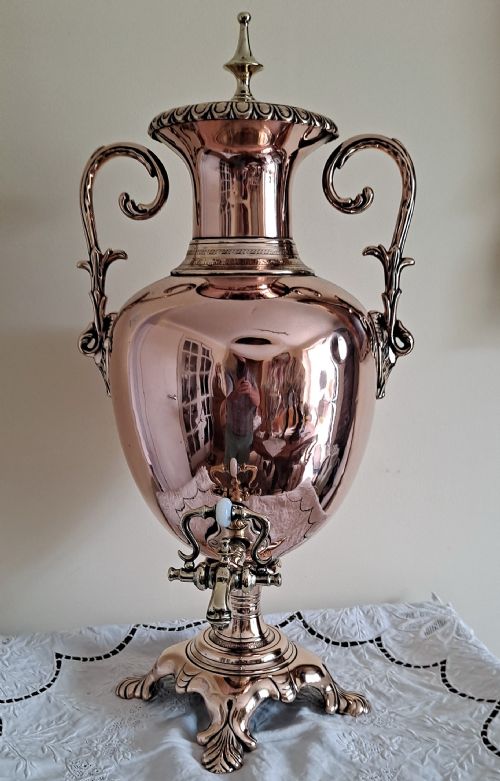
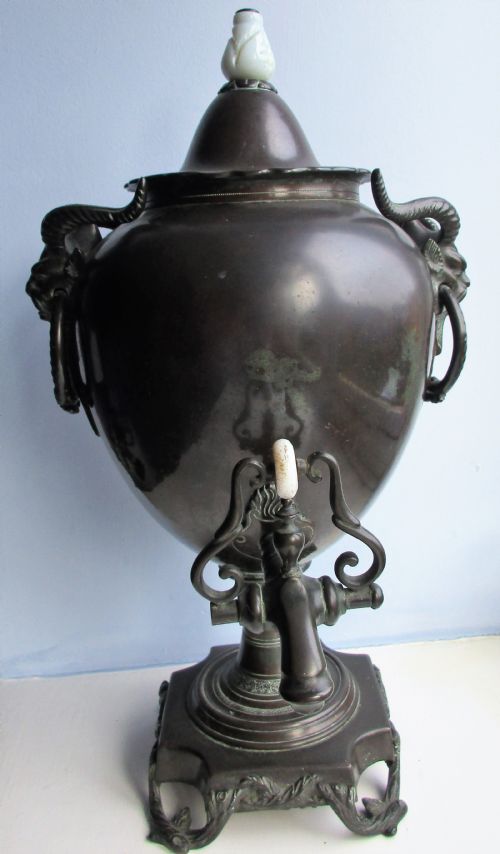
A copper water dispenser urn is a functional vessel designed to hold and heat water, appearing primarily as tea urns and samovars across the listings here. These pieces span several distinct eras, encompassing Georgian, Regency, and Victorian periods alongside Japanese Meiji examples.
The most common form encountered is the English samovar, which pairs a copper body with contrasting metal fittings. Alongside these traditional British tea urns, the selection includes decorative vessels and large temple water dispensers finished in cloisonne enamel.
Origins stretch from domestic English workshops to Meiji period Japanese studios, reflecting varied cultural approaches to water storage and service. Buyers will find both small tabletop examples and large hanging or freestanding vessels.
Materials and construction methods
Makers built these vessels predominantly from sheet copper, hammering and joining the metal to form substantial bodies. Brass and bronze provide structural contrast for taps, handles, and feet, while bell metal and iron occasionally appear in fittings.
Surface treatments vary widely, ranging from polished copper and patinated metal to japanned Pontypool ware finishes. More ornate Japanese pieces incorporate detailed cloisonne enamel work depicting motifs such as dragons.
Listings feature copper water dispenser urn styles spanning Georgian, Regency, and Victorian periods alongside Japanese Meiji examples.
Distinctions in craftsmanship
Quality in a copper water dispenser urn rests upon the integrity of the original fittings and the skill of the metalwork. Pieces retaining their complete original taps, handles, and internal components stand apart from those with replacement parts.
The refinement of the surface decoration, whether the smooth japanning of Pontypool ware or the intricate wirework of cloisonne enamel, dictates the upper tier of the selection. Heavier gauge metal and balanced proportions similarly elevate individual examples.
Benetfink & Co London
The Copper Water Dispenser Urn Glossary
- Samovar
- A heated metal container traditionally used to boil water for tea. These vessels typically feature an internal heating tube and a spigot near the base.
- Pontypool Ware
- British japanned metalware produced in Wales and London, known for its durable and glossy dark lacquered finish. This technique created decorative surfaces resembling Japanese lacquer.
- Cloisonne
- An enamelwork technique where thin metal wires form compartments on a metal base, which are then filled with coloured paste and fired. Japanese examples from the Meiji period frequently utilise this method.
- Bell Metal
- A hard alloy used for casting bells and durable metal fittings, containing copper and tin. It appears in authentic period urn components for its strength and resonance.
- Regency
- A British design period spanning the early nineteenth century, characterised by classical revival motifs and refined metallic finishes. Pieces from this era often display clean architectural lines.
Copper Water Dispenser Urn: Frequently Asked Questions
What is a samovar?
A samovar is a metal urn historically used to heat and boil water, particularly for tea service. These vessels utilise a central internal tube or fire box to heat the surrounding liquid.
Most examples include a small spigot near the bottom for dispensing hot water directly into cups or teapots.
How do I display an urn?
These vessels suit placement on sideboards, buffets, or large tables where their reflective metallic surfaces can be appreciated. Their substantial presence makes them effective focal points in traditional or eclectic rooms.
Ensure the surface is stable and capable of supporting the weight of the metal vessel.
Were these urns used for tea?
Many of these pieces served specifically as tea urns in domestic settings during the Georgian and Victorian eras. They provided a continuous supply of hot water for large gatherings.
Some larger variants functioned as general water dispensers or temple vessels rather than dedicated tea equipment.
How are different periods told apart?
Georgian and Regency pieces often display restrained classical silhouettes with bronze or brass accents. Victorian examples tend to be heavier, sometimes featuring japanned finishes or elaborate surface ornamentation.
Japanese Meiji period pieces are distinguished by distinct enamel techniques and iconography such as dragons.