


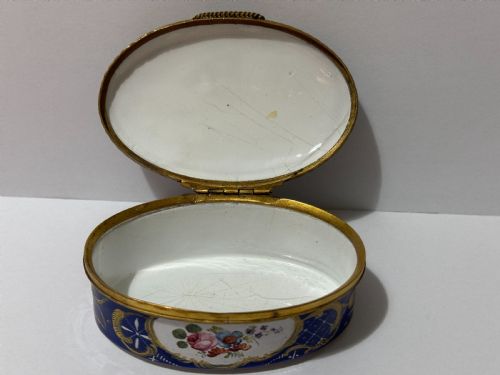


Copper Trinket Box
These copper trinket box examples range from Georgian enamel pieces to Arts and Crafts repoussé designs, offering compact storage for small valuables.
Copper Trinket Box
A copper trinket box typically takes the form of a small lidded vessel designed to hold pocket items, patches, or snuff, appearing across several distinct historical periods.
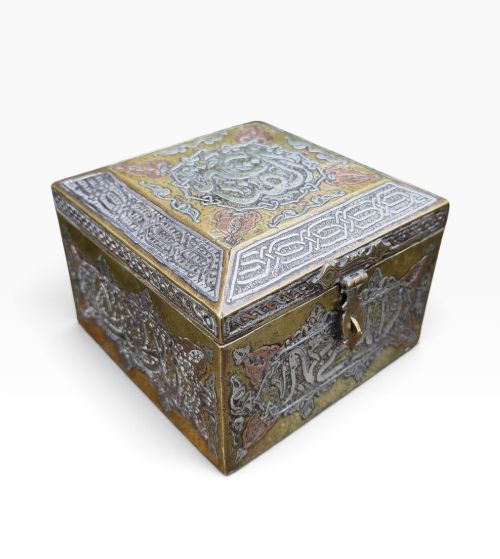
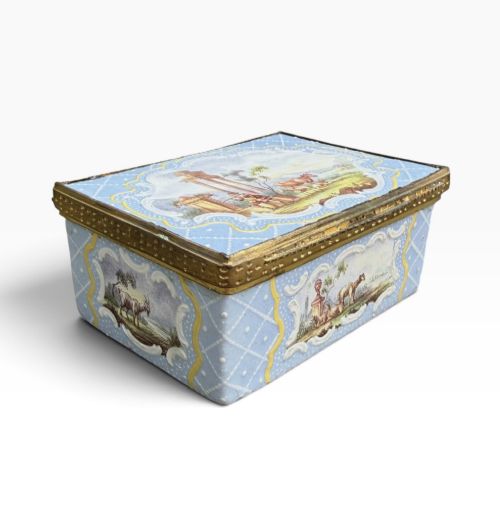
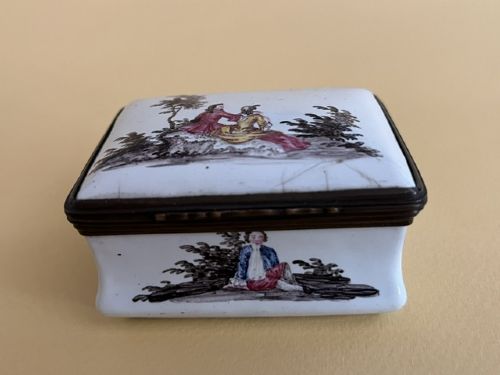
The selections span 18th-century enamel boxes from Bilston and Staffordshire alongside later Arts and Crafts copper pieces and Mamluk revival brass caskets.
Buyers will encounter small decorative boxes, patch boxes, snuff boxes, and jewellery caskets originating from English, French, Japanese, and Chinese makers.
Materials and technique
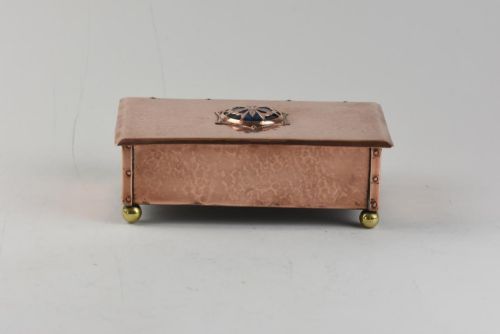
Many pieces combine copper bases with enamel surfaces, often featuring hand-painted scenes or central enamel cabochons mounted with metal overlays.
Arts and Crafts examples utilise hand-decorated repoussé copper techniques, sometimes paired with silver or ebony elements.
French and English workshops also employed gilded copper, brass, and electro-form methods to create detailed surface relief on small containers.
What separates the grades
Quality rests upon the crispness of the hand-painting on enamel panels and the complexity of repoussé metalwork decoration.
The precision of the metal hinge fittings and the condition of the underlying copper or gilt metal structure distinguish finer examples.
Artisanal touches, such as specific motifs and narrative scenes like parkland musicians or animal portraits, elevate the character of individual boxes.
Hunter and Palmer
The Copper Trinket Box Glossary
- Bilston enamel
- A type of enamelled copper box produced in Staffordshire during the eighteenth century. These pieces frequently feature hinged lids and delicate painted decoration.
- Repoussé
- A metalworking technique where the metal is beaten from the reverse side to form a raised design in relief. This method defines many Arts and Crafts copper boxes.
- Cabochon
- A gemstone or enamel piece shaped and polished rather than faceted. They often sit centrally on Arts and Crafts metalwork lids.
- Patch box
- A small container used historically to hold cosmetic patches made of silk or velvet. Eighteenth-century examples often include an interior mirror.
- Electro-form
- A manufacturing process using electrodeposition to form metal objects around a mould. French jewellery caskets from the late nineteenth century frequently utilise this method.
Copper Trinket Box: Frequently Asked Questions
What were copper trinket boxes used for originally?
These small containers served to hold personal items such as snuff, patches for the face, or small pieces of jewellery.
Their compact size made them suitable for carrying in pockets or placing upon dressing tables during the eighteenth and nineteenth centuries.
How do I date an enamel trinket box?
Dating relies on the style of the painted decoration, the shape of the metal mount, and the manufacturing origin, such as eighteenth-century Staffordshire.
Examining the hinge construction and the copper base beneath the enamel also helps determine the period of manufacture.
What is the difference between an Arts and Crafts box and a Georgian box?
Georgian boxes frequently feature detailed enamel panels with painted pastoral scenes or portraits set into copper frames.
Arts and Crafts examples tend to display hand-beaten repoussé copper surfaces, sometimes incorporating embossed plant motifs or cabochons.
How should I clean a copper trinket box?
Enamelled surfaces require only a soft, dry cloth to remove dust without damaging the painted details or the delicate copper mountings.
Uncoated copper or brass sections can be gently wiped, avoiding harsh chemical polishes that might strip patination or ruin applied gilding.