
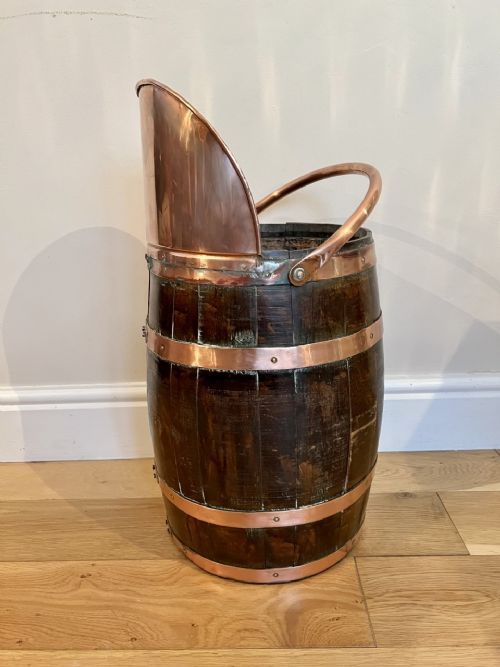


Copper Purdonium Scuttle
A copper purdonium scuttle is a fireside coal container designed to store fuel beside the grate with traditional metallic craftsmanship.
Copper Purdonium Scuttle
A copper purdonium scuttle serves as a practical fireside container for holding coal and logs near the hearth, combining utility with decorative metalwork. When you search for copper purdonium scuttle, you encounter coal boxes, bins and buckets originating from the Victorian, Edwardian and late nineteenth-century periods.
The pieces on this page span several decades of British fireside accessories, featuring the distinctive forms of the Arts and Crafts movement alongside traditional Victorian designs. Most examples combine rich warm copper bodies with contrasting brass fittings, iron details or wooden frames.
Forms range from sloped-front purdoniums designed for easy coal retrieval to lidded bins and open buckets fitted with carrying handles. These items reflect the domestic routines of period homes where fuel storage required durable and presentable metal containers.
How they were made
Metalworkers constructed these scuttles primarily from sheet copper and brass, often mounting the metal over robust wooden carcases made of oak or iron frames. Craftsmen shaped the bodies through panel beating and riveting, joining seams with visible metal fasteners that doubled as structural decoration.
Surface finishes relied on polished copper and brass highlights, sometimes paired with wrought iron handles and hinges for durability. Arts and Crafts examples often incorporated hand-hammered textures that highlighted the physical labour of the metalworker.
Listings feature copper, brass, oak and wrought iron across Victorian and Edwardian periods.
What varies in quality
The distinction between standard domestic fire bins and finer examples lies in the weight of the metal and the complexity of the construction. Heavier gauge copper and solid brass mountings indicate superior manufacture, whereas lighter plated sheets represent more utilitarian production.
Design ambition separates basic coal buckets from sophisticated Arts and Crafts purdoniums featuring hand-beating, decorative strapwork and integrated wooden storage boxes. The integration of solid oak framing alongside quality metal hardware marks the upper tier of these fireside pieces.
William Soutter & Sons
The Copper Purdonium Scuttle Glossary
- Purdonium
- A specialised coal box or scuttle, typically featuring a hinged front flap or scoop for dispensing fuel cleanly into the fireplace. The form became popular in British homes during the Victorian era.
- Arts and Crafts
- A design movement spanning the late nineteenth and early twentieth centuries that emphasised hand craftsmanship, visible construction methods and simple functional forms. Objects from this tradition often display hammered metal surfaces.
- Scuttle
- A metal bucket or container designed for carrying and storing coal, usually fitted with a swinging bail handle and a flat base for resting near the hearth.
- Brass
- An alloy of copper and zinc used extensively for decorative fittings, hinges, handles and rims on fireside containers to provide a bright golden contrast against dark copper bodies.
Copper Purdonium Scuttle: Frequently Asked Questions
What is a copper purdonium scuttle?
A copper purdonium scuttle is a traditional fireside container made to hold coal or logs beside a fireplace. These pieces combine metal bodies with functional handles and lids for daily domestic use.
Most examples date from the Victorian and Edwardian eras, utilising copper, brass and oak materials to balance practical storage with decorative hearth appeal.
How do I date a copper scuttle?
Dating relies on stylistic clues, construction methods and materials recorded across the Victorian, Edwardian and late nineteenth-century periods. Arts and Crafts examples often display hand-hammered textures and specific structural joins.
Heavier oak framing and specific brass mountings help distinguish earlier nineteenth-century pieces from later twentieth-century reproductions or standard utilitarian designs.
Where should I place a coal scuttle?
These pieces sit naturally beside an active fireplace or hearth as functional fuel storage for logs and coal. They also function as standalone decorative metal objects in period interiors.
Positioning a scuttle near the grate allows easy access to fuel while showcasing the warm tones of polished copper and brass fittings.
How do I clean antique copper?
Cleaning antique copper requires gentle dusting and occasional mild polishing depending on the desired level of brightness. Many collectors prefer to preserve the natural aged patina rather than achieving a mirror shine.
Harsh chemical abrasives should be avoided to protect the original surface texture and any protective lacquers or historical finishes.