
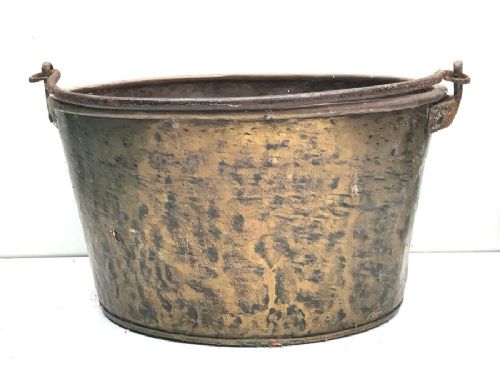
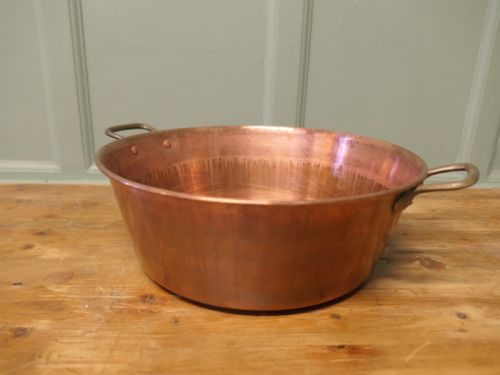
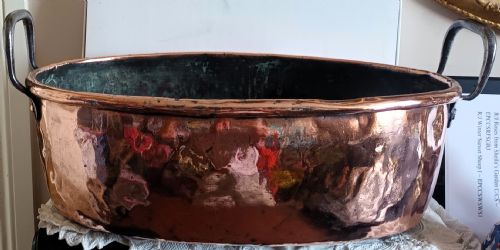


Copper Preserve Vessel
These copper preserve vessels bring a utilitarian warmth to modern spaces, built from heavy-gauge metal to handle centuries of kitchen work.
Copper Preserve Vessel
A copper preserve vessel is a deep, open metal pan designed originally for boiling fruit, sugar, and cream across domestic and farm kitchens. When you search for copper preserve vessel, you encounter heavy kitchenware ranging from George III examples through to late Victorian country pieces.
The forms span double-handled jam pans, cream setting pans, large bowls, and swing-handled vessels intended for hanging over hearths or resting on stoves. Most pieces on this page originate from the eighteenth and nineteenth centuries, carrying the marks of genuine utilitarian service.
Rural workshops and provincial makers produced these vessels to be robust rather than decorative, resulting in generous proportions and practical construction. Buyers select them today for their rich metal surfaces and their capacity to function as planters, fireside log holders, or display items.
How they were made
Artisans hammered heavy sheets of copper into deep basins, joining seams with overlapping rivets to withstand intense thermal expansion during boiling. Wrought iron or brass handles were securely attached using heavy rivets, providing the necessary strength to lift large quantities of dense contents.
The underside of each vessel shows the irregularities of hand-beating, where old hammers shaped the hot metal against an anvil. Surface finishes reveal years of scouring and polishing, leaving a tactile record of use that machine-pressed modern metals lack.
What varies in quality
Quality rests in the thickness of the original metal sheet and the integrity of the hand-beaten form rather than any surface polish. Vessels with heavier gauge copper maintain their structural rigidity better over centuries, showing fewer deep dents along the body.
The craftsmanship in the handle attachment and the neatness of the riveted joints separate standard utilitarian items from finer workshop pieces. Superior examples exhibit balanced proportions and substantial weight that mark them out as products of skilled metalworking.
Hodges & Sons
The Copper Preserve Vessel Glossary
- George III
- The period spanning from 1760 to 1820, characterised in these listings by early hand-beaten copper cookware. Pieces from this era often display simpler, heavier construction suited to open hearths.
- Victorian Country
- A stylistic grouping for nineteenth-century domestic items made for rural use rather than urban drawing rooms. These objects prioritise sturdy materials like copper, brass, and wrought iron over delicate ornamentation.
- Cream Setting Pan
- A wide, shallow vessel used in dairy work to allow cream to rise to the surface of milk before skimming. They provide a broader diameter than standard upright jam pans.
- Riveted
- A method of joining metal plates by inserting a metal pin through overlapping sections and hammering the end flat. This technique provides the robust joints found on eighteenth and nineteenth-century handles.
Copper Preserve Vessel: Frequently Asked Questions
How were copper preserve vessels used?
These vessels were hung over open hearths or placed on range stoves to boil large batches of fruit and sugar for jam, or to heat milk for cream setting.
The wide, open tops allowed steam to escape efficiently during long simmering processes, while the conductive metal distributed heat evenly across the base.
Can I use an antique copper pan for cooking?
Many older pans were lined with tin to prevent copper from reacting with acidic fruit mixtures, and original linings often wear away over centuries of use.
Buyers generally use these pieces for display, storage, or interior decoration rather than modern food preparation unless a specialist has retinned the interior.
How do I date a copper preserve vessel?
Dating relies on observing construction details such as hand-beaten marks, the shape of the riveted handles, and the thickness of the rolled rim.
Earlier eighteenth-century pieces often feature heavier wrought iron fittings, whilst later Victorian versions tend to utilise brass or standardised iron drop handles.
How should I clean my copper vessel?
Most collectors prefer to maintain a warm, aged patina rather than polishing the metal to a bright, mirror-like shine.
If cleaning is desired, mild non-abrasive metal cleaners remove excess oxidation without stripping away the subtle marks of historical hand-beating.