


Copper Metal Plaque
A copper metal plaque brings tactile weight and rich metallic depth to an interior, whether worked with Arts and Crafts foliage or intricate Japanese cloisonne enamel.
Copper Metal Plaque
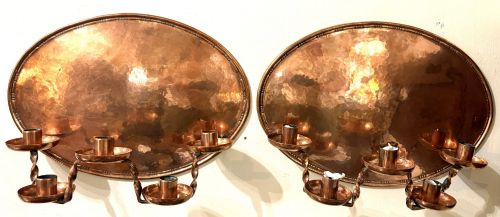
A copper metal plaque encompasses a wide variety of wall-hung chargers, trays, and decorative panels spanning the Victorian era through the early twentieth century. These pieces reflect diverse international aesthetics, ranging from British Arts and Crafts hand-beaten designs to Japanese Meiji period enamel work and intricate Middle Eastern metalwork.
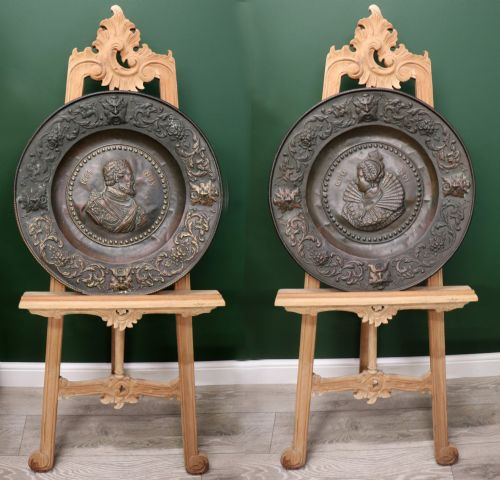
The versions most commonly met on this page include large circular wall chargers and rectangular decorative plaques produced during the nineteenth and early twentieth centuries. Makers utilised copper alongside brass, bronze, and enamel to create substantial wall art and decorative displays for domestic interiors.
How they were made
Makers shaped these pieces primarily through hammering, repousse, and chasing techniques, pushing the metal from the reverse to create raised relief details. Artisans often combined copper with brass, silver plate, and bronze to achieve contrasting tones and textures across the surface.
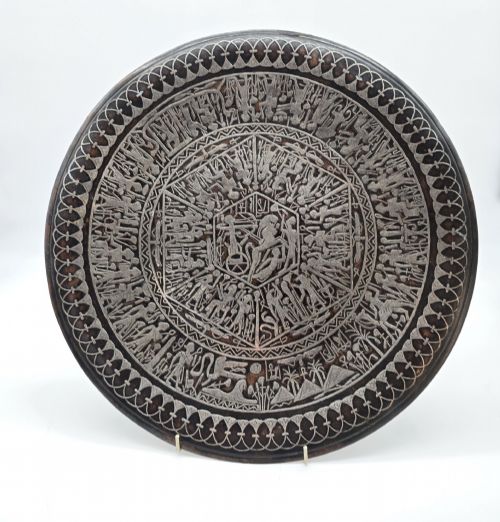
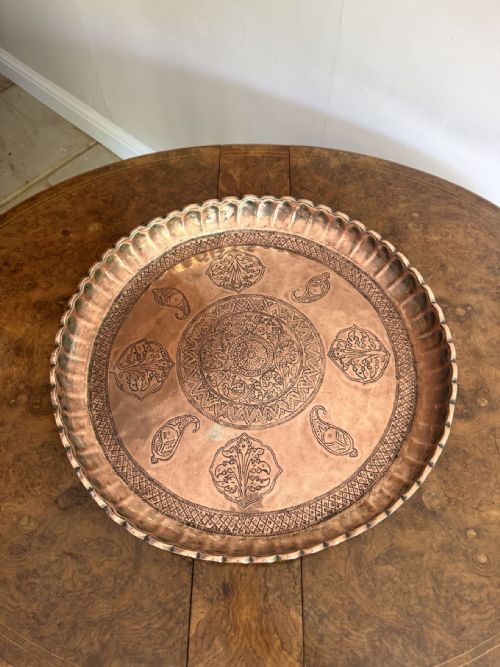
Enamelling played a major role in decoration, particularly within Japanese works utilising cloisonne and champleve methods to enclose colourful glass pastes within thin metal wires. Piercing, engraving, and silver inlay further enriched pieces originating from Indian, Syrian, and Egyptian workshops.
Listings feature periods from the early nineteenth century through to 1910, spanning Victorian and Edwardian aesthetics alongside Meiji period Japanese works.
What varies in quality
Quality rests upon the crispness of the hand-worked detail and the depth of the metal relief. Pieces featuring sharp, confident repousse work or precise cloisonne wire placement separate standard production from superior craftsmanship.
The choice of materials and the complexity of mixed-metal integration also dictate the standing of a piece. Heavier gauge copper and successful combinations of silver inlay, enamel, and bronze indicate higher ambition in the workshop.
Gustav Grohe·Faulkner Bronze Company
The Copper Metal Plaque Glossary
- Repousse
- A metalworking technique where the artisan hammers metal from the reverse side to form a raised design in relief on the front. This method requires considerable skill to maintain even thickness and smooth contours.
- Cloisonne
- An enamelling process utilising thin metal wires soldered to a base to form compartments, which are then filled with coloured glass paste and fired. Fine examples show intricate wirework without flaws in the enamel.
- Charger
- A large decorative plate or platter intended for display on a wall or sideboard rather than for serving food. These items often feature elaborate pictorial or botanical decoration across a wide surface.
- Cairo Ware
- Metalware produced in Egypt, typically constructed from brass or copper and heavily inlaid with silver and other metals in intricate geometric or calligraphic patterns. These objects gained popularity during the nineteenth century Grand Tour.
- Meiji Period
- The era in Japanese history spanning from 1868 to 1912, noted for exceptional technical mastery in metalwork and enamel production directed towards international collectors.
Copper Metal Plaque: Frequently Asked Questions
How were copper metal plaques displayed?
Many large chargers and plaques were designed specifically for wall mounting in Victorian and Edwardian interiors, often hung using integrated wire loops or displayed on dedicated plate rails. They served as focal points in reception rooms, libraries, and hallways.
Smaller trays and enamel panels were frequently placed on flat surfaces or mounted within wooden frames to protect the edges and enhance their presence as framed art.
What is the difference between Arts and Crafts and Japanese styles?
Arts and Crafts copper plaques emphasise honest hand craftsmanship, featuring visible hammer marks, naturalistic botanical motifs like pomegranates, and subdued patination. They celebrate the texture of the raw metal.
Japanese pieces from the Meiji period focus on extreme technical precision, utilising smooth cloisonne enamels, multi-metal inlays, and detailed depictions of dragons, samurai, and natural scenes with vibrant colour.
How do I care for antique copper?
Antique copper requires minimal intervention to preserve its historic surface and natural patination. Dusting with a soft, dry cloth is usually sufficient for regular maintenance.
Avoid using harsh abrasive metal polishes, as these can strip away desirable age-related patination and damage delicate enamels or silver inlay work present on mixed-metal pieces.
What periods do these pieces date from?
The selection spans from the early nineteenth century through to the Edwardian era, with a strong concentration of pieces originating around 1900. Victorian and late nineteenth-century examples dominate the available forms.
Stylistic influences range from nineteenth-century European revivals to Meiji period Japanese craftsmanship and regional Indo-Persian metalwork.