


Copper Iron Coal Bucket
These copper iron coal bucket pieces combine sturdy metal construction with warm metal bodies for domestic hearth utility.
Copper Iron Coal Bucket
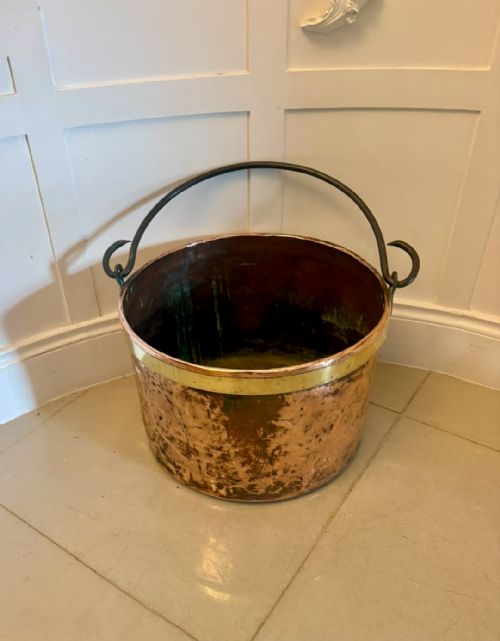
A copper iron coal bucket sits beside a fireplace to hold fuel, combining a sheet metal body with iron handles or frames. The form appears in styles ranging from Georgian and Victorian to Arts and Crafts and Art Nouveau.
Most examples found here date across the nineteenth and early twentieth centuries. Makers applied these materials to utilitarian vessels like log bins, coal scuttles, and fireside buckets.
Buyers encounter cylindrical bins, handled vessels, and footed receivers intended for daily hearth service. These domestic objects transitioned from pure utility to decorative fireside accessories.
Materials and construction
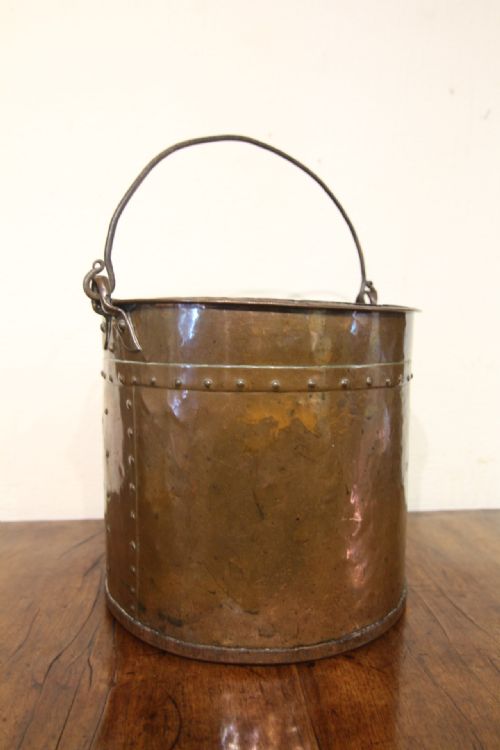
Workshops formed the bodies from beaten or riveted sheet copper to create a durable, rust-resistant container. Wrought iron provided structural handles, swing Bails, and supporting frames.
Brass components occasionally appear for decorative trim or mounts alongside the primary copper and iron structure. Rivets secured the overlapping seams of the metal plates before finishing.
Listings feature items spanning the Georgian, Victorian, Arts and Crafts, and Art Nouveau styles.
Judging quality in copper iron coal bucket pieces
The weight of the copper sheet and the robustness of the ironwork dictate the structural integrity of each vessel. Thicker metal resists denting from heavy fuel loads over decades of use.
Hand-hammered surfaces and carefully hammered rivet heads separate workshop pieces from standard factory production. Original iron mountings and matching handles preserve the integrity of the design.
The Copper Iron Coal Bucket Glossary
- Coal scuttle
- A container designed for carrying coal to a fireplace, often featuring a hinged lid or a tilted opening. These vessels range from simple buckets to elaborate perdoniums.
- Log bin
- A large container used to store firewood near the hearth, sharing similar copper and iron construction with coal buckets. They prioritize capacity over mobility.
- Wrought iron
- Iron worked by hand or machine while hot, used for sturdy handles and frames on fireside vessels. Its fibrous texture provides high tensile strength.
- Arts and Crafts
- A design movement valuing visible construction methods and handcrafted quality over mass production. Pieces from this era often display exposed rivets and hammered copper textures.
- Art Nouveau
- A style defined by organic, flowing lines and natural motifs popular around nineteen hundred. Copper buckets in this taste feature sinuous handles and plant-inspired body shapes.
Copper Iron Coal Bucket: Frequently Asked Questions
What is a copper iron coal bucket?
A copper iron coal bucket is a hearth accessory made with a copper body and iron handles or frames. It served to store and transport solid fuel for domestic fires.
Craftsmen built these vessels to withstand daily use while adding a warm metallic sheen to the fireplace area. They appear in several historical domestic design styles.
How do I date a copper iron coal bucket?
Dating relies on stylistic clues like Arts and Crafts hand-hammered surfaces or Victorian decorative forms. Construction methods such as hand-riveting also point to specific manufacturing eras.
Earlier Georgian examples tend toward simpler proportions, whereas twentieth-century pieces often reflect modernist or revivalist tastes.
Can I use these buckets for logs?
Many of these vessels functioned as log bins or coal buckets interchangeably during their working lives. Their durable metal construction handles firewood storage easily.
Owners today frequently utilise them beside modern stoves to hold logs rather than coal. The combination of copper and iron handles heavy loads without failing.
How should I clean copper and iron?
Cleaning depends on whether you prefer a bright polished finish or a patinated surface showing age. Gentle dusting and mild soapy water preserve the original metal skin.
Avoid harsh abrasives that strip away the historical darkening accumulated over centuries of fireside placement. Iron parts benefit from light oil to prevent corrosion.