

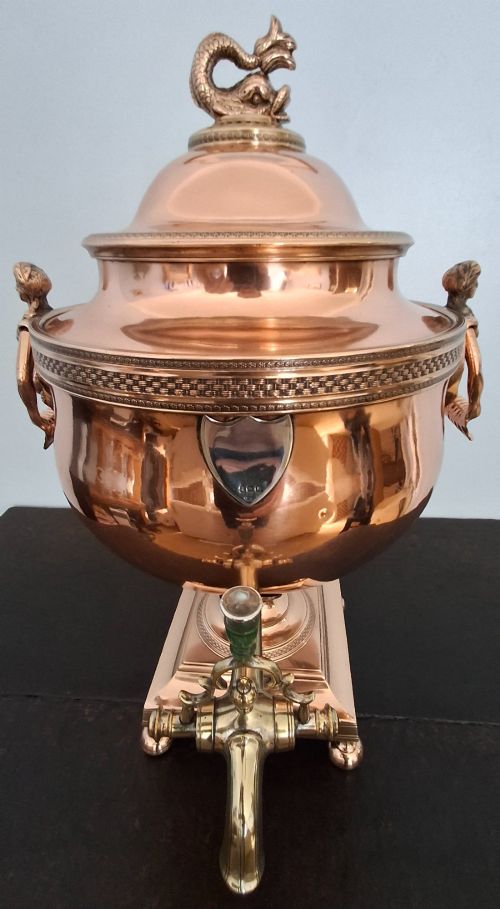
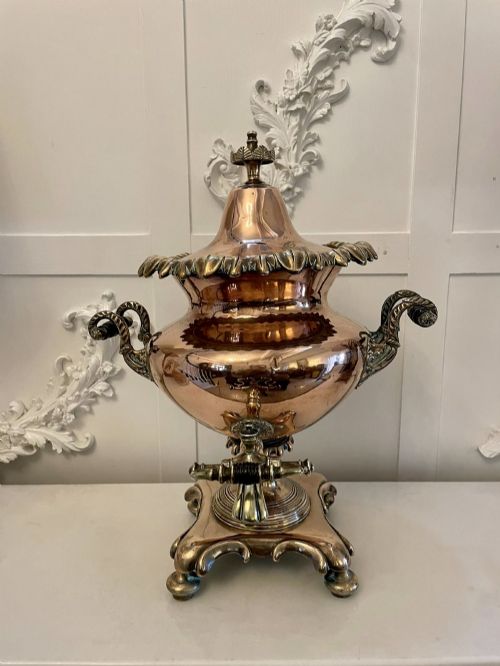
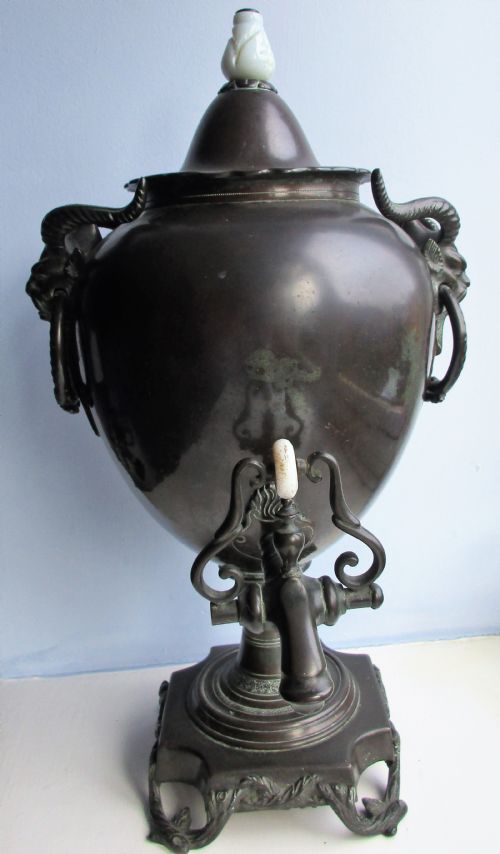
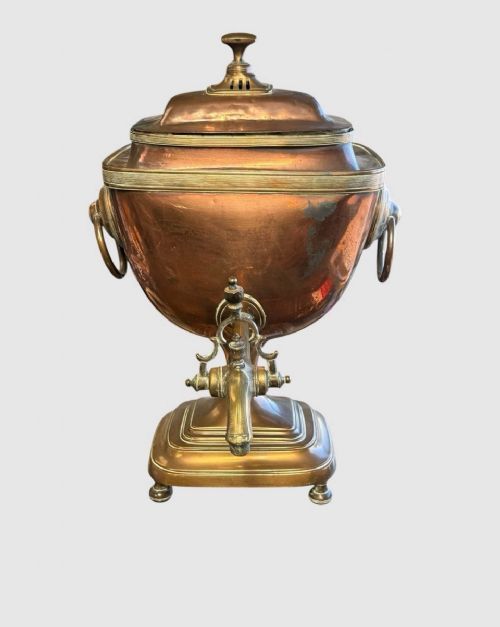
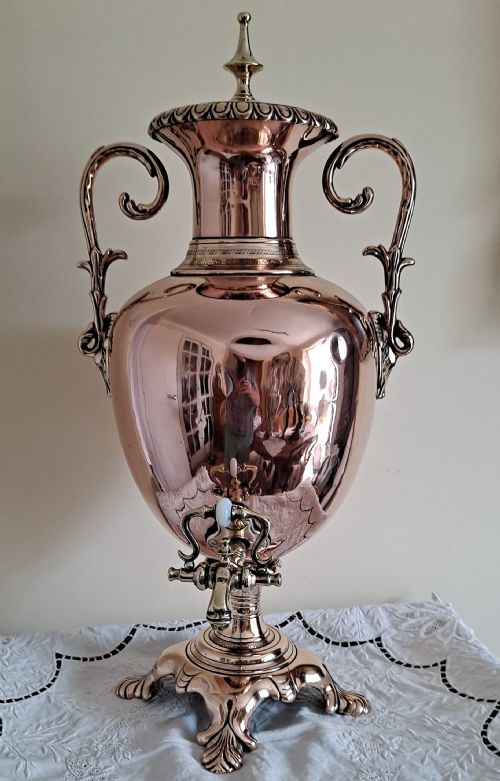
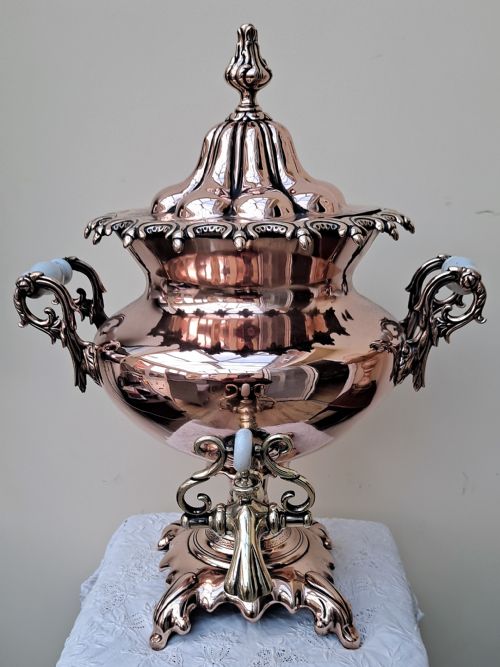
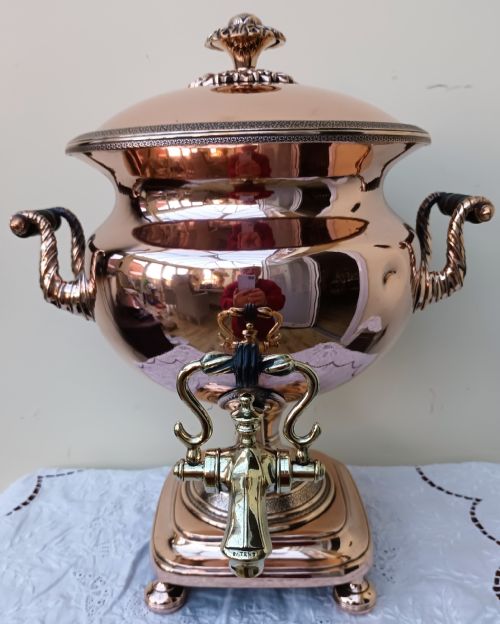


Copper Hot Water Dispenser
A copper hot water dispenser delivers a steady supply for the table, combining heavy metal construction with formal presence.
Copper Hot Water Dispenser
A copper hot water dispenser is typically encountered as a samovar or tea urn dating from the Georgian, Regency, and Victorian periods.
These vessels take the form of large, handled containers designed to keep water hot for tea service in the dining room or drawing room.
English examples dominate the selection, spanning styles from the early nineteenth century through the late Victorian era.
Materials and construction
Construction relies heavily on sheet copper, often paired with brass for handles, spigots, and decorative mounts.
Certain pieces incorporate japanned metal or bronzed copper finishes, whilst interior components may utilise bell metal or ceramic elements.
Copper Hot Water Dispenser Retail Price Guide 2026
Typical asking prices for copper hot water dispenser among the pieces listed under this phrase on Sellingantiques today, from the lower quarter to the upper quarter. They describe what is for sale here now, not the wider market.
The listings show pieces spanning the Georgian, Regency, and Victorian periods, executed in copper, brass, bronze, and japanned metal.
Distinctions in quality
Quality rests upon the weight of the metal and the integrity of the original fittings rather than mere surface ornament.
The refinement of the casting in the brass handles and the complexity of the form separate standard production from superior examples.
Benetfink & Co London
The Copper Hot Water Dispenser Glossary
- Samovar
- A heated metal vessel traditionally used to heat and boil water for tea. These pieces often feature an internal heating tube or a central chamber.
- Tea Urn
- A large metallic container fitted with a tap, designed to dispense hot water for tea service. They sit upon fixed pedestals or raised bases.
- Pontypool Ware
- Tinned sheet iron or metal finished with a distinctive japanned lacquer. This Welsh technique produces a glossy, durable surface often seen on nineteenth-century examples.
- Bell Metal
- An alloy of copper and tin traditionally utilised for hard-wearing metal components and fittings. It provides durability and a distinct tonal quality.
- Japanned Metal
- A European imitation of East Asian lacquerware applied to metal objects. The process involves multiple layers of varnish baked to a hard finish.
Copper Hot Water Dispenser: Frequently Asked Questions
What is a copper hot water dispenser?
A copper hot water dispenser is a vessel designed to hold and heat water for social tea service. These pieces operate as central table elements in period settings.
They combine functional water storage with decorative metalwork, utilising spigots for easy pouring.
How were these dispensers used historically?
These vessels stood on dining tables or sideboards to provide a continuous supply of hot water during long meals and gatherings. Servants or hosts operated the spigot to fill teapots as needed.
Internal heating methods kept the contents warm throughout the service.
How do I date a copper samovar?
Dating relies on stylistic shifts from the neoclassical lines of the Regency period to the heavier proportions of the Victorian era. The design of the handles, feet, and spigot offers clear clues to the period of manufacture.
Material choices, such as bronzed copper or japanned finishes, also point to specific decades.
Can I use an antique urn today?
Most antique examples serve primarily as decorative objects or collection centerpieces rather than functioning kitchen appliances. Internal modifications would be necessary for modern water heating.
Displaying them polished or in patinated condition highlights the craftsmanship of the period.