
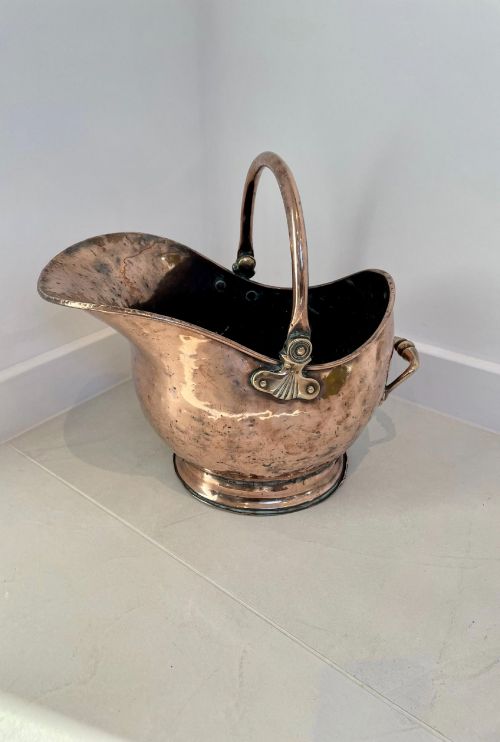
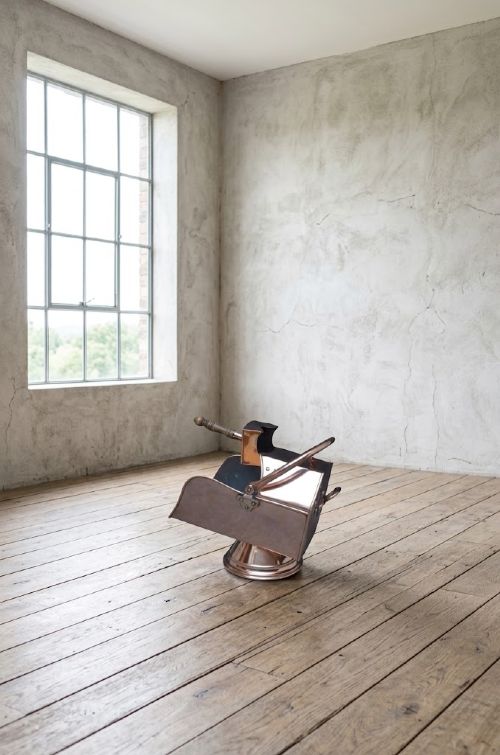
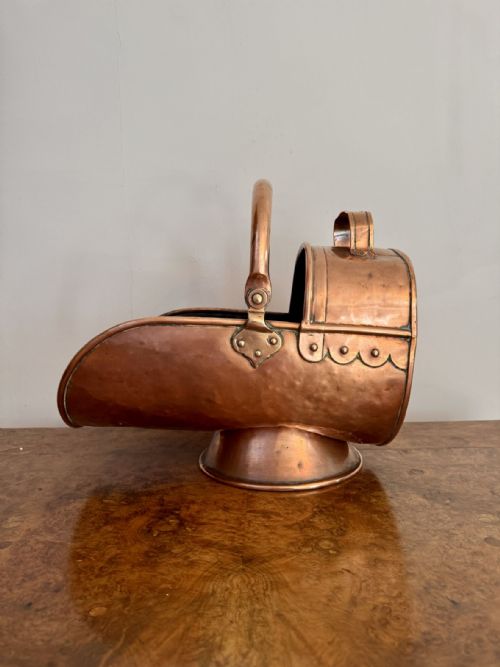
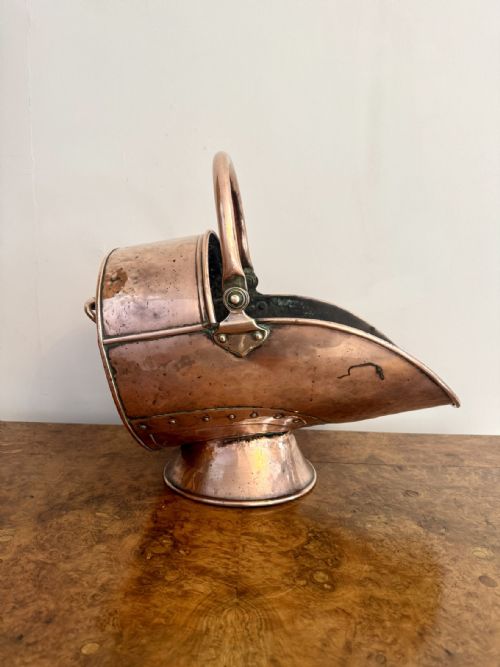
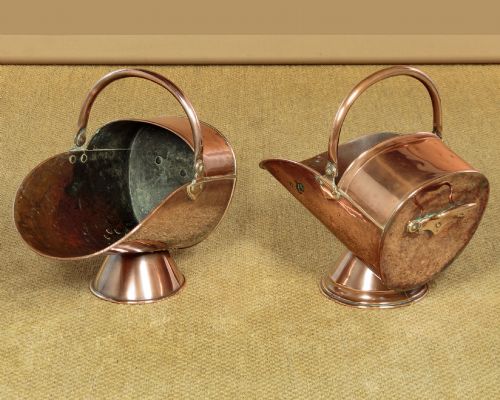


Copper Helmet Coal Bucket
A copper helmet coal bucket brings polished metal and practical hearth storage to the fireside, shaped by centuries of domestic use.
Copper Helmet Coal Bucket
A copper helmet coal bucket is a fireside accessory designed to hold solid fuel close to the fireplace while offering a distinct sloped profile resembling a traditional helmet. These vessels appear frequently in Victorian and George III periods, spanning from the early 19th century into the Edwardian era.
The form combines a widened mouth for scooping coal with a stable base and carrying handle, often paired with brass fittings or a matching shovel. Collectors encounter these items grouped alongside broader fireplace accessories, log bins, and fireside baskets.
Most examples originate from English and Scottish workshops, utilising traditional metalworking techniques that range from smooth polished sheeting to hammer beaten surfaces. Their survival in domestic settings demonstrates their enduring utility as both containers and decorative fireside focal points.
How They Were Made
These vessels rely on sheet copper shaped over forms, joined with secure seams, and frequently reinforced with brass handles, rims, and claw feet. Wrought iron and standard iron appear in internal handles or structural supports, adding durability to the weight of the metal.
Surface decoration emerges through techniques like embossing and hammer beating, creating textured patterns typical of Arts and Crafts and Art Nouveau aesthetics. Brass components are cast and attached securely to the copper body to withstand regular lifting and transport.
Certain Victorian examples feature china handles, adding a delicate touch of porcelain to heavy metal fuel storage.
What Varies In Quality
The distinction between standard utility items and finer examples rests on the weight of the copper sheet and the execution of applied details. Thicker gauge metal provides structural rigidity, while finely cast brass handles and articulated feet demonstrate greater workshop attention.
Surface finish also separates pieces, with hand-hammered and embossed designs showing deliberate craftsmanship compared to plain commercial stampings. The integrity of riveted joints and the balance of the helmet profile contribute to the overall standard of construction.
The Copper Helmet Coal Bucket Glossary
- Helmet scuttle
- A coal container featuring a high back and sloping front reminiscent of a traditional headpiece, designed for easy pouring.
- Coal hod
- A deep container for carrying and storing coal, often interchangeable in terminology with a bucket or scuttle.
- Hammer beaten
- A surface finish displaying visible blows from a hammer, creating texture and catching light across the metal.
- Aesthetic Movement
- A late 19th-century design approach prioritising visual and material beauty over strict utilitarian function.
- Claw feet
- Ornamental supports shaped like animal paws, elevating the base of the bucket above the hearth floor.
Copper Helmet Coal Bucket: Frequently Asked Questions
How do I clean a copper helmet coal bucket?
Wipe the surface gently with a soft cloth to remove dust and soot accumulation.
Avoid abrasive polishes that strip away historical patina unless a bright finish is specifically desired.
What periods do these coal buckets date from?
Most surviving examples originate during the Victorian era and the George III period.
Pieces also extend into Edwardian times and the early 20th century, carrying stylistic traits of Arts and Crafts or Art Nouveau.
Were these buckets used only for coal?
While designed primarily to hold coal near the fireplace, many served as log bins for firewood.
Their substantial construction made them suitable for carrying various solid fuels used in open hearths.
How can I tell a George III bucket from a Victorian one?
George III examples generally date around 1800 and exhibit simpler, restrained Georgian proportions and joinery.
Victorian pieces often display heavier cast brass mounts, embossed patterns, or decorative handle designs introduced later in the 19th century.