


Copper Fireplace Coal Hod
A copper fireplace coal hod brings warmth and gleam to a hearth, combining practical fuel storage with striking metalwork.
Copper Fireplace Coal Hod
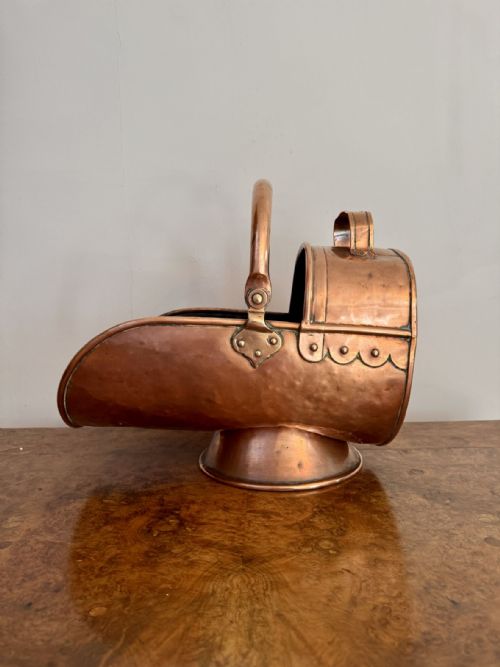
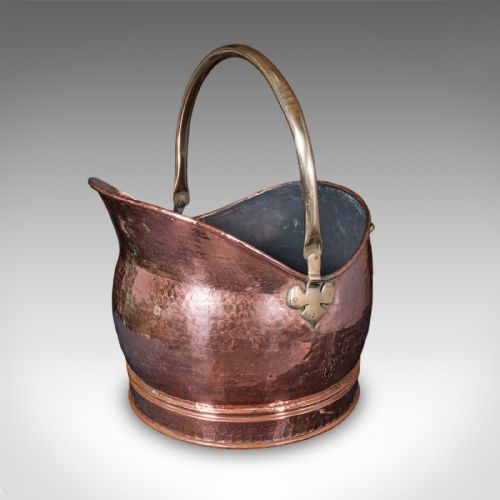
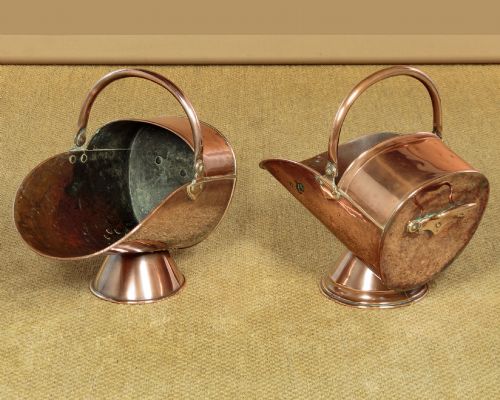
A copper fireplace coal hod is a functional fireside container designed to hold solid fuel for domestic hearths. The selection on this page centres primarily on Victorian, George III, and Edwardian examples fashioned from copper.
Most pieces take the form of helmet scuttles, buckets, or hods, often accompanied by brass handles and feet. You will also encounter Arts and Crafts and Art Nouveau interpretations that emphasise hand-beaten surfaces and wrought iron details.
Originating largely from English workshops, these items bridge utility and decoration. They range from simple cylindrical buckets to elaborate helmet shapes designed to pour coal cleanly onto a fire.
How they were made
Metalworkers shaped sheet copper by hand, joining seams with rivets or brazing to create robust vessels capable of holding heavy loads of coal. Handles and fittings in brass or wrought iron were then securely attached using traditional fixings.
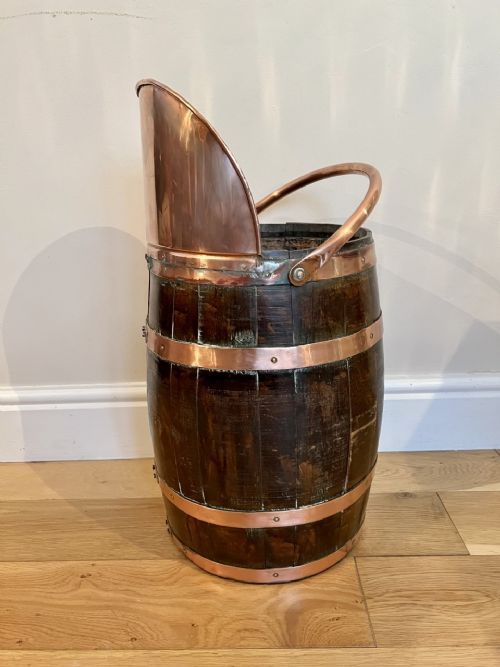
Many examples display hammer-beaten textures achieved through skilled manual raising on a stake. Wood components, such as oak bodies or grip handles, were turned or joined to contrast with the warm metallic sheen of the copper.
Listings feature pieces spanning from the George III era through to the Arts and Crafts and Art Nouveau movements of the early twentieth century.
What varies in quality
The standard of a copper fireplace coal hod depends largely on the weight of the metal sheet and the integrity of its construction. Thicker gauge copper resists dents and holds its structural form better under the daily strain of carrying fuel.
Refinement in decorative details separates standard utilitarian vessels from finer examples. Look at the crispness of the hand-beaten marks, the solidity of the brass mounts, and the proportion of the handle to the body.
The Copper Fireplace Coal Hod Glossary
- Coal hod
- A container designed specifically for holding and transporting coal to a fireplace. These vessels often feature a wider base and a shaped mouth for easy pouring.
- Helmet scuttle
- A traditional coal container shaped like an inverted military helmet, featuring a high back and a jutting lip at the front. This design helps direct the fuel cleanly onto the fire.
- Arts and Crafts
- A design movement spanning the late nineteenth and early twentieth centuries that prioritised hand craftsmanship and visible tool marks. Pieces from this style often feature beaten copper surfaces and wrought iron elements.
- Wrought iron
- Tough, malleable iron worked by hand while hot to produce sturdy structural elements and decorative mounts. It frequently provides a dark, contrasting trim on copper fireside vessels.
- George III
- The period spanning the late eighteenth and early nineteenth centuries, associated with restrained classical proportions in furniture and metalwork.
Copper Fireplace Coal Hod: Frequently Asked Questions
How do I clean a copper coal hod?
Maintenance depends on whether you prefer a bright polished finish or a deep historical patina. Gentle dusting and occasional wiping with a soft cloth preserve the surface without stripping its character.
Harsh chemical abrasives strip the aged skin that forms over decades of handling. Many collectors prefer to leave the natural oxidation untouched.
Can I still use these for real coal?
These vessels were built to carry fuel and remain entirely functional for daily hearth use. Modern owners frequently use them to hold logs, kindling, or coal beside an active fireplace.
Care should be taken not to drop heavy fuel blocks sharply against the thin metal walls. Lining the base can prevent unnecessary internal scratching.
How do I tell a Victorian hod from a George III one?
Georgian examples generally display simpler, more austere lines and heavier gauge construction. Victorian pieces often embrace ornamental helmet shapes and more elaborate brass mounts.
Examining the construction methods, such as rivet types and hammer marks, helps clarify the period of manufacture. Regional workshop traditions also influenced the silhouette over time.