
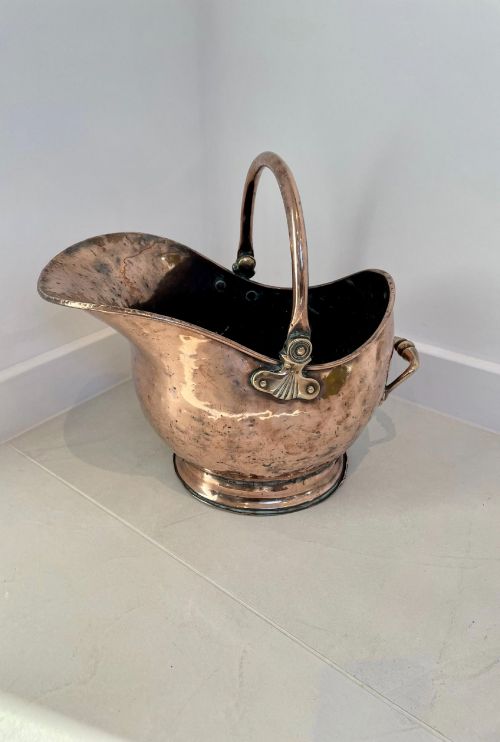
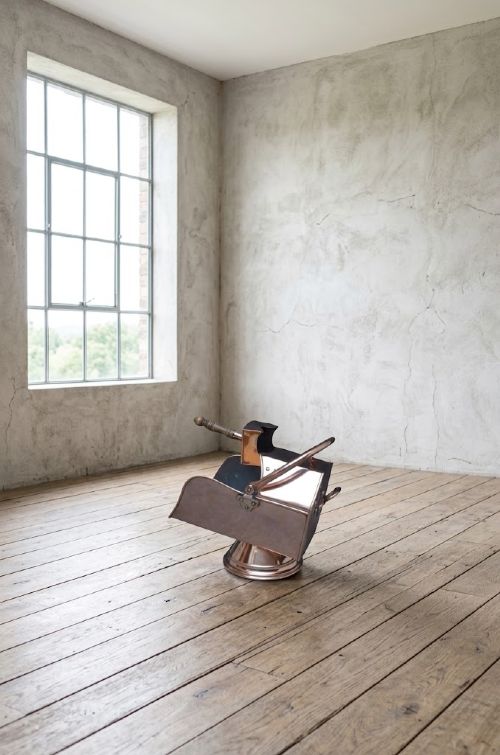
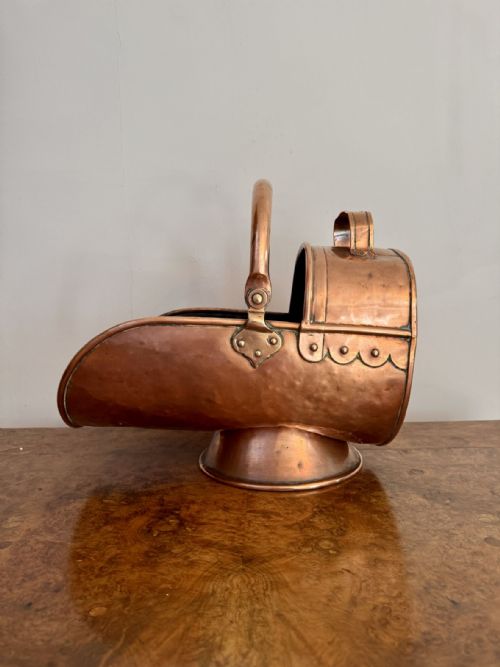
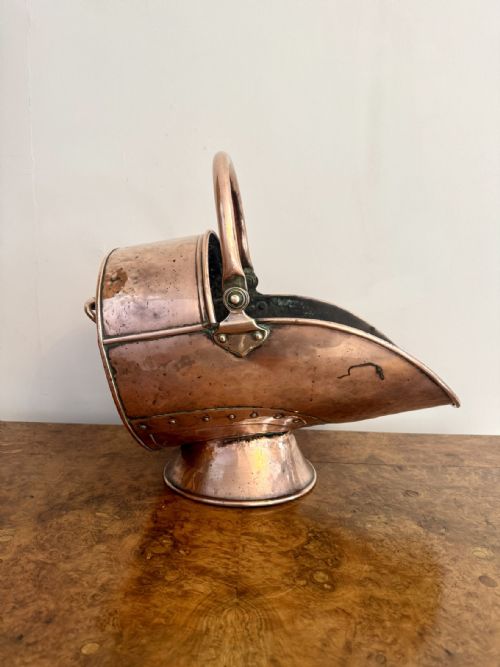
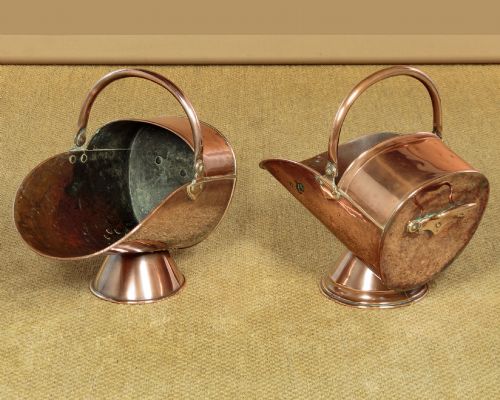


Copper Coal Helmet
A copper coal helmet brings warm metal tones and traditional utility to a hearth, offering a practical way to store solid fuel beside the fire.
Copper Coal Helmet
A copper coal helmet is a fireside accessory designed to hold coal, logs or other solid fuel close to the fireplace for daily use. When you search for this phrase, you find practical containers that double as decorative metalwork for the hearth.
The version you are most likely to meet on this page is the Victorian helmet shape, often dated around 1860 to 1880, featuring a flared mouth and a swing handle. These pieces draw on Georgian origins and extend into Edwardian, Arts and Crafts and Art Nouveau styles.
Makers shaped these coal buckets in copper, sometimes pairing the main body with brass feet, rims or handles, and occasionally incorporating an interior metal liner. Beyond standard helmets, the listings include log bins, fireside baskets and hods.
How They Were Made
Makers fashioned these vessels primarily from sheet copper, joining seams with precision to create watertight or durable containers for solid fuel. Brass components such as handles, feet and rims provide structural contrast and sturdy points of interaction.
Certain pieces exhibit hammer beaten or embossed surface decoration, reflecting Arts and Crafts and Art Nouveau design movements where manual manipulation of the metal texture took precedence. Wrought iron and standard iron appear in structural or supporting elements.
Object forms include standard helmets, coal scuttles, hods, log bins and fireside baskets.
What Varies in Quality
Gauge and weight separate robust items from lighter counterparts, with heavier copper and substantial brass mounts indicating superior construction that withstands heavy fuel loads. The rigidity of the swing handle and the security of its fixings dictate daily usability.
Artistic execution creates a distinct tier at the top of the range, seen in hand-beaten surfaces or crisp embossing from the Arts and Crafts and Art Nouveau periods rather than plain stamped sheet metal.
Henry Loveridge and Co
The Copper Coal Helmet Glossary
- Helmet coal scuttle
- A fireside container featuring a flared rim reminiscent of a traditional headpiece, designed for pouring coal cleanly into a grate.
- Coal hod
- A deep bucket-style fuel container, often fitted with a fixed top handle and a flat base for resting upright.
- Hammer beaten
- A surface technique where individual hammer marks remain visible on the metal, creating texture and catching the fireside light.
- Arts and Crafts
- A design movement prioritising visible handcraftsmanship, simple utility and honest materials over mass-produced ornamentation.
- Liner
- A secondary internal bucket, frequently galvanized or tin, inserted to protect the outer copper shell from moisture and coal dust.
Copper Coal Helmet: Frequently Asked Questions
How do you use a coal helmet?
You fill the helmet with coal or logs in a coal cellar or utility space, then carry it to the hearth using its swing handle for easy refuelling.
The flared spout allows you to tip the fuel directly into the grate without spilling debris onto the hearth rug.
How do I date a copper coal helmet?
Dating relies on stylistic details, such as the restrained lines of Georgian examples versus the embossed floral motifs of Art Nouveau or the hand-beaten textures of Arts and Crafts pieces.
Victorian iterations typically display heavy gauges, brass claw feet and classic helmet profiles spanning the mid to late nineteenth century.
Are these coal scuttles safe to use?
Most antique copper coal helmets remain fully functional for holding logs or solid fuel beside a working fireplace today.
Checking for an intact internal liner helps ensure that moisture and coal dust will not degrade the original copper base.