

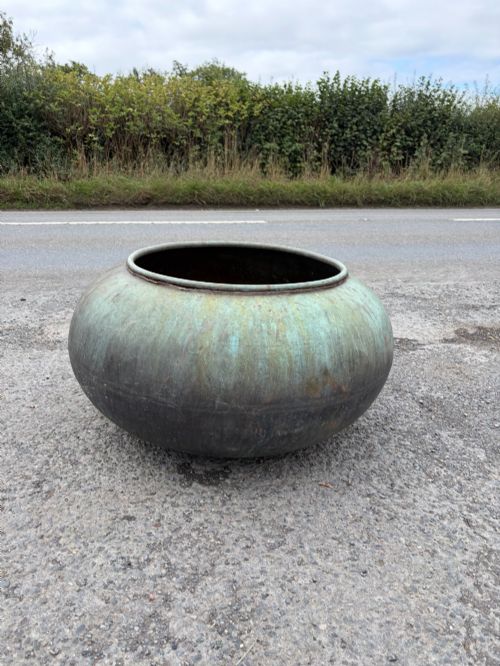
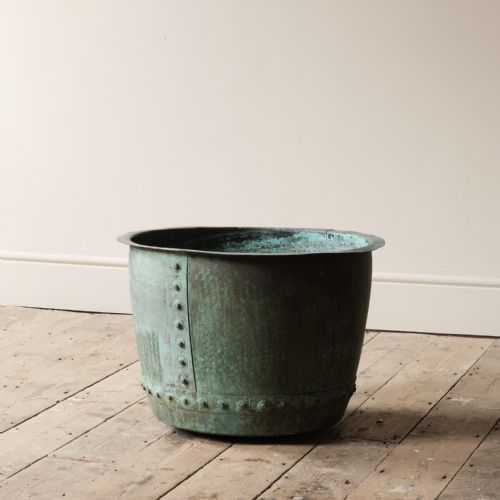
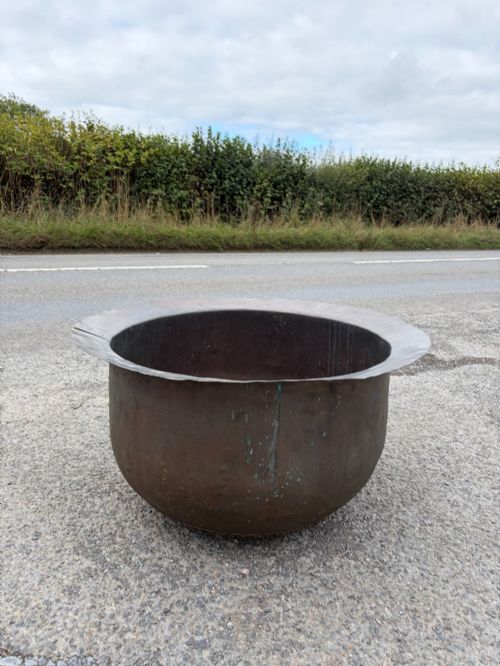

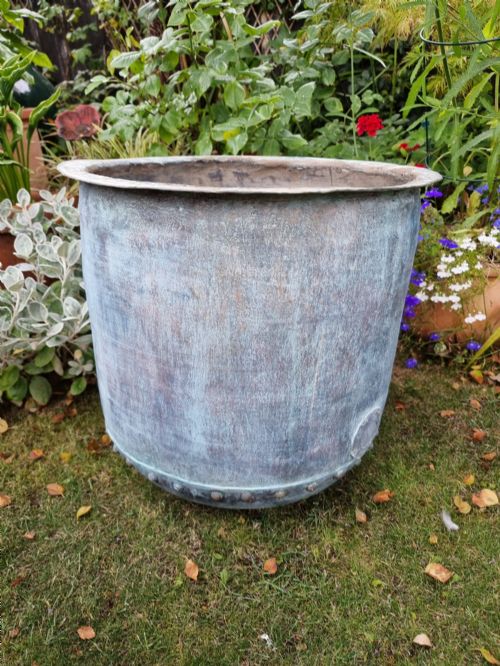


Copper Boiler Pot
These copper boiler pot selections bring robust nineteenth century utility and rich patinated metal into contemporary interiors and gardens.
Copper Boiler Pot
A copper boiler pot is a heavy utilitarian vessel designed for hearth or laundry use during the Georgian and Victorian eras, often repurposed today as a planter, log bin, or garden display. The examples on this page span the nineteenth century, including specific dates from eighteen hundred to eighteen ninety, alongside Georgian and Victorian pieces.
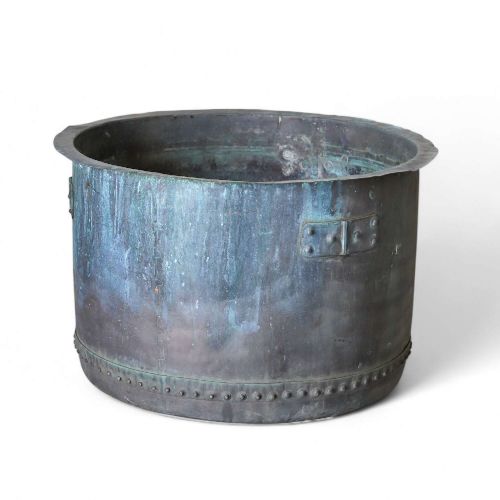
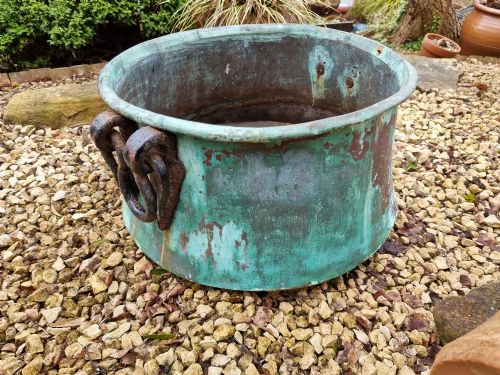
Buyers will encounter large pots, cauldrons, and kettles shaped from heavy gauge metal, frequently featuring riveted construction and swing handles made of wrought iron. These items range from French and English country styles to industrial utilitarian forms, functioning equally well as interior log baskets or large garden vessels.
Materials and construction methods
These vessels rely on heavy copper sheets joined together by hand-riveting, creating durable seams that often display distinct verdigris finishes and natural patinas developed over centuries. Wrought iron and cast iron provide robust support for swing handles, whilst brass accents appear on specific kettle designs.
The combination of hammered or sheet copper with iron hardware reflects nineteenth century utilitarian craftsmanship, where structural integrity matched the demands of daily boiling and cooking tasks.
Copper Boiler Pot Retail Price Guide 2026
Typical asking prices for copper boiler pot among the pieces listed under this phrase on Sellingantiques today, from the lower quarter to the upper quarter. They describe what is for sale here now, not the wider market.
Listings span the nineteenth century, Georgian, and Victorian periods, utilising copper, iron, brass, and cast iron in utilitarian forms.
Distinctions in quality
Quality rests in the weight of the metal gauge, the precision of the hand-riveting along the seams, and the retention of original wrought iron swing handles rather than modern replacements. Superior examples maintain an honest, undisturbed natural patina and structural soundness across large cauldrons and garden pots.
The distinction between standard utility vessels and finer Georgian or Victorian pieces also depends on the proportional balance of the body, the crispness of any brass or iron fittings, and the absence of intrusive modern repairs.
The Copper Boiler Pot Glossary
- Patina
- The surface sheen and colour acquired by copper through age, oxidation, and handling over many decades. A rich natural patina is a primary indicator of authenticity.
- Verdigris
- The green crust or patina formed on copper and brass surfaces through atmospheric weathering and oxidation. It is frequently valued for its decorative garden aesthetic.
- Cauldron
- A large metal pot with a wide mouth and a swing handle, traditionally used for heating liquids over an open fire. Many survive as heavy planters or log bins.
- Wrought iron
- Tough, malleable iron that can be heated and forged into shapes by hand. It provides the heavy swing handles and mounts seen on nineteenth century boilers.
Copper Boiler Pot: Frequently Asked Questions
What were copper boilers used for originally?
These large vessels served domestic and industrial purposes such as heating water for laundering, dyeing textiles, or general boiling tasks over open hearths.
Over time, many of these heavy metal pots transitioned from functional utility items into decorative garden vessels and fireside log bins.
How do I clean a copper boiler pot?
Most collectors prefer to leave the original patina and verdigris intact, as excessive polishing removes the historical surface character.
If cleaning is necessary, use a mild soapy cloth rather than harsh abrasive compounds to preserve the aged metal skin.
Can these pots be used outdoors?
Their durable copper and iron construction makes them exceptionally well suited for garden displays, planter arrangements, and patio log storage.
Exposing the metal to outdoor elements will naturally deepen the verdigris finish over successive seasons.
How do I date a nineteenth century copper pot?
Dating relies on observing construction techniques such as hand-riveting patterns, handle attachments, and the specific gauge of the copper sheet.
Georgian and Victorian examples often feature distinct handle mounts and maker marks that align with nineteenth century manufacturing methods.