

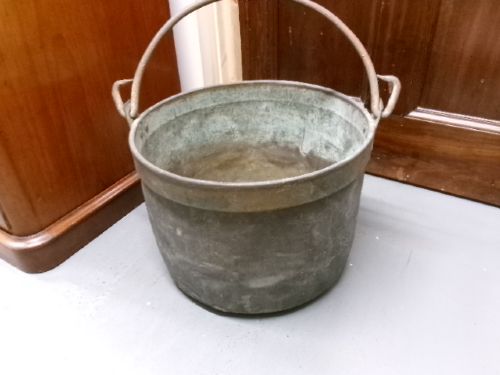


Copper Cooking Vessel
A copper cooking vessel brings warmth and honest utility into a home, offering sturdy metalwork shaped for old kitchens.
Copper Cooking Vessel
A copper cooking vessel encompasses heavy kitchenware from past centuries, principally formed for hearth and stove use. These pieces range from large cauldrons with swing handles to lidded pots and saucepans designed for serious culinary work. When searching for a copper cooking vessel, a buyer encounters robust items that reflect the practical demands of historic domestic spaces.
The versions most frequently met on this page date from the Georgian and Victorian eras, spanning the nineteenth century. They typically appear in rustic farmhouse or country styles, showing utilitarian forms meant for heavy daily employment. Many retain their original patina, marking decades of honest service in traditional kitchens.
How they were made
These vessels rely fundamentally on heavy gauge copper, shaped by hand or early mechanical methods to withstand intense hearth heat. Many examples incorporate riveted construction, joining the metal plates securely to handle the immense weight of liquid and food. Iron and brass appear frequently as complementary materials, forming sturdy swing handles and securing rims.
Makers reinforced these pieces with wrought iron fittings and brass attachments, ensuring durability over years of constant use. The exterior surfaces often display the honest marks of hand-beating and tool work, leaving a distinct tactile texture. Original patinas develop naturally across the metal over generations of exposure and handling.
Copper Cooking Vessel Retail Price Guide 2026
Typical asking prices for copper cooking vessel among the pieces listed under this phrase on Sellingantiques today, from the lower quarter to the upper quarter. They describe what is for sale here now, not the wider market.
What varies in quality
Quality in these items rests upon the thickness of the metal plate and the integrity of the original construction. Superior pieces show heavy, substantial gauge copper that resists denting and holds heat evenly across the base. Lesser examples may exhibit thin walls or excessive wear that compromises the structural form.
The presence of original components, such as heavy swing handles and secure lids, elevates an example considerably. Pieces retaining authentic patinas and uncompromised riveted seams demonstrate superior historic character compared to heavily restored or polished alternatives.
The Copper Cooking Vessel Glossary
- Cauldron
- A large deep pot with a rounded bottom and a swing handle, traditionally used for cooking over an open fire. These heavy metal vessels sat directly in the hearth ash or hung from crane hooks.
- Patina
- The surface sheen and colour acquired by metal through age, handling and exposure to the atmosphere. An original patina reveals the historic character and uncleaned state of an antique.
- Riveted
- Joined together by metal pins hammered flat at the ends to secure overlapping plates. This technique provides immense structural strength for heavy historic cookware.
- Swing handle
- A movable arched metal handle attached to the sides of a pot or cauldron via loops or ears. It allows the vessel to be lifted or suspended easily above a fire.
Copper Cooking Vessel: Frequently Asked Questions
What is a copper cooking vessel?
A copper cooking vessel is a historic piece of metal kitchenware, such as a pot, pan or cauldron, used for food preparation in past centuries.
These items combine heavy copper bodies with iron or brass fittings, designed for durability over open hearths and early stoves.
How were these vessels used originally?
They served as fundamental tools for boiling, stewing and general food preparation in Georgian and Victorian domestic kitchens.
Their heavy metal construction allowed them to sit directly near or over fire, distributing heat efficiently for large household meals.
How do I care for a copper cooking vessel?
Living with these pieces involves dusting them gently and keeping them in stable atmospheric conditions to preserve their metal surfaces.
Many owners choose to leave the historic patina untouched rather than polishing the copper to a bright shine.
How can I tell the age of a pot?
Age is determined by examining the construction techniques, such as hand-riveted seams, and the overall form associated with periods like the Georgian and Victorian eras.
Material choices, including wrought iron handles and the presence of an authentic dark patina, also point to nineteenth-century production.