
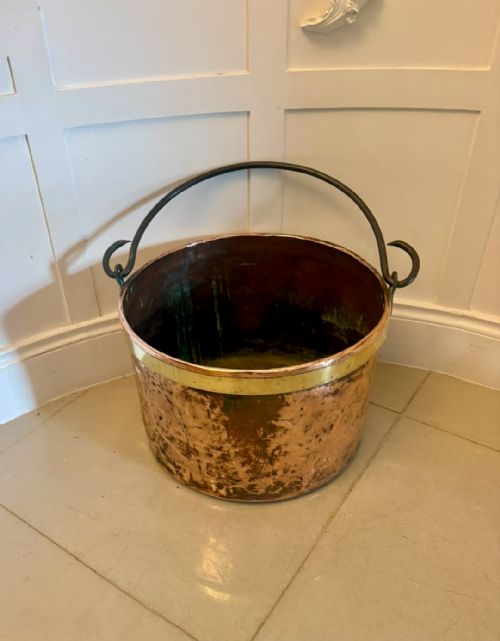


Copper and Brass Hearth Bin
A copper and brass hearth bin brings warmth and practical storage to a fireside, holding fuel near the hearth.
Copper and Brass Hearth Bin
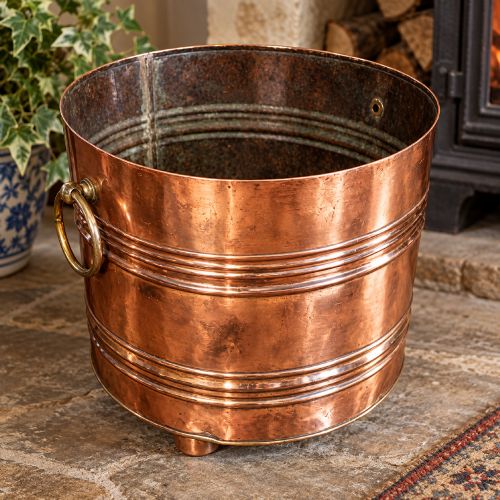
A copper and brass hearth bin serves as a functional container for holding coal, logs, and kindling beside a fireplace. These domestic vessels combine utility with decorative metalwork.
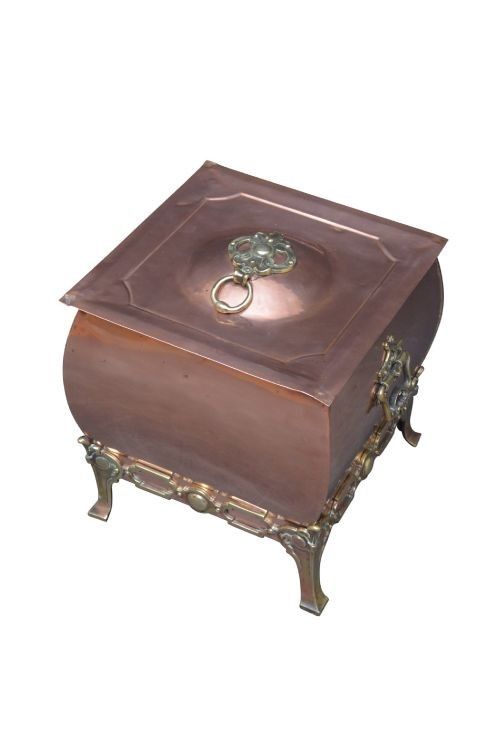
The pieces on this page mostly date from the Victorian and Georgian periods, appearing in forms such as coal scuttles, log buckets, and lidded bins. Makers shaped these items for daily household service.
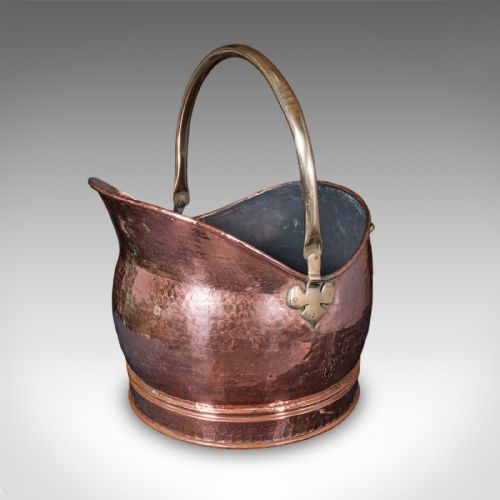
Victorian examples dominate the selection, often taking the shape of helmet scuttles or cylindrical bins. Earlier Georgian items also appear, demonstrating simpler geometric forms.
How they were made
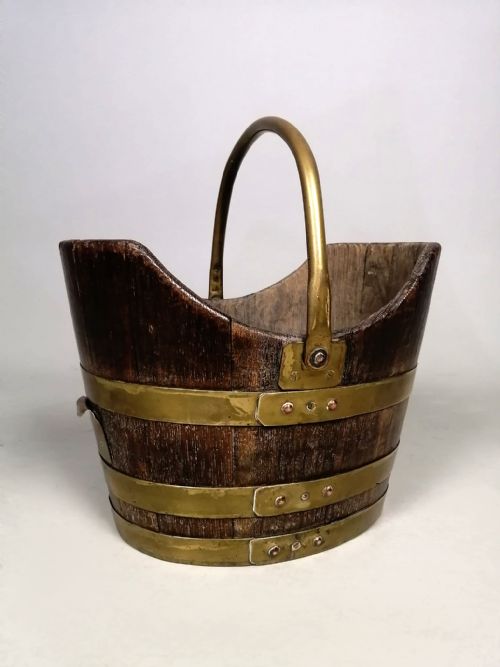
Metalworkers hammered and joined sheets of copper and brass, sometimes combining these materials with oak, iron, or wrought iron for structural strength. Rivets and soldered seams held the bodies together.
Handles and feet cast in brass were attached to the main copper bodies, adding functional grip and decorative weight. Wood featured principally in handles or specific internal construction.
Materials appearing across the inventory include copper, brass, oak, wrought iron, and tin.
What varies in quality
The standard of metalworking distinguishes the construction, particularly in the weight of the copper sheet and the solidity of the applied brass mounts. Substantial metal gauge ensures durability under heavy loads of fuel.
Design detail separates basic utility items from more decorative examples, seen in the shaping of the body and the finishing of handles. Hand-finished surfaces reflect greater attention from the original maker.
The Copper and Brass Hearth Bin Glossary
- Coal scuttle
- A container designed with a sloping mouth or hinged lid specifically for carrying and pouring coal onto a fire. These items usually feature a rear handle and a smaller grip underneath.
- Log bin
- A larger cylindrical or oval vessel used for storing logs beside a hearth. They often incorporate brass bands or side handles.
- Helmet scuttle
- A coal container named for its resemblance to a classical helmet, featuring a flared rim and a pivoted handle. This form gained popularity during the Victorian era.
- Coal hod
- A deep bucket or box used for holding coal, frequently constructed from metal or wood with metal reinforcement. They sit directly on the hearth.
- Planter
- A secondary use for many hearth bins, where watertight metal vessels hold indoor plants. These conversions repurpose old fireside equipment.
Copper and Brass Hearth Bin: Frequently Asked Questions
What is a copper and brass hearth bin?
A copper and brass hearth bin is a functional container designed to hold coal, logs, or kindling beside a fireplace. These vessels combine durable metal construction with decorative appeal for domestic interiors.
Most examples date from the Georgian and Victorian periods, reflecting the shifting interior styles of British homes. They served a purely practical purpose before finding a place as decorative antiques.
How were these bins used originally?
Households used these containers to store solid fuel close to the hearth for easy access during cold weather. Servants filled them from larger coal cellars or wood stores.
They were carried by handles to replenish open fires throughout the day. Their robust metal construction withstood the heavy wear of daily coal handling.
How do I clean a copper hearth bin?
Cleaning depends on the desired appearance, as many collectors prefer to leave an aged patina on the metal. Gentle dusting and mild soap remove surface dirt without stripping the historic finish.
Harsh abrasive polishes can remove the character built up over centuries of use. It is best to avoid aggressive chemical cleaners on antique copper and brass.
Can I use an antique bin for logs?
These bins remain practical for holding logs or kindling in a modern living room. Their original function translates well to contemporary fireside use.
Care should be taken with damp wood to prevent internal corrosion over time. Placing a protective liner inside can protect the historic metal base.
How do I date a copper bin?
Dating relies on stylistic clues, construction methods, and materials used in the piece. Georgian items often display simpler lines and heavy brass banding, while Victorian versions include helmet scuttles and stamped decoration.
Hand-hammered seams and specific handle attachments also provide clues to the era of manufacture. Comparing the form against known period examples helps narrow down the age.