



Coopered Oak Stick Stand
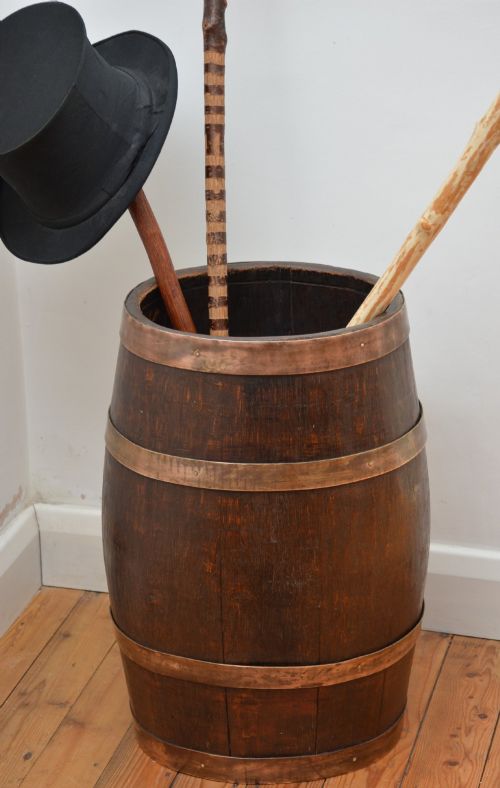
A coopered oak stick stand brings sturdy staves and metal bands into the hallway to hold walking items and umbrellas.
Coopered Oak Stick Stand
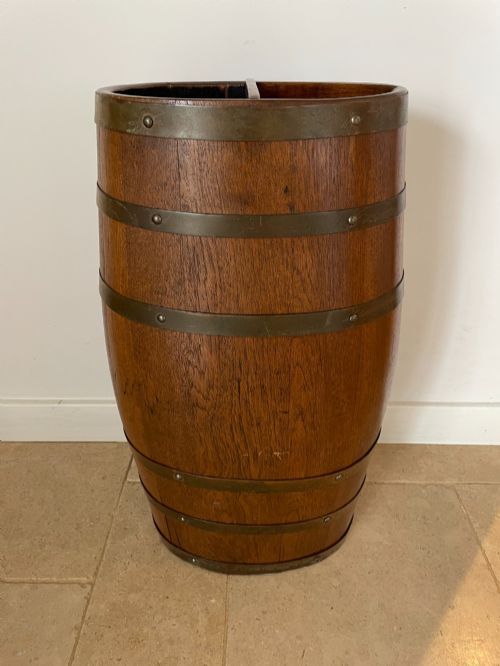
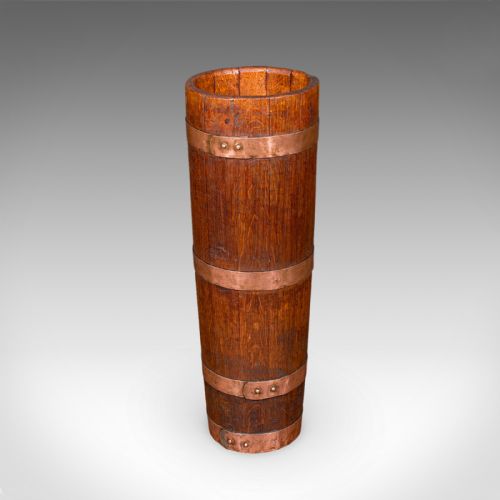
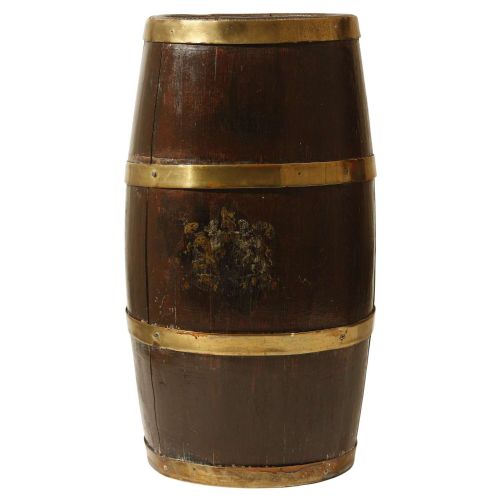
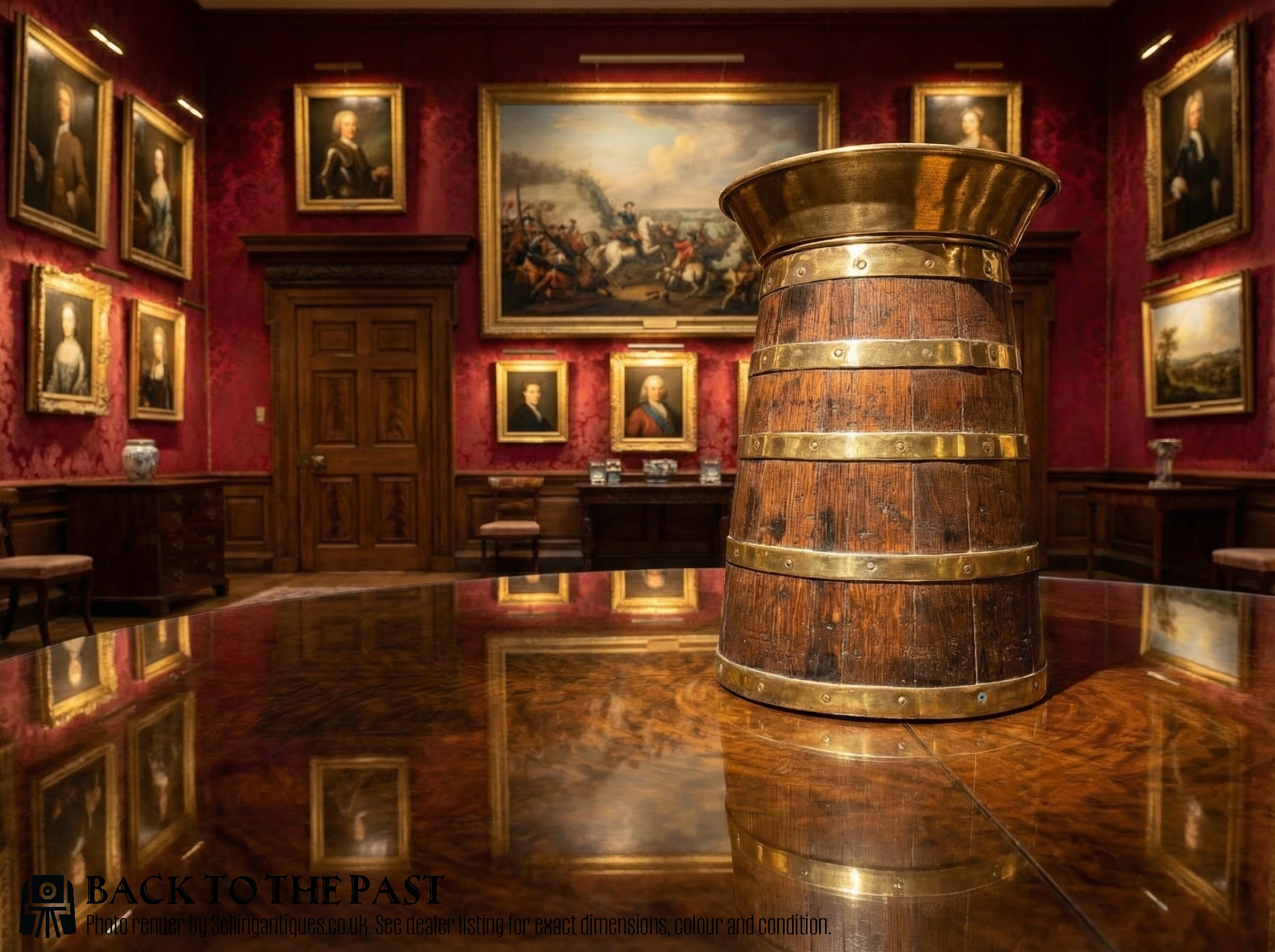
A coopered oak stick stand takes the form of a barrel, jug, or oval vessel designed to hold walking sticks and umbrellas in the hallway. These pieces appear most frequently from the Victorian and Edwardian periods, reflecting traditional English country house interiors.
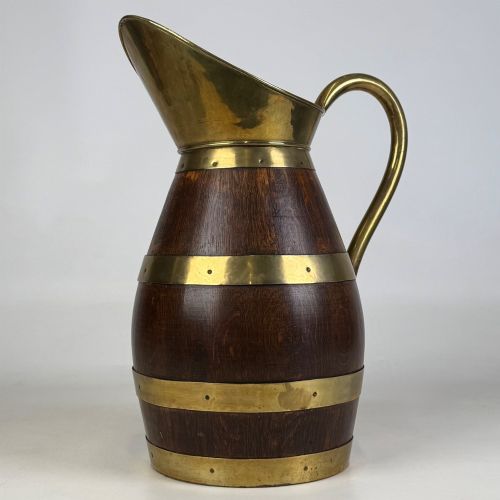
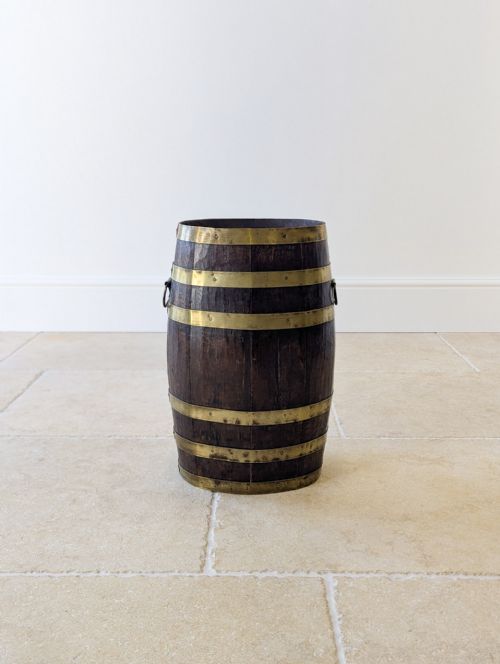
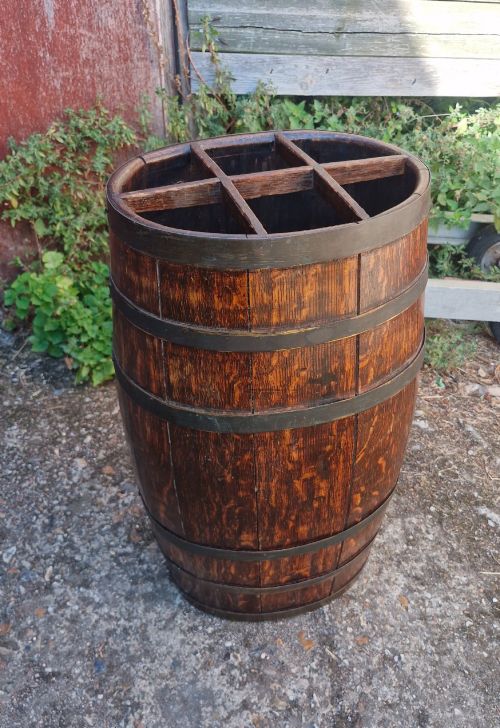
The objects include cylindrical barrels, oval shapes, and jug forms fitted with internal loops or racks for organisation. Examples often feature flat or semi-circular profiles to sit flush against an entrance hall wall.
Materials and Construction
Makers construct these stands using solid oak staves assembled via traditional barrel-making techniques, secured by tight joints and metal hoops. The metal components consist primarily of brass, copper, or iron bands that hold the wooden staves firmly in place.
Surfaces remain plain or display painted crests, while metal braces and handles provide additional structural support and detail. The combination of dense oak and substantial metalwork ensures stability for holding heavy walking items.
Object forms include barrels, jugs, and oval shapes designed for hallways and entryways.
Quality and Proportion
Quality rests on the precision of the cooperage and the weight of the metal bands securing the oak staves. Superior examples display tight, seamless joints and substantial brass or copper bracing that age gracefully.
Proportion and form separate standard barrels from refined oval and jug shapes designed for specific hallway spaces. The presence of original umbrella loops and distinct crests adds to the character of individual pieces.
R.A. Lister
The Coopered Oak Stick Stand Glossary
- Coopered
- Constructed from wooden staves fitted together side by side to form a curved vessel, secured by exterior bands. This technique derives from traditional barrel and cask making.
- Stave
- One of the narrow vertical strips of oak that form the curved sides of the stand. These pieces fit tightly together to create the cylindrical or oval body.
- Umbrella Loop
- An internal metal ring or divider attached to the top rim or interior to keep walking sticks and umbrellas upright. This feature prevents items from slipping sideways.
- Brass Bound
- Fitted with exterior metal bands made of brass that hold the wooden staves under tension. These bands often serve a decorative as well as a structural purpose.
- Country House
- A style associated with traditional English domestic interiors from the Victorian and Edwardian periods. Pieces from this context emphasise utility and robust construction.
Coopered Oak Stick Stand: Frequently Asked Questions
How do I clean a coopered oak stick stand?
Wipe the oak surfaces gently with a dry or barely damp cloth to remove dust without disturbing the grain or finish. Avoid soaking the wood or the metal bands to prevent moisture damage.
Polish the brass or copper bands occasionally with a suitable metal cleaner if you prefer a brighter finish, or leave them unpolished to retain their aged patina.
Where should I place a stick stand?
Position the stand in an entrance hall or porch where wet umbrellas and walking sticks are deposited upon entering the house. Oval and semi-circular shapes fit neatly against flat walls without obstructing walkways.
Ensure the interior base has adequate protection or ventilation if you place wet items inside regularly, as standing water can affect the oak staves over time.
What is the difference between a barrel and an oval stand?
Barrel stands follow a traditional cylindrical shape derived from cask-making, offering a compact footprint with deep storage for longer walking items. Oval and jug forms provide a wider profile that sits closer to the wall while accommodating multiple items.
Both forms utilise the same coopered construction methods, but oval versions often include specific metal umbrella loops at the top rim.
How can I tell a Victorian stand from an Edwardian one?
Victorian examples often display heavier brass or iron bands and darker, denser oak with simpler utility forms. Edwardian pieces can introduce lighter wood tones and refined jug or oval shapes associated with early twentieth-century country house interiors.
Construction details remain largely consistent across both periods due to the enduring nature of traditional cooperage techniques.