


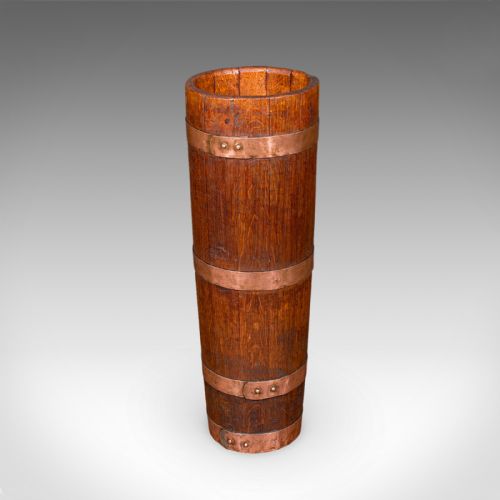
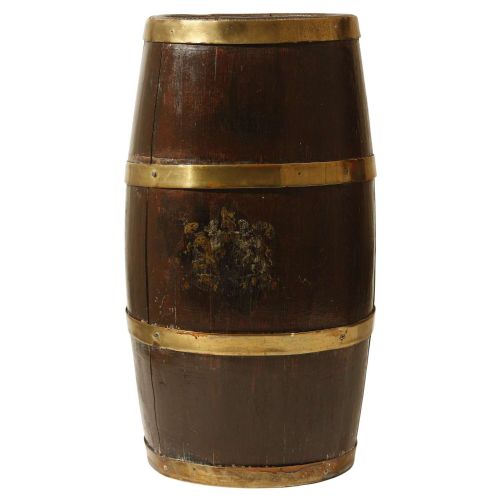


Coopered Oak Barrel Stand
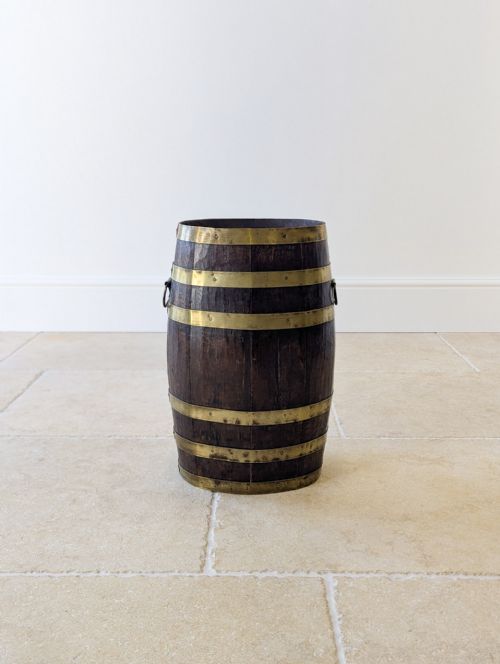
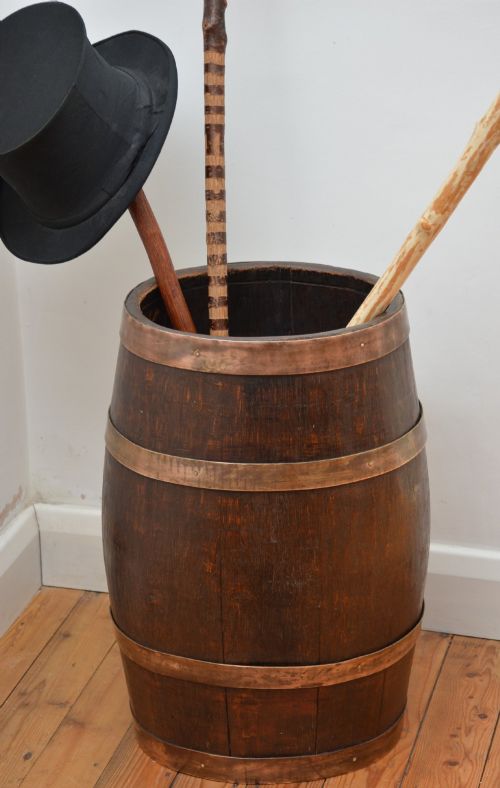
These coopered oak barrel stand pieces are sturdy hallway vessels designed to hold umbrellas and walking sticks, prized for their handsome timber and metal bands.
Coopered Oak Barrel Stand
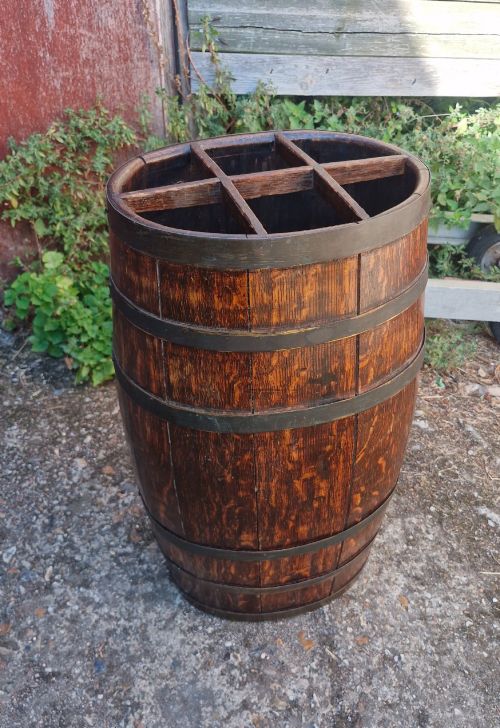
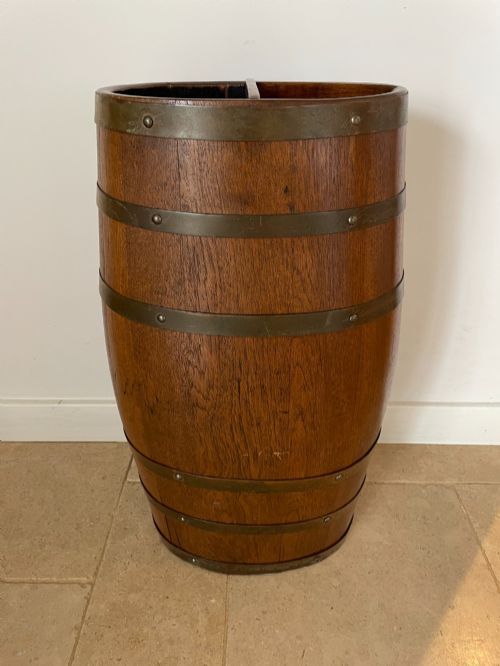
A coopered oak barrel stand serves primarily as an umbrella or stick stand for the hallway, utilising the traditional vessel form of staves and hoops. These practical items appear in various iterations, ranging from straightforward cylindrical oak casks to oval shapes fitted with metal umbrella loops.
Most examples date from the Victorian and Edwardian periods, reflecting the functional domestic requirements of nineteenth and early twentieth-century country houses. Alongside dedicated stick stands, the selection includes related vessels adapted for plants, such as jardiniere stands and planters.
The form relies on traditional stave construction where narrow lengths of oak are bound together by tight metal bands. Buyers encounter pieces spanning the mid-nineteenth century through to the interwar decades of the nineteen-thirties.
How they were made
The construction of a coopered oak barrel stand depends on the skill of the cooper, who shapes individual staves of oak to form a watertight or structurally sound vessel without adhesives. These wooden staves curve inward to create the characteristic barrel profile, held tightly in position by metal hoops.
Makers reinforced the oak bodies using metal bindings made from brass, copper, or iron. Brass bands and decorative coats of arms appear frequently on finer hallway pieces, contrasting warmly with the dark grain of the timber.
Some oak barrel stands proudly display an applied English coat of arms, adding a touch of heraldic ceremony to the dripping umbrellas.
What varies in quality
Quality in a coopered oak barrel stand lies in the weight of the timber and the precision of the stave joints. Superior examples feature thick, well-figured oak staves that maintain their structural integrity without excessive shrinkage over the decades.
The quality of the metalwork also distinguishes different tiers of manufacture. Heavy cast brass bands and securely fitted umbrella loops indicate a more substantial piece intended for a prominent hallway, compared to lighter iron or painted alternatives.
Lister and Co·R.A. Lister
The Coopered Oak Barrel Stand Glossary
- Coopered
- Constructed from wooden staves shaped and fitted together side by side, then secured with encircling bands. This traditional woodworking technique was essential for making barrels, buckets, and casks.
- Stave
- One of the narrow, shaped strips of oak that form the sides of a barrel or stand. Each piece is bevelled to fit tightly against its neighbours.
- Jardiniere
- An ornamental pot or stand for holding plants and flowers, often matching the barrel form of hallway umbrella stands in Edwardian interiors.
- Portico
- A term used to describe the grand entrance hallway setting where large umbrella stands and stick loops were historically positioned.
- Umbrella loop
- A metal divider or frame mounted above the barrel to keep walking sticks and umbrellas separated and upright.
Coopered Oak Barrel Stand: Frequently Asked Questions
How were coopered oak barrel stands used?
These vessels stood in entrance halls and porticos to hold wet umbrellas and walking sticks for residents and guests.
They kept hallways tidy by containing moisture and mud from walking gear within their sturdy wooden staves.
Are these stands waterproof?
While many use traditional barrel construction that held liquids originally, their primary purpose on this page is holding dry or wet sticks.
Some include metal linings or trays at the base to catch drips and protect the timber staves.
How do I date a Victorian stand?
Dating relies on stylistic markers, timber patination, and the specific type of metal used for the bands and loops.
Earlier nineteenth-century examples often feature heavy brass bindings and deep oak colouration, whereas later pieces show Edwardian or 1920s manufacturing traits.
Where should I place a barrel stand?
They suit entrance halls, boot rooms, and corridors where coats and walking gear accumulate.
Their upright oval or circular footprint fits neatly against hallway walls without taking up excessive floor space.