

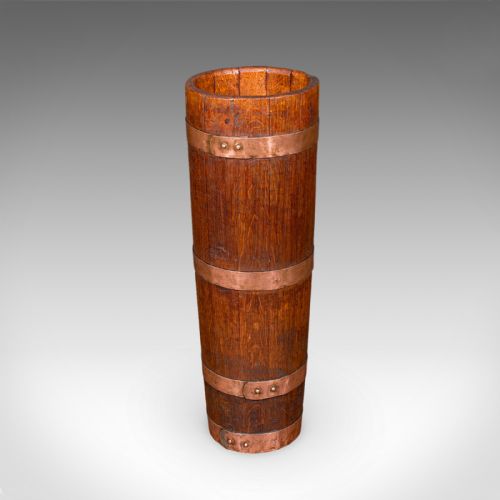
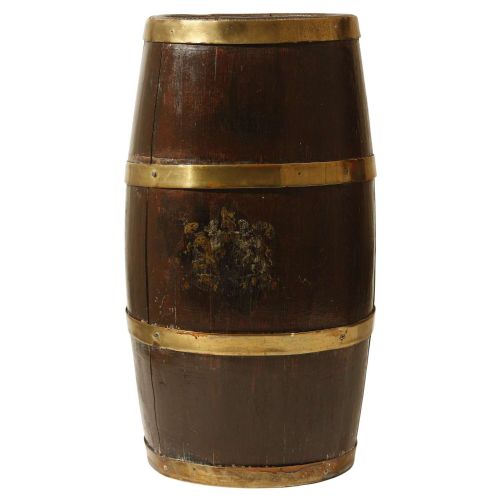


Coopered Wooden Stick Stand
A coopered wooden stick stand brings structural warmth and practical utility to a hallway, fashioned from timber staves bound with metal braces.
Coopered Wooden Stick Stand
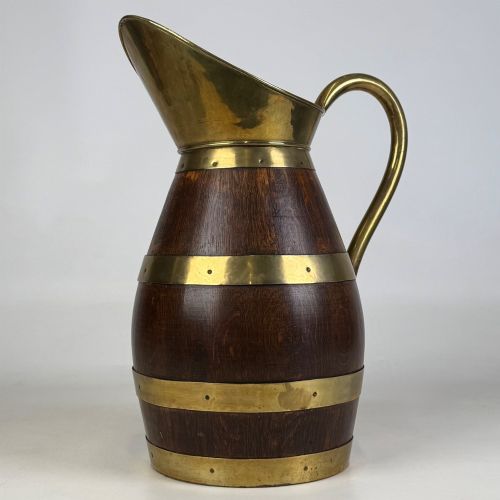
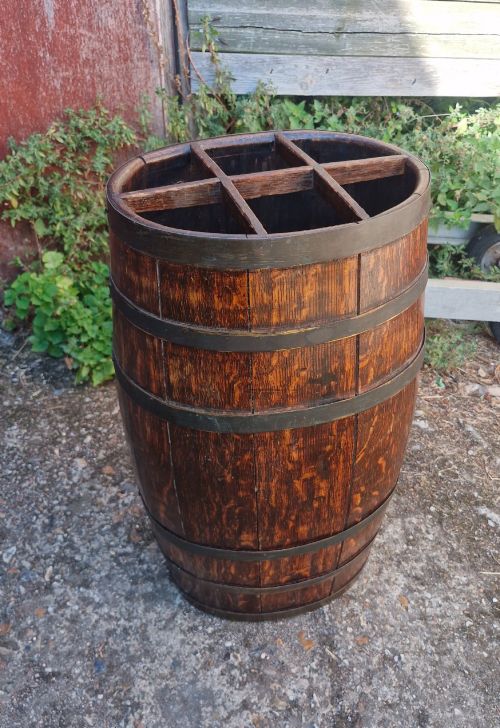
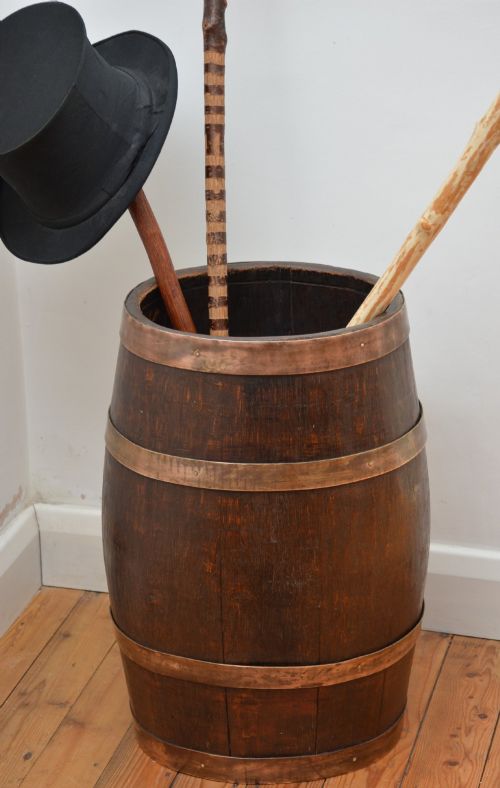
A coopered wooden stick stand takes the form of a barrel or jug, designed specifically to hold walking sticks and umbrellas in a hallway or entrance. These pieces draw upon traditional woodworking techniques used to contain liquids, translated here into domestic umbrella stands.
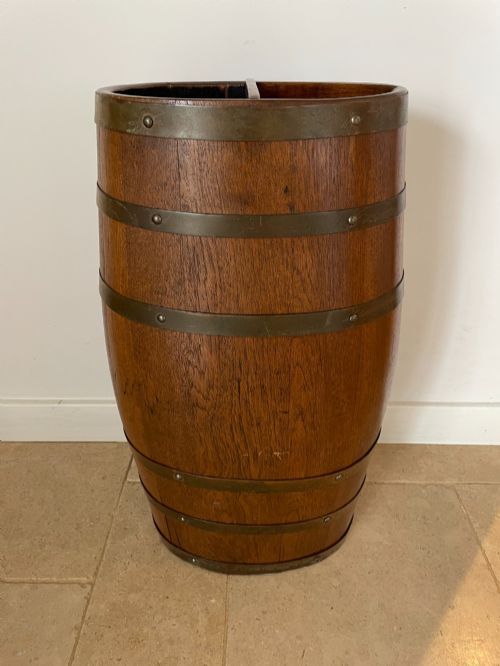
The versions most commonly met across this selection originate in the Victorian and Edwardian periods, stretching into the nineteen-thirties. English country house examples appear frequently, often constructed with distinctive oval or round footprints.
Makers shaped oak into vertical staves, held tightly together by metal hoops rather than standard joinery. This construction method links the everyday stick stand directly to traditional cask and barrel making.
How they were made
Construction relies upon shaped oak staves fitted closely together to form the curved body of a barrel or jug. These wooden sections are secured under tension by exterior metal bands.
Braces, hoops, and bindings formed from brass, copper, or iron reinforce the oak structure and provide a contrasting metallic finish. Some variants incorporate cast loops or designated umbrella rings fixed to the top edge.
Oak is the predominant timber across these listings, paired exclusively with brass, copper, or iron metalwork.
What varies in quality
Quality rests in the precision of the cooperage and the weight of the timber used for the staves. Thicker oak sections combined with heavy brass or copper bindings distinguish the more substantial country house pieces.
Refinement in the metalwork, such as engraved coats of arms or neatly jointed brass hoops, separates standard utility barrels from superior decorative examples.
R.A. Lister
The Coopered Wooden Stick Stand Glossary
- Coopered
- The method of forming vessels from curved wooden staves bound together with hoops. This technique traditionally produced casks and barrels before being adapted for umbrella stands.
- Staves
- The narrow strips of oak that form the sides of a barrel or stick stand. Each piece is bevelled to fit flush against its neighbours.
- Brass bound
- Refers to wooden vessels secured with brass hoops or bands. These metal rings hold the staves under constant structural tension.
- Umbrella loop
- A metal ring or divider fitted to the upper section of a stand to keep walking sticks and umbrellas separated. It prevents wet tips from pooling together.
Coopered Wooden Stick Stand: Frequently Asked Questions
What is a coopered wooden stick stand?
A coopered wooden stick stand is a cylindrical or oval vessel made from curved oak staves bound with metal hoops. They were designed to hold walking sticks and wet umbrellas in domestic entryways.
Craftsmen adapted traditional barrel-making techniques to create these hall furnishings, which date primarily from the Victorian and Edwardian eras.
How do I date a stick stand?
Dating relies on observing the timber, the style of the metal bindings, and any associated maker marks. Victorian and Edwardian examples often feature heavy brass braces and solid oak construction.
Earlier pieces typically display hand-finished staves and forged iron or copper bands, while nineteen-thirties versions reflect more simplified domestic designs.
Were these originally made as barrels?
Many stick stands share construction methods with small casks and brewing vessels, though some were manufactured specifically as umbrella holders from the outset. Formats range from traditional barrels to jug-shaped vessels with applied handles.
Coopered construction ensured the wood could handle damp umbrella tips without compromising the overall structural integrity of the vessel.
Where should I place a stick stand?
These stands suit entrance halls, boot rooms, and corridors where walking sticks and umbrellas gather. Their vertical profile occupies minimal floor space while offering substantial storage capacity.
Pairing the oak and brass tones with traditional hallway furniture highlights the original country house aesthetic.