


Coopered Barrel Umbrella Holder
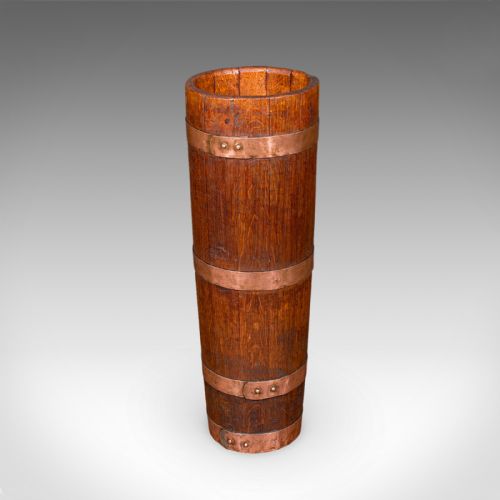
A coopered barrel umbrella holder is a robust hallway vessel built to hold walking sticks and wet umbrellas, prized for its honest craft and timber warmth.
Coopered Barrel Umbrella Holder
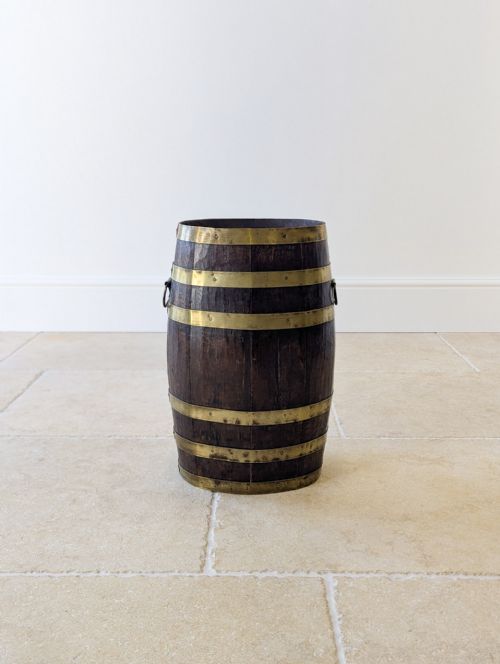
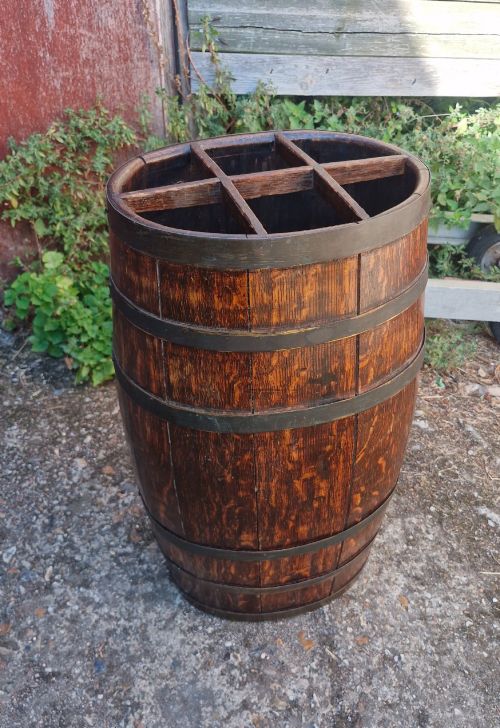
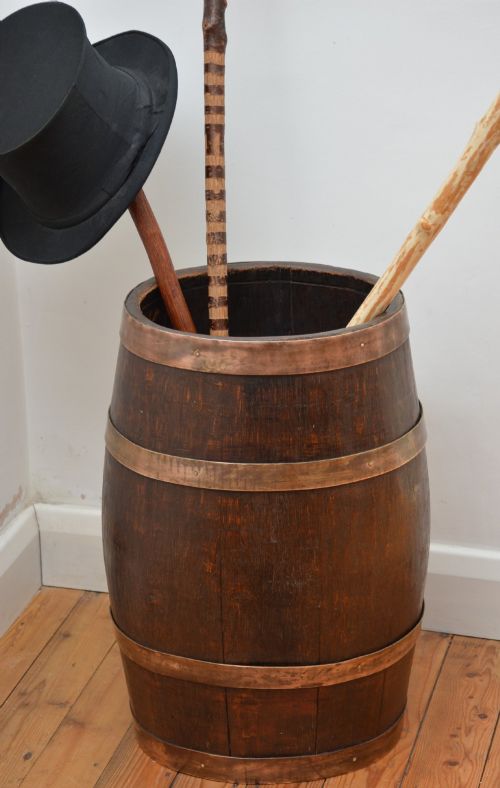
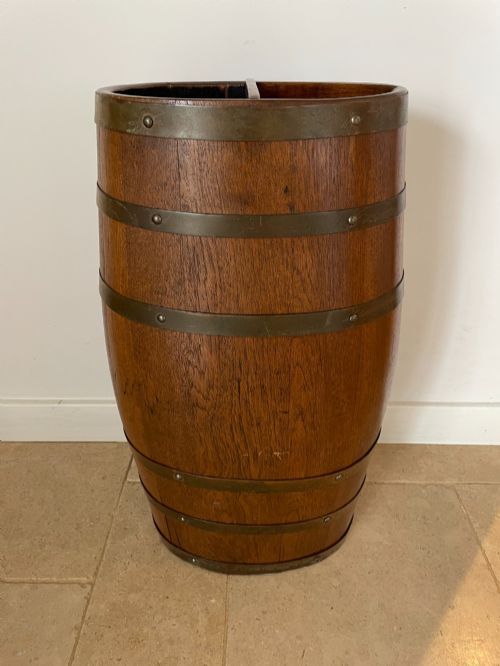
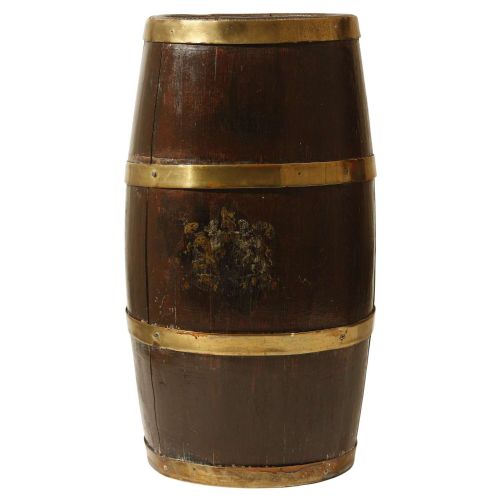
A coopered barrel umbrella holder takes the form of a small timber cask constructed from vertical staves bound with metal hoops. The examples appearing on this page span the Victorian and Edwardian eras through to the early twentieth century.
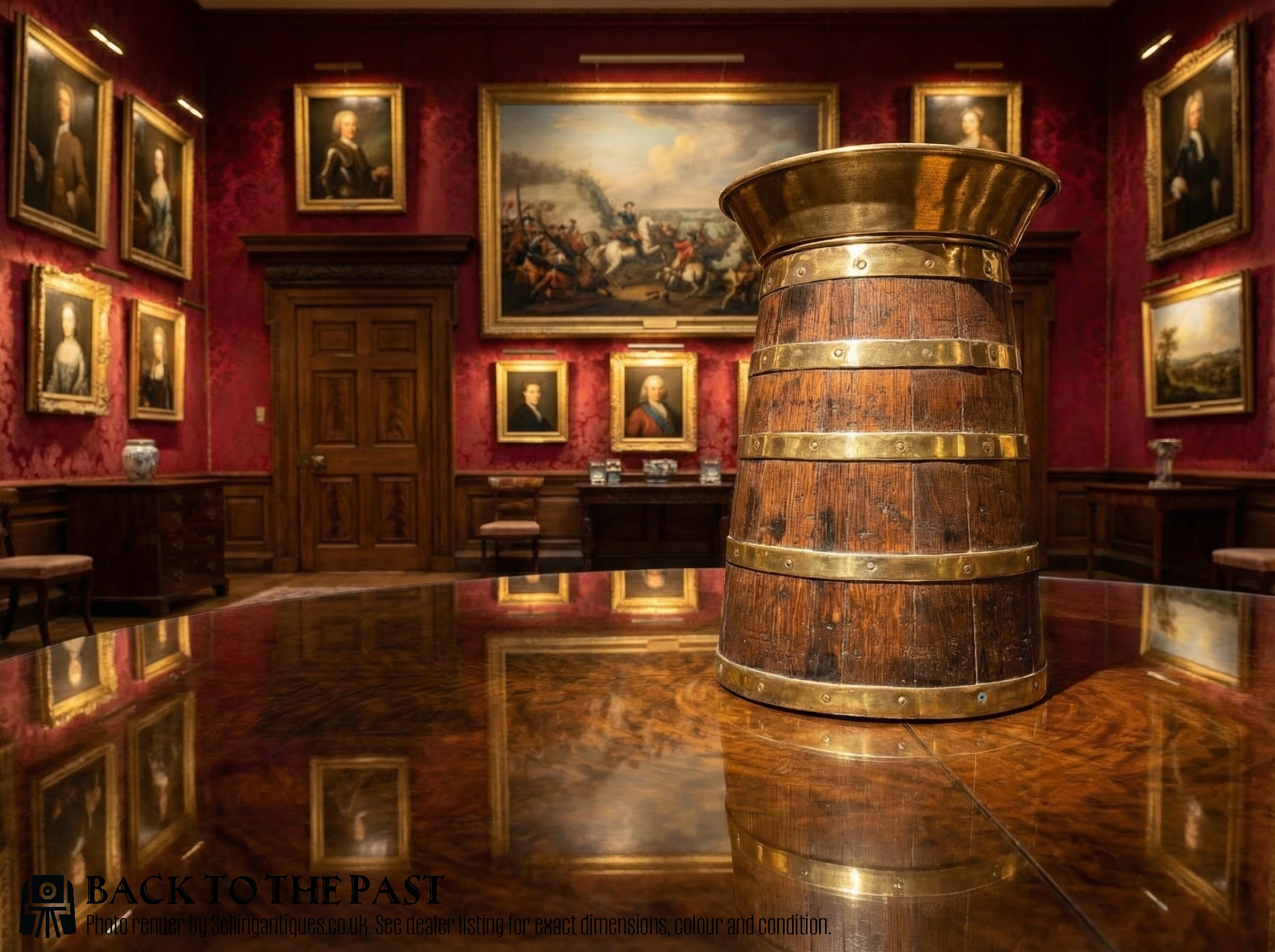
Most pieces seen here adopt a sturdy English country house aesthetic, frequently rendered in solid oak with brass or iron bands. Both round and oval formats recur across the selection, often accompanied by interior division loops for individual sticks.
The primary role of these vessels remains utilitarian, designed to stand in hallways and boot rooms to receive wet umbrellas and walking canes. Their survival reflects the enduring appeal of practical vernacular furniture in modern interiors.
Materials and construction methods
Makers built these pieces using traditional coopering techniques, shaping individual timber staves with bevelled edges so they fit tightly together to form a self-supporting cylinder or oval. Solid oak serves as the predominant wood across the recorded inventory.
Metal bands in brass, copper, or iron are driven onto the wooden staves to secure them permanently under tension. Some variants feature applied coats of arms or decorative metal loops to hold individual sticks upright.
Listings span the nineteenth and early twentieth centuries, featuring oak bound with brass, copper, and iron.
Distinctions in quality and execution
Quality reveals itself in the precision of the stave joints and the weight of the metal bindings used to secure the timber. Finer iterations display carefully fitted joints and substantial brass work rather than thin iron straps.
The selection of the oak grain and the presence of original maker details or armorial plaques distinguish more ambitious workshop output from standard utilitarian wares.
R.A. Lister
The Coopered Barrel Umbrella Holder Glossary
- Coopered
- Constructed from curved wooden staves joined vertically to form a hollow vessel. This method originates from traditional barrel-making.
- Stave
- One of the narrow vertical strips of wood that form the sides of a barrel or holder. These pieces are tapered to ensure a tight fit.
- Stick stand
- A piece of furniture designed to hold walking sticks, canes, and umbrellas. These items are typically placed in hallways.
- Victorian
- Pertaining to the reign of Queen Victoria, spanning the nineteenth century. Pieces from this period often display robust proportions and dark oak finishes.
- Edwardian
- Dating from the reign of King Edward VII in the early twentieth century. Items from this era frequently maintain traditional forms with slightly lighter construction.
Coopered Barrel Umbrella Holder: Frequently Asked Questions
How do I clean a coopered oak holder?
Dust the timber regularly with a dry cloth and nourish the oak occasionally with traditional beeswax. Avoid using modern liquid polishes that can build up on the grain.
Keep the interior dry where possible to prevent moisture damage to the base staves, ensuring the metal bands remain free from prolonged dampness.
Can these hold wet umbrellas safely?
These holders were originally designed to receive wet umbrellas and walking sticks in hallways. The solid oak and metal construction handles daily domestic use reliably.
Place a small protective tray inside the base if you wish to shield the historic timber from standing water.
How do I date a barrel stand?
Examine the construction details, including the type of metal used for the bands and the colour of the oak patina. Nineteenth-century examples often feature heavier brass bindings and deeper timber tones.
Compare the style with documented pieces from the Victorian and Edwardian periods recorded in the listings.
Where should I place an umbrella holder?
Position the piece in an entrance hall, porch, or boot room where guests arrive and depart. Its vertical profile occupies minimal floor space while offering functional storage.
Ensure the location avoids direct, intense sunlight to protect the historic oak finish from fading.