



Coopered Barrel Stick Stand
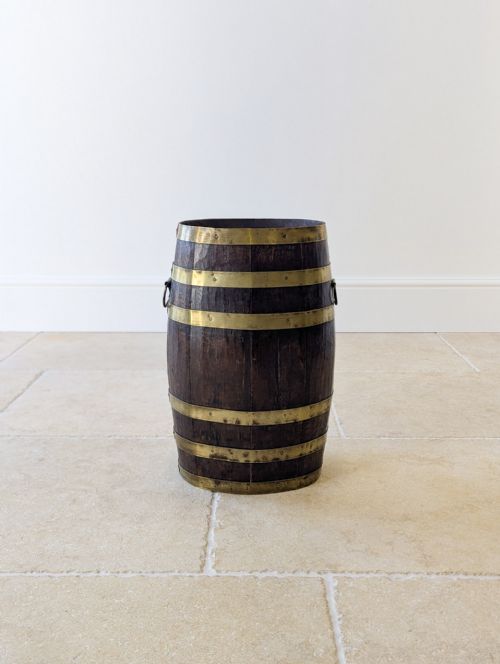
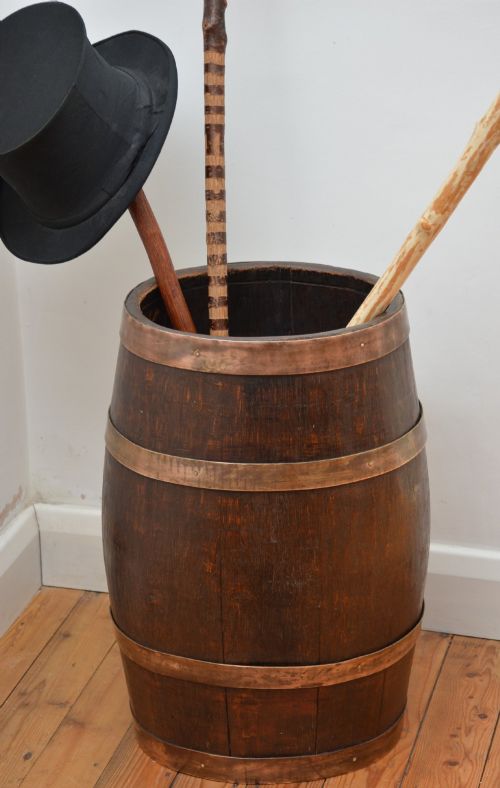
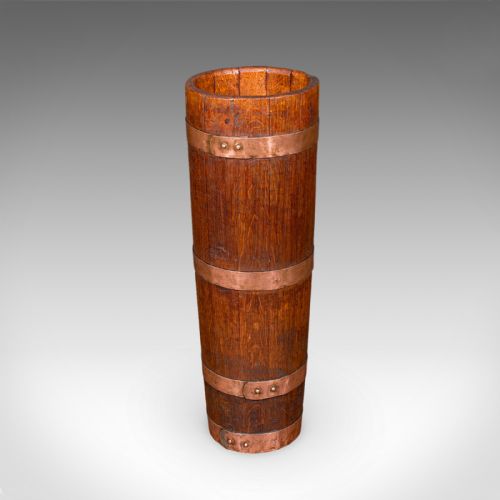
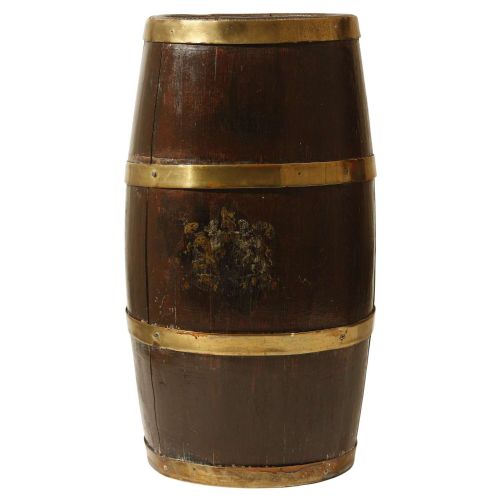
These coopered barrel stick stands are sturdy hallway vessels built from oak staves and secured with brass or metal bands to hold walking sticks and umbrellas.
Coopered Barrel Stick Stand
A coopered barrel stick stand is a cylindrical or oval vessel designed for the hallway to keep walking sticks and umbrellas contained. When searching for a coopered barrel stick stand, buyers encounter pieces primarily originating from the Victorian and Edwardian periods, alongside examples from the early twentieth century.
Most entries belong to the English country house tradition, taking the form of truncated barrels or modified casks. These items serve a practical domestic purpose while bringing warm timber tones and metal strapping into entrance halls.
Materials and construction
Construction relies on traditional coopering techniques, where narrow lengths of oak known as staves are fitted side by side to form a watertight or structurally sound circular or oval body. These wooden staves are held tightly in place by horizontal tension using metal bands, most commonly fashioned from brass or copper, and occasionally iron.
Makers shaped the timber to curve gently outward before securing the structure with metal hoops. The natural grain of the oak provides a textured surface that contrasts sharply with the polished or patinated metallic braces.
Factors that distinguish quality
Quality in these vessels rests upon the precision of the stave joints and the weight of the metal bands. Superior examples display tight, seamless joins between the oak staves and feature heavy brass braces that have aged with a rich, undisturbed patina.
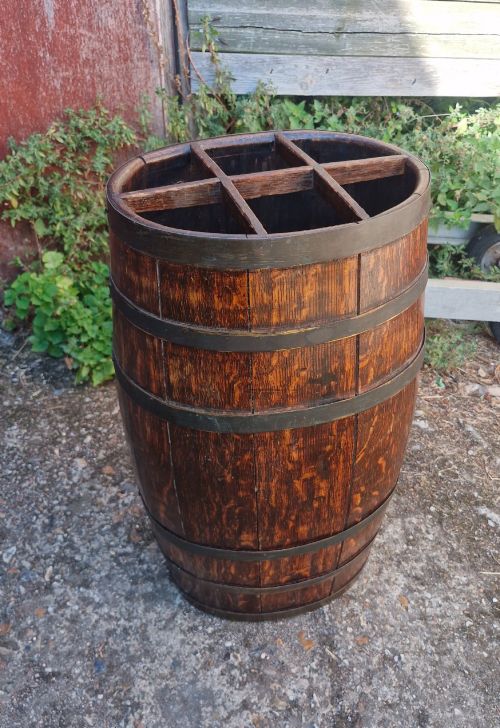
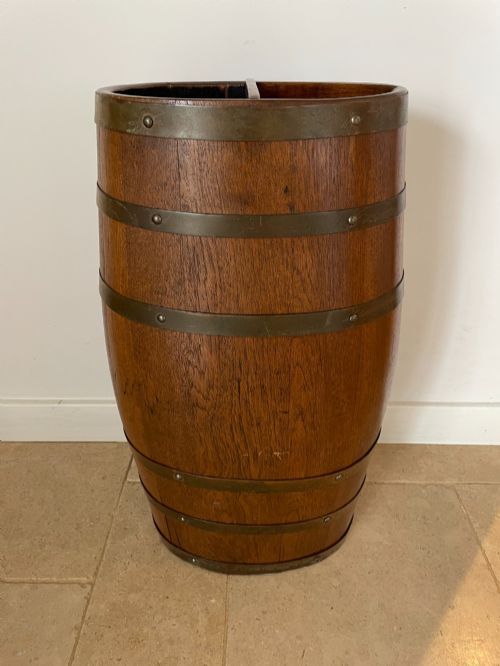
The refinement of the silhouette also marks out finer specimens, particularly those shaped into precise ovals rather than basic round tubs. Additionally, the inclusion of internal metal stick loops or applied decorative elements such as coats of arms elevates the standing of an individual piece.
R.A. Lister
The Coopered Barrel Stick Stand Glossary
- Coopered
- Built by a craftsman using curved wooden staves bound together with hoops. This traditional technique is identical to the method used for making casks and barrels.
- Stave
- One of the narrow vertical strips of oak that form the sides of the barrel. Each piece is tapered and bevelled to fit flush against its neighbours.
- Brass bound
- Fitted with external metal bands made of brass to hold the wooden staves under tension. This metalwork often provides a decorative contrast to the dark oak timber.
- Umbrella loop
- An internal metal ring or divider fitted to the top of the stand to separate individual sticks and umbrellas. It prevents items from tangling together inside the vessel.
Coopered Barrel Stick Stand: Frequently Asked Questions
What is a coopered barrel stick stand?
A coopered barrel stick stand is a traditional hallway container made from curved wooden staves held together by metal bands. It functions as a utilitarian yet decorative holder for walking sticks and umbrellas.
These items draw on the craft of barrel making, adapting container forms for domestic entrance halls. They appear predominantly in oak with brass or copper strapping.
How do I care for an oak stick stand?
Oak stick stands require minimal maintenance beyond dusting the timber and keeping the interior free from standing moisture. Placing a suitable liner inside helps protect the base from damp umbrella tips.
Applying a traditional wax polish occasionally will nourish the oak and preserve its finish. Avoid placing the vessel directly next to strong heat sources to prevent the wood from drying out.
How are Victorian and Edwardian stands different?
Victorian examples often display heavier brass banding and darker, highly patinated oak associated with country house interiors. They tend to emphasise robust proportions and traditional cask forms.
Edwardian pieces can show slightly lighter construction methods and occasionally bear maker attribution stamps from workshops such as R.A. Lister. Both periods utilise identical coopered techniques but reflect the subtle shifts in domestic interior taste.
Where should I place a stick stand?
These vessels suit placement in entrance halls, boot rooms, or porches where outdoor walking equipment is gathered. Their vertical profile allows them to sit neatly against a wall without obstructing passageways.
The combination of oak and polished brass adds a grounded, traditional accent to entryways. They work well alongside other hallway furniture such as coat racks and console tables.