



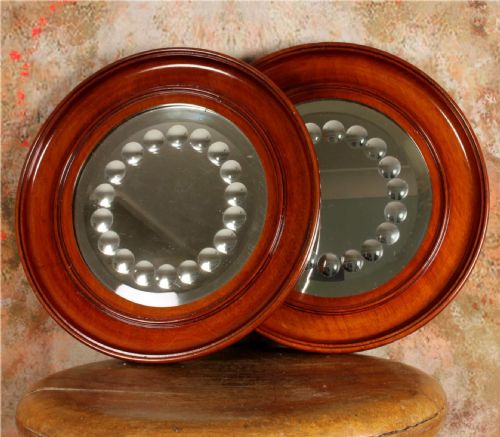

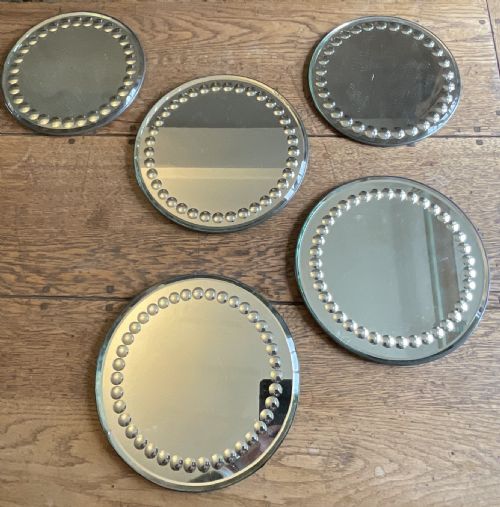


Convex Glass Wall Mirror
A convex glass wall mirror gathers the room into a single curved sphere, distorting perspective and brightening darker corners with dramatic flair.
Convex Glass Wall Mirror
A convex glass wall mirror delivers a distinctive circular reflection that curves the perspective of an interior space. These pieces span from the Regency period through to the Victorian era and the twentieth century, appearing in round frames and wheel barometer cases.
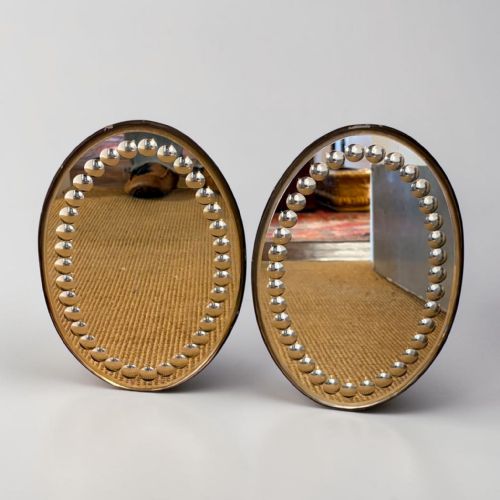
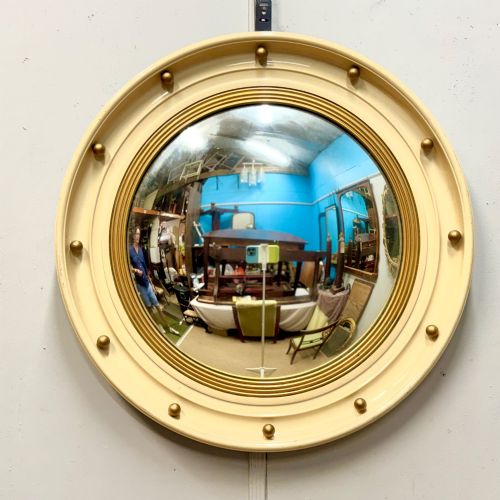
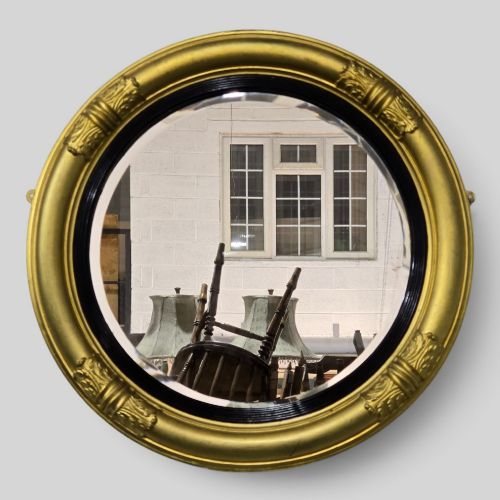
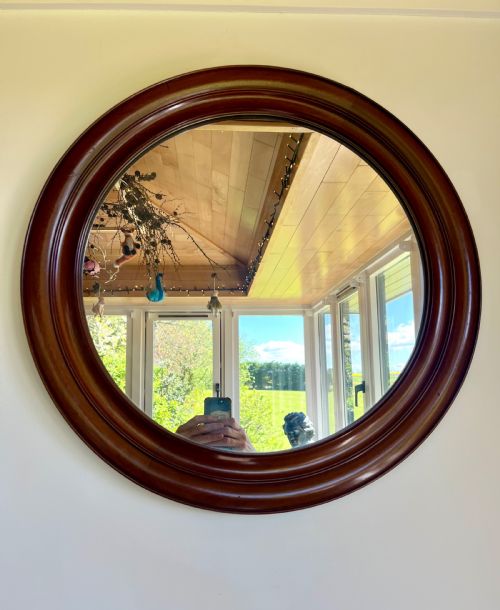
The version most commonly encountered on this page is the circular giltwood frame, often associated with the Regency style or described as a butler or sorcerer mirror. Examples also emerge in mahogany and ebonised wood, alongside occasional French and Art Deco variants.
How they were made
Makers constructed these frames predominantly from wood, applying gold leaf or paint over giltwood and ebonised surfaces. Glass plates were formed with a distinct outward curve to capture the wide-angle reflection characteristic of the type.
Combinations of wood and glass form the core structure, with some nineteenth-century pieces incorporating velvet backings and metal mounts. Barometer variants integrate precision brass mechanisms directly into mahogany timber housings.
Hang your mirror low enough to catch the cat plotting mischief across the room in glorious miniature.
What varies in quality
The fineness of the carved giltwood frame and the depth of the original gilding set apart the superior examples. Crisp detailing on the moulding and the retention of intact gold leaf distinguish better workshops from later revivals.
The clarity and condition of the convex mirror plate itself dictate the visual impact of the piece. Older glass showing gentle foxing holds greater character than modern replacements, provided the silvering remains stable within the frame.
The Convex Glass Wall Mirror Glossary
- Convex glass
- Glass formed with an outward curve that reflects a wide-angle, miniaturised view of the room. This curved surface is the defining feature of the entire category.
- Giltwood
- Timber coated with gold leaf or a gold-coloured finish. This material dominates the frames seen in Regency and Victorian examples.
- Sorcerer's mirror
- Alternative term for a convex mirror, also known as a witch's mirror. The name derives from the magical, distorted perspective created by the curved glass.
- Wheel barometer
- A domestic weather instrument housed in a circular or banjo-shaped wooden case. Certain Victorian examples pair this function with a convex mirror dial.
- Butler's mirror
- A round convex wall mirror traditionally positioned to allow servants to observe the dining table. They frequently feature simple round frames with gilt or painted finishes.
Convex Glass Wall Mirror: Frequently Asked Questions
What is a convex glass wall mirror?
A convex glass wall mirror is a circular looking glass featuring an outward-curving plate that reflects a panoramic view of an interior. These pieces range from Regency giltwood frames to Victorian sorcerer mirrors and mid-century circus variants.
They function primarily as decorative focal points that pull light into a room. The curved glass creates an unusual optical depth, making small spaces feel larger.
Where should I hang a convex mirror?
These mirrors suit principal reception rooms, hallways, and dining spaces where their wide-angle reflection can be fully appreciated. Hanging them at eye level ensures the curved perspective captures the best angles of the surrounding furniture and lighting.
Because they concentrate natural light, placing them opposite a window or near a light source maximises their brightness. Avoid damp locations to protect the giltwood frames and original silvered glass.
How do I date a convex mirror?
Dating relies on examining the construction of the wooden frame, the composition of the gesso, and the characteristics of the mirror plate. Regency examples often display intricate carved giltwood, while Victorian pieces introduce velvet surrounds and varied timber cases.
Backboards, fixings, and the method used to silver the glass provide further clues to the period of manufacture. Archival listings show pieces spanning the early nineteenth century through to the twentieth century.
What is a sorcerer's mirror?
A sorcerer's mirror is a historical term for a convex wall mirror, sometimes also referred to as a witch's mirror. The name stems from folklore linking the distorted, globe-like reflection to scrying and divination.
In practical interior terms, these pieces share the exact construction methods of standard butler mirrors. Their dark or gilt frames and curved glass provide an intriguing decorative accent.
Are barometer mirrors accurate?
Victorian wheel barometers housing convex glass combined atmospheric pressure measurement with decorative reflection. Their internal mechanisms utilised mercury or aneroid systems to track weather changes.
While many survive primarily as decorative wall objects, some historic movements retain functional capability. Expert calibration is recommended if you intend to rely on the barometer readings.