





Convex Bullseye Mirror
A convex bullseye mirror distorts the room into a single curved sphere of light, bringing historic depth and focus to an interior wall.
Convex Bullseye Mirror
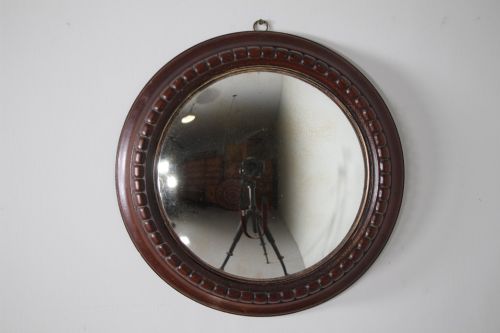
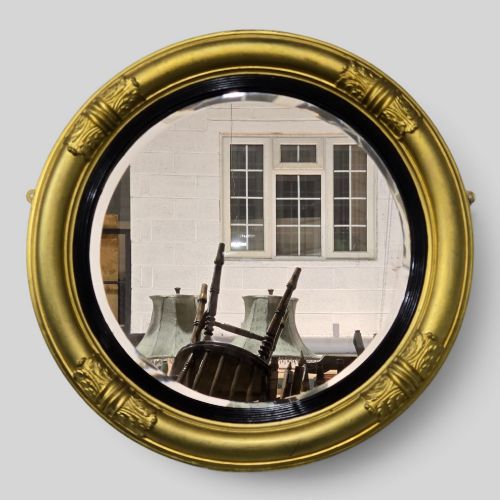
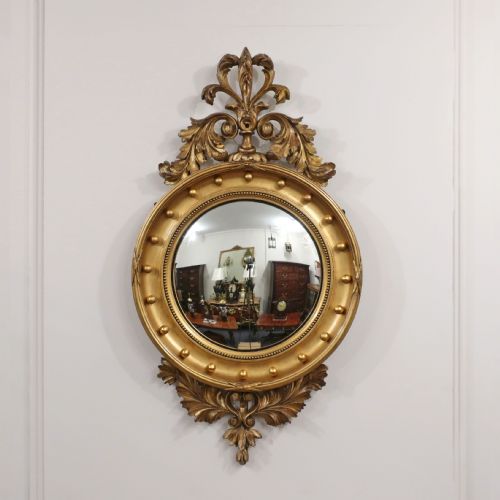
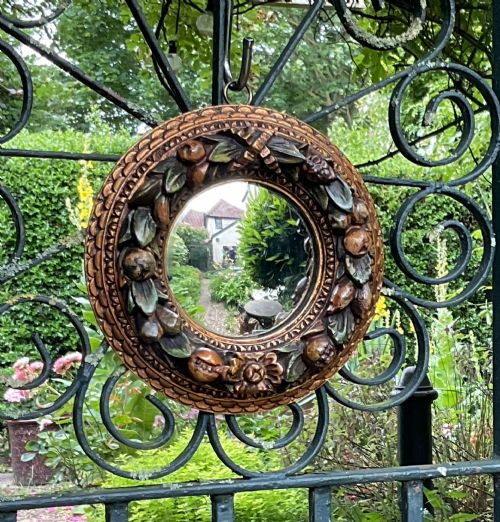
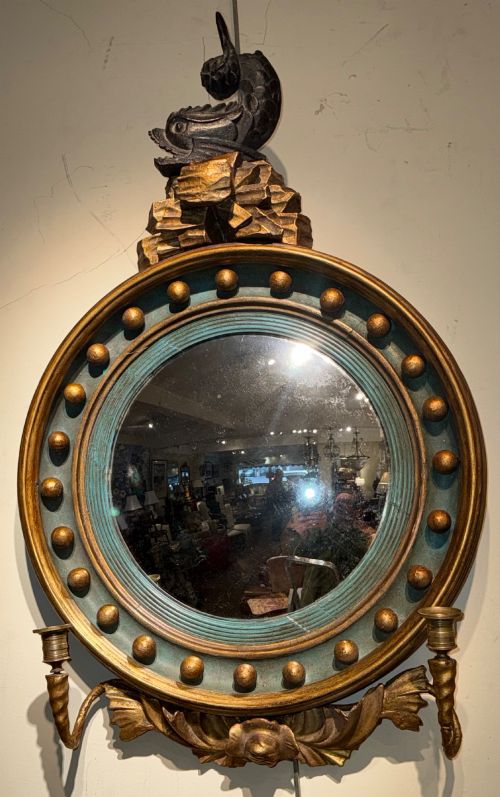
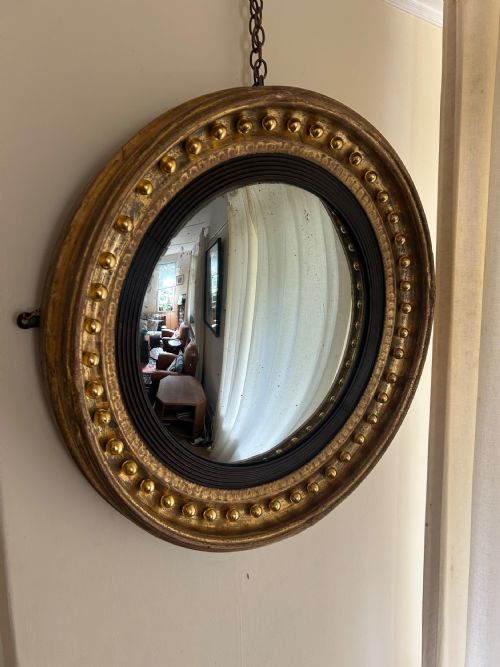
A convex bullseye mirror sits within circular frames of varying scale, most often encountered in Regency giltwood designs featuring prominent moulded surrounds. These wall mirrors draw the eye with their distinct curved glass plates that capture entire room perspectives within a compact circular format.
The material palette spans from carved and gilded wood to ebonised accents, brass, and mahogany frames. While Regency examples dominate the selection, Victorian, Georgian, and later twentieth-century iterations also appear across the listings.
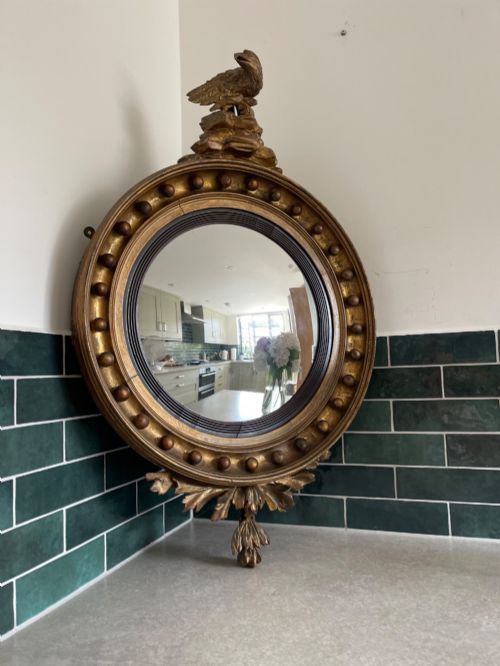
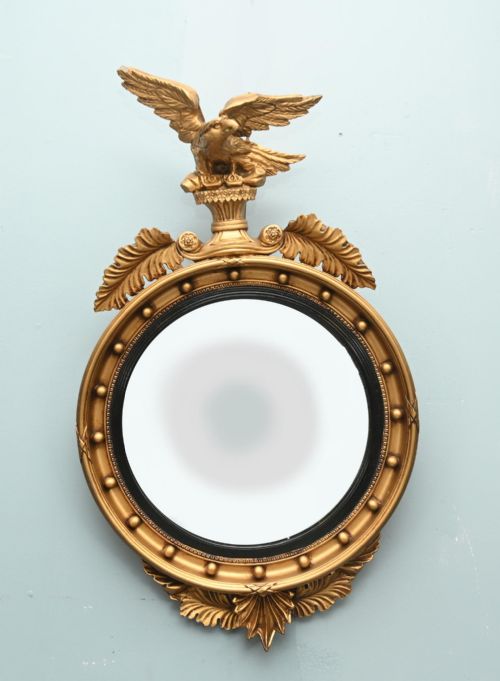
Many of the period pieces incorporate decorative crests, notably eagle mounts perched atop the frame, alongside simpler circular mouldings suited to smaller hall spaces.
How they were made
Makers shaped the distinctive curved glass plates using specialised glassblowing techniques before silvering the interior surface to create the characteristic fish-eye reflection. Frames combined timber cores with applied gesso layers, which carvers then worked into crisp decorative details before applying gold leaf or ebonising.
Joinery for circular timber frames required precise segment construction to ensure stability across the circumference. Giltwood surfaces received multiple preparatory coats of gesso and bole, providing a smooth foundation for the burnished gold leaf finish.
Convex Bullseye Mirror Retail Price Guide 2026
Typical asking prices for convex bullseye mirror among the pieces listed under this phrase on Sellingantiques today, from the lower quarter to the upper quarter. They describe what is for sale here now, not the wider market.
Historic eagles perched atop these frames keep a watchful glass eye on centuries of passing rooms.
What varies in quality
The crispness of the carved ornamentation on the frame distinguishes finer examples, particularly where acanthus leaves, reeded bezels, and eagle surmounts retain sharp definition through the gesso. Superior pieces show careful proportion between the heavy bullseye glass plate and the surrounding frame moulding.
The quality of the gilding and the depth of the original mirror glass contribute significantly to the visual weight of the piece. Untouched surfaces with rich patination on the giltwood carry greater historical integrity than heavily restored examples.
The Convex Bullseye Mirror Glossary
- Convex mirror
- A round mirror with an outward-curving glass surface that reflects a wide, distortion-rich view of the surrounding room. These pieces were historically placed to monitor activity in large spaces.
- Giltwood
- Timber coated with fine layers of gesso and gold leaf. This technique provides the bright reflective surface characteristic of classical wall mirrors.
- Gesso
- A plaster-like mixture applied to wooden frame bases to create a smooth surface for carving and gilding. It allows artisans to shape intricate relief details.
- Ebonised
- Wood finished to resemble ebony through dark staining or painting. This treatment creates a strong contrast against gilded interior details.
- Surmount
- An ornamental feature placed at the very top of a mirror frame, such as a carved eagle. It adds height and formal presence to the composition.
Convex Bullseye Mirror: Frequently Asked Questions
Where should I hang a convex mirror?
These mirrors function best on primary walls in reception rooms, hallways, or above mantelpieces where their wide-angle reflection can capture the entire space. Their circular form creates a strong visual focal point that balances rectangular furniture arrangements.
Because the curved glass gathers light from every angle, positioning the piece opposite a window or light source brightens darker corners of a room effectively.
How do I identify a Regency period mirror?
Regency examples often feature robust giltwood frames with reeded ebonised inner bezels, ball-turned ornamentation, and carved eagle crests. The construction typically utilises traditional timber joinery methods appropriate to the early nineteenth century.
Examining the backboards, fixings, and the character of the mercury silvering behind the glass helps confirm the period authenticity of the piece.
What is the difference between Georgian and Regency styles?
Georgian mirrors tend to show restrained classical proportions with simpler carved wooden or gilded surrounds. They predate the more exuberant decorative motifs introduced during the Regency era.
Regency pieces frequently incorporate bolder architectural elements, including heavier moulded frames and prominent animal crests like eagles.
How do I care for giltwood frames?
Giltwood surfaces require gentle dusting with a dry, soft brush to avoid disturbing the delicate gold leaf and gesso layers. Moisture and chemical cleaning agents must be kept away from the frame entirely to prevent lifting.
Stable indoor humidity protects both the wooden core and the gesso preparation from cracking over time.