




Converted Bronze Vase Lamps
Converted bronze vase lamps bring substantial historical weight and varied global craftsmanship into modern interiors.
Converted Bronze Vase Lamps
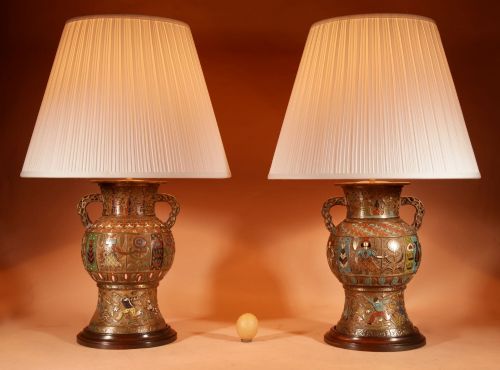
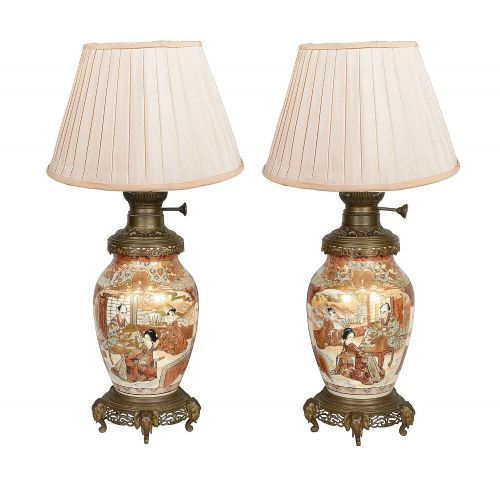
These pieces are decorative vessels originally created in East Asia and Europe that have subsequently been adapted to function as table lamps. Converted bronze vase lamps draw heavily on nineteenth century oriental, Japanese Meiji period, and Chinese export traditions alongside eighteenth century French aesthetics.
Buyers will most frequently encounter nineteenth century examples fashioned from bronze, porcelain, and cloisonné, often standing as paired sets. The underlying bodies utilise forms such as Satsuma, celadon, and champlevé enamel to anchor the electrical fittings added later.
The aesthetic bridges distant decorative arts with domestic utility, transforming antique cabinet pieces into functional room lighting. Such objects carry the visual language of Qing dynasty vessels, Arita Imari ceramics, and Sevres porcelain into everyday spaces.
Materials and construction methods
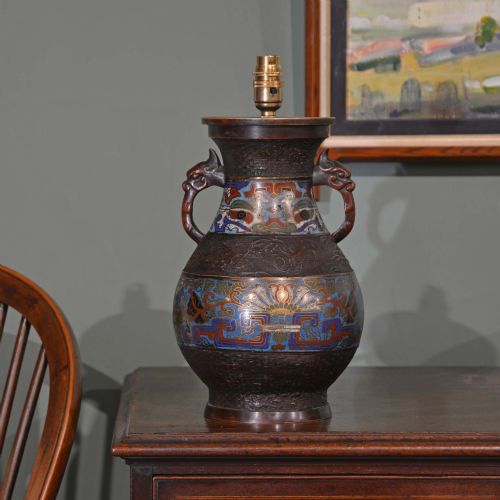
The primary bodies rely on cast bronze, ormolu mounts, and various ceramic forms including porcelain and enamel. Artisans employed detailed champlevé and cloisonné techniques to pattern the metal surfaces with coloured glass pastes before firing.
Vessels originating from Japanese Meiji workshops and Chinese kilns were later paired with wiring and fabric or silk shades during the conversion process. Ormolu mounts in French pieces provide gilded brass accents that secure the structural adaptation for modern electrical wiring.
Some vases spent a century holding dried flowers in a French salon before an electrician finally got his hands on them.
Distinctions in quality and execution
The grade of a piece rests upon the crispness of the original bronze casting and the complexity of the enamel or ceramic decoration. Finer examples display meticulous hand-chiselling on ormolu mounts and precise alignment between the antique vessel and the added lighting hardware.
The integrity of the underlying vase dictates the overall standing of the conversion, particularly where hand-painted glazes or intricate champlevé work remain crisp and undamaged. Matched pairs command greater attention than single items due to the difficulty of sourcing balanced decorative companions.
The Converted Bronze Vase Lamps Glossary
- Ormolu
- Gilded brass applied as a decorative mount to furniture and vases. This technique was widely utilised by French makers during the eighteenth and nineteenth centuries.
- Champlevé
- An enamelwork technique where troughs are dug into a bronze surface and filled with coloured vitreous paste before firing. The method produces bold patterns defined by metal lines.
- Cloisonné
- Enamel decoration formed by soldering metal wires onto a metal body to create cells that hold coloured paste. The piece is then fired and polished smooth.
- Celadon
- A transparent pale green glaze applied to porcelain, originating in China. It mimics the appearance of jade through subtle variations in tone.
- Imari
- A style of Japanese export porcelain characterised by underglaze blue and overglaze red, gold, and black decoration. These wares were heavily collected in Europe.
Converted Bronze Vase Lamps: Frequently Asked Questions
What are converted bronze vase lamps?
These items are antique vessels, primarily from Asian and European traditions, that have been altered to hold electrical fittings and lamp hardware.
They combine historical craftsmanship with everyday domestic lighting.
How do I date these lamps?
Dating relies on examining the style of the base vessel, such as Meiji period bronzes or eighteenth century ormolu mounts, rather than the electrical components.
The materials, glaze types, and manufacturing marks provide the clearest chronological indicators.
Where were these vases made?
The underlying vessels originate from diverse regions including China, Japan, and France.
Common styles encompass Qing dynasty ceramics, Japanese export wares, and nineteenth century European decorative pieces.
How do I care for my lamp?
Maintenance involves gentle dusting with a soft cloth to protect delicate enamel, gilt bronze, and ceramic surfaces.
Avoid harsh chemical cleaners that can damage historic glazes or patinated metal.