





Bronze Dragon Table Lamps
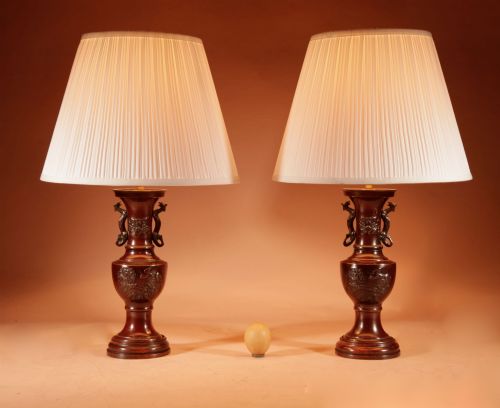
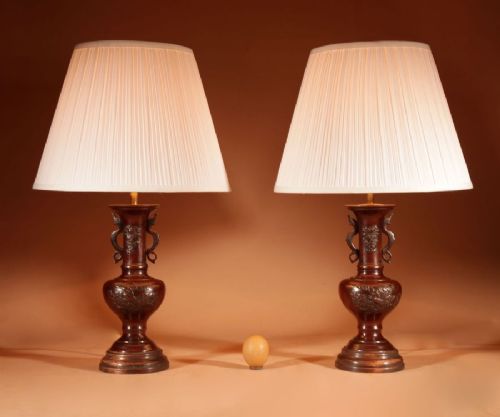
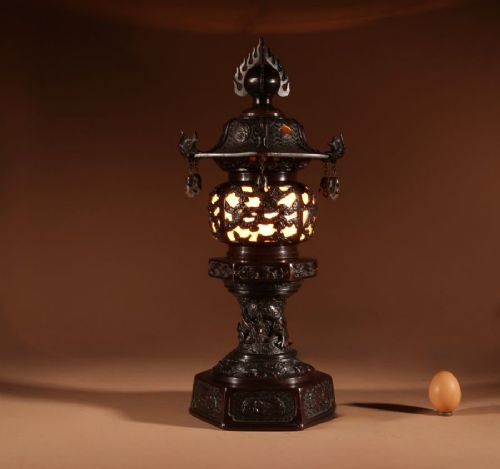
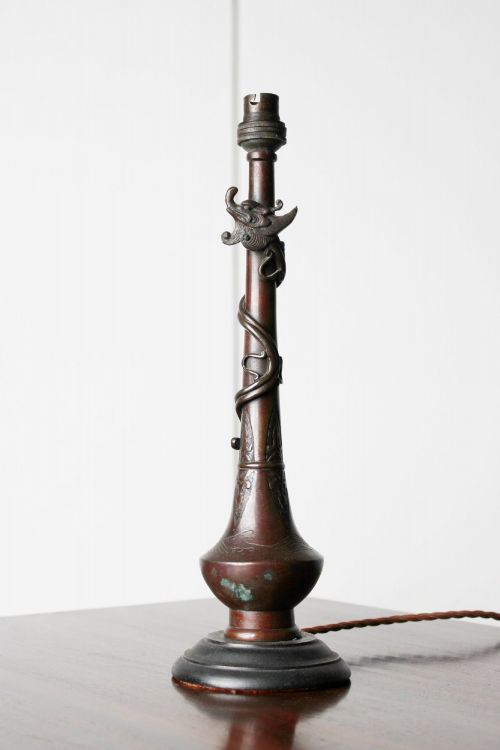
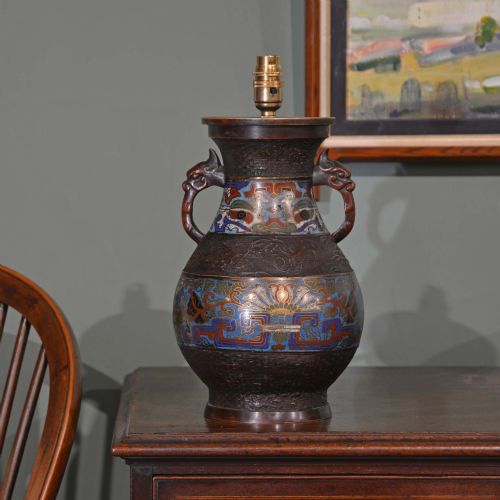
These bronze dragon table lamps bring heavy cast metal and intricate oriental ornament into domestic interiors, offering a striking focal point for a room.
Bronze Dragon Table Lamps
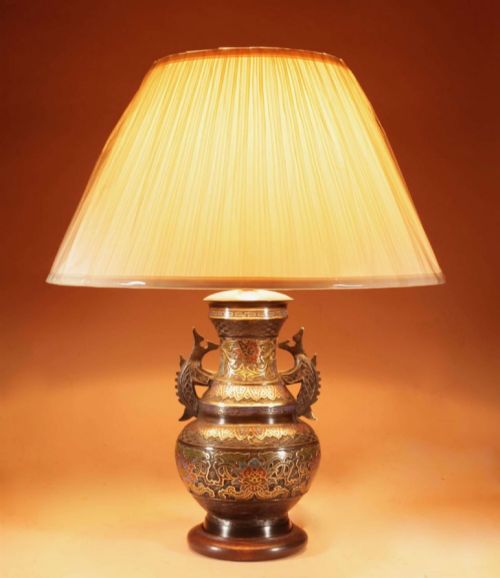
Bronze dragon table lamps combine solid cast metal bodies with functional lighting, drawing heavily on oriental aesthetics from the nineteenth century and the early twentieth century. Buyers encounter forms derived from Meiji period Japanese bronzes, Qing dynasty pieces, and Chinese cloisonné or champlevé vessels adapted into lamps.
How they were made
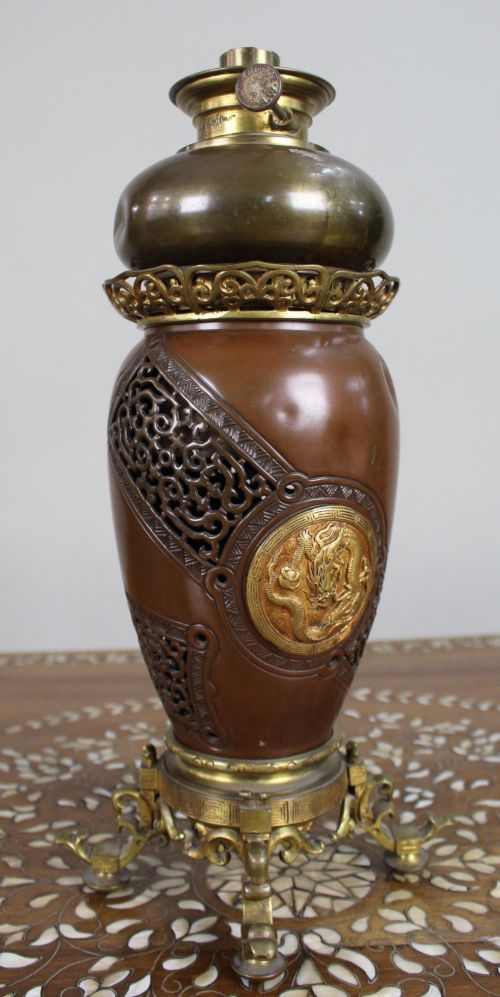
Craftsmen utilised traditional lost-wax casting methods to shape bronze into complex, sculptural forms featuring dragons, elephants, and elaborate ornamentation. Surfaces were frequently embellished with champlevé enamel, gilt bronze highlights, or patinated finishes to create rich surface textures.
Many of these pieces began life as vases, oil lamps, or lanterns before being converted into table lamps during subsequent decades. The incorporation of fabric shades and brass or gilded metal fittings complemented the heavy bronze bases without obscuring the intricate metalwork.
Dragons coil so convincingly around these nineteenth-century bronzes that you might occasionally check if the shade is tethered to a live tail.
What varies in quality
Quality rests in the crispness of the bronze casting and the depth of the chased or engraved detail across the dragon motifs. Pieces with superior surface patination and intact enamel or gilt work stand apart from simpler castings.
The integrity of the conversion from original vessel to lamp also dictates the standard of the piece. Well-executed adaptations maintain the balance and proportion of the original nineteenth century or early twentieth century metalwork.
The Bronze Dragon Table Lamps Glossary
- Bronze
- An alloy consisting primarily of copper, traditionally combined with tin, used to create durable and highly detailed sculptural objects. It develops a rich patina over centuries of handling and exposure.
- Champlevé
- An enamelling technique where troughs or cells are sunk into the surface of the bronze and filled with vitreous enamel before firing. This method produces vibrant decorative patterns alongside the metallic body.
- Meiji Period
- The era in Japanese history spanning from 1868 to 1912, characterised by extensive trade with the West and exceptional metalwork production. Pieces from this time often feature naturalistic dragons and birds.
- Cloisonné
- A metalwork decoration method where flat wires are soldered to a bronze base to create compartments that receive coloured enamel pastes. The entire surface is then fired and polished smooth.
- Patination
- The natural or chemically induced alteration of the bronze surface over time that results in varied tones and colours. A stable patination protects the metal and adds visual depth to the object.
Bronze Dragon Table Lamps: Frequently Asked Questions
Are these lamps converted from old vases?
Many bronze dragon table lamps originate from nineteenth-century vases, oil lamps, or lanterns that were subsequently wired for electricity. This practice preserves the sculptural quality of the original vessel while giving it a modern domestic purpose.
Buyers frequently find that pieces retain their original mounting hardware alongside later electrical components added during the conversion process.
How do I identify a Meiji period lamp?
Meiji period pieces date between 1868 and 1912, aligning with an era of exceptional Japanese metalworking skill. They typically display dynamic dragon motifs, precise casting, and distinctive patination.
Comparing the style of the relief work and the composition of the bronze helps distinguish these Japanese items from later European interpretations in the Chinese taste.
What materials accompany the bronze?
These lamps incorporate fabric for the shades alongside brass, gilded metal, and glass components. Enamelwork frequently appears in champlevé or cloisonné forms to add colour and texture to the metal body.
Wood elements also occasionally feature in the mounting bases or structural supports that elevate the heavy bronze sections.
How should I clean a bronze lamp?
Dust the bronze and any enamel sections gently with a dry, soft cloth to prevent the accumulation of grit. Avoid harsh chemical cleaners or polishes that can strip away the historical patination.
Preserving the surface finish ensures the subtle variations in the metal remain intact for the life of the piece.