

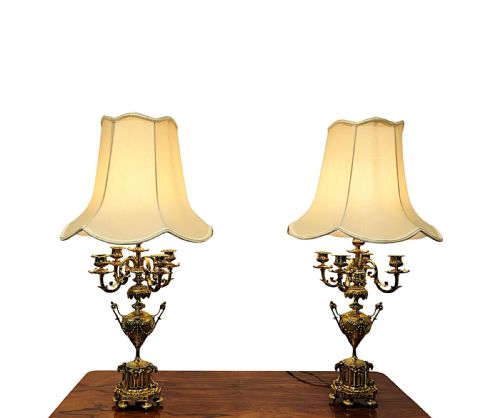
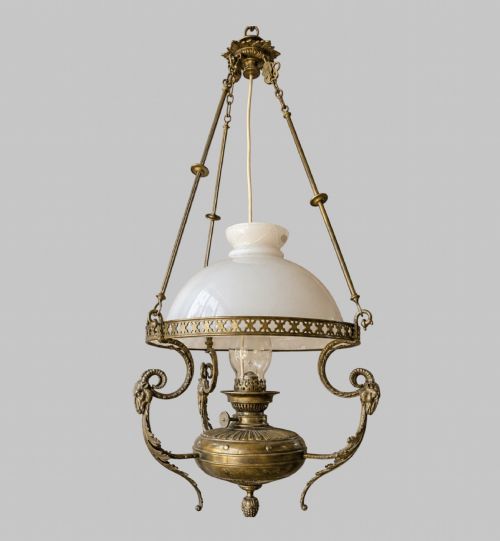
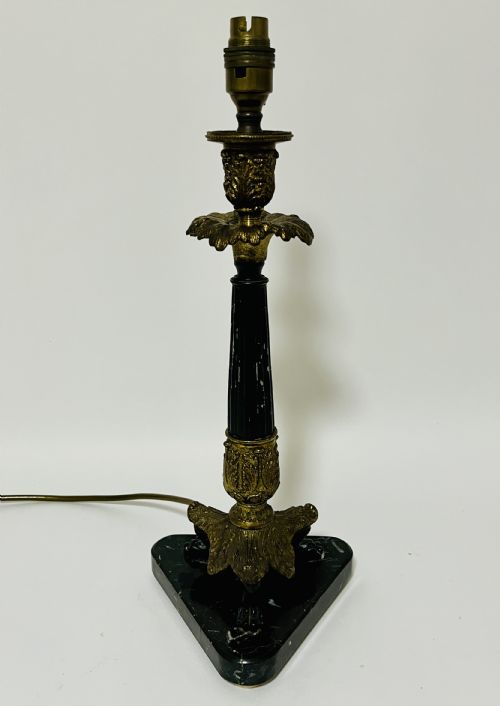
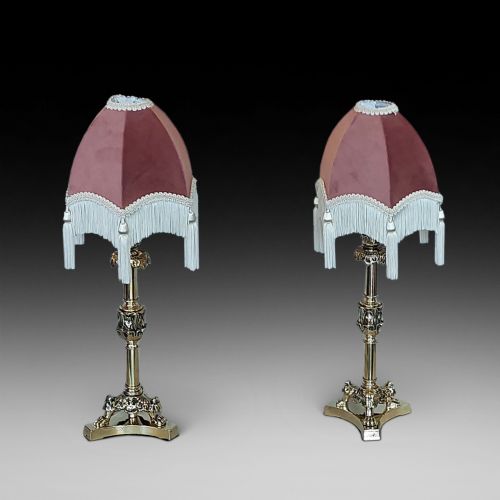
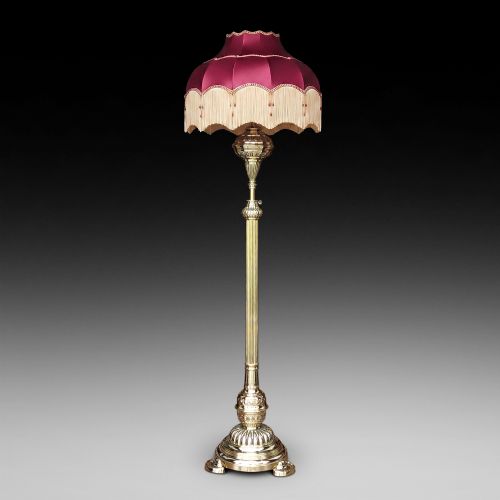


Converted Brass Lamp
A converted brass lamp bridges utilitarian history and domestic lighting through altered candlesticks, oil fonts, and vases.
Converted Brass Lamp
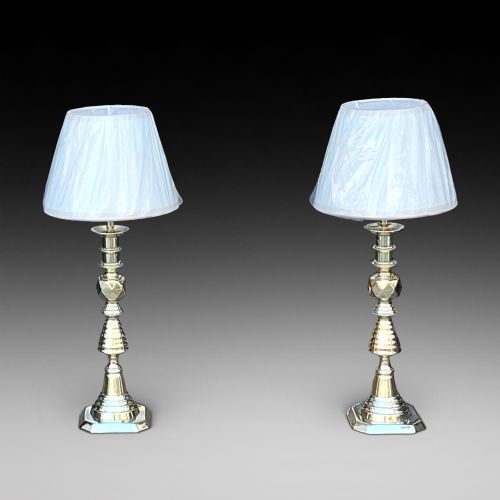
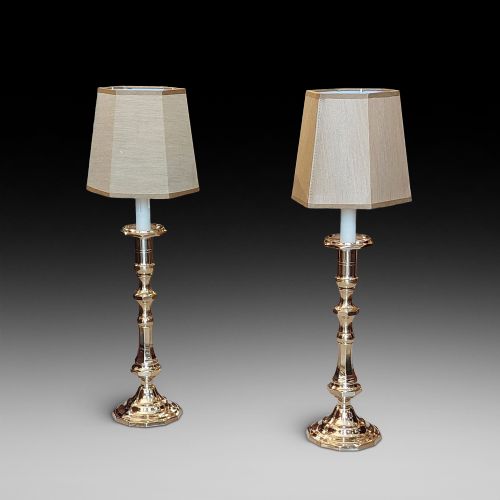
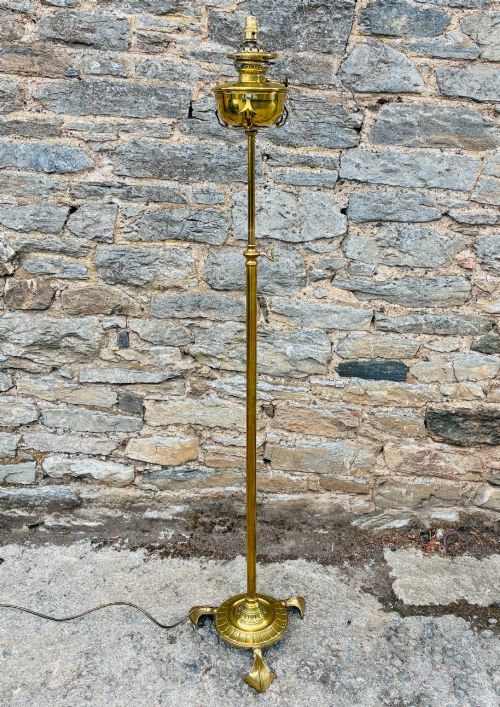
A converted brass lamp originates as an oil burner, a domestic candlestick, or a decorative vessel from the nineteenth century that now accepts modern electrical fittings. These pieces range from telescopic standard lamps designed for floor placement to small table lamps and candelabra adapted for modern rooms.
The Victorian period supplies many of the examples found here, alongside earlier Georgian items and later turn-of-the-century designs. Forms follow historical revivals, encompassing Corinthian columns, Gothic altar sticks, and French Empire styling alongside simpler utilitarian shapes.
How they were made
Makers fashioned these bodies from cast, spun, or rolled brass, often combining the metal with copper, bronze, or gilt bronze. Many incorporate contrasting materials such as marble bases, hand-painted opaline glass, or porcelain inserts from factories like Royal Doulton.
The structural adaptation involves routing wiring through the original central column or burner mechanism, occasionally retaining components like Hinks duplex burners or extending brass stems while replacing the oil reservoir with lamp holders.
Converted Brass Lamp Retail Price Guide 2026
Typical asking prices for converted brass lamp among the pieces listed under this phrase on Sellingantiques today, from the lower quarter to the upper quarter. They describe what is for sale here now, not the wider market.
Listings demonstrate conversions spanning the eighteenth through the early twentieth centuries, uniting brass with porcelain, crystal, and marble.
What varies in quality
Quality rests in the weight of the casting, the crispness of classical detailing on capitals and bases, and the integrity of the original metal surface. Superior examples demonstrate substantial gauge brass, balanced proportions, and seamless integration of electrical wiring without compromising the historic silhouette.
The distinction between standard production items and finer pieces involves hand-finishing, the presence of maker marks on mechanisms, and the harmonious pairing of components when vessels like cloisonné or porcelain vases receive brass mounts.
Hinks of B'ham·Royal Doulton
The Converted Brass Lamp Glossary
- Corinthian column
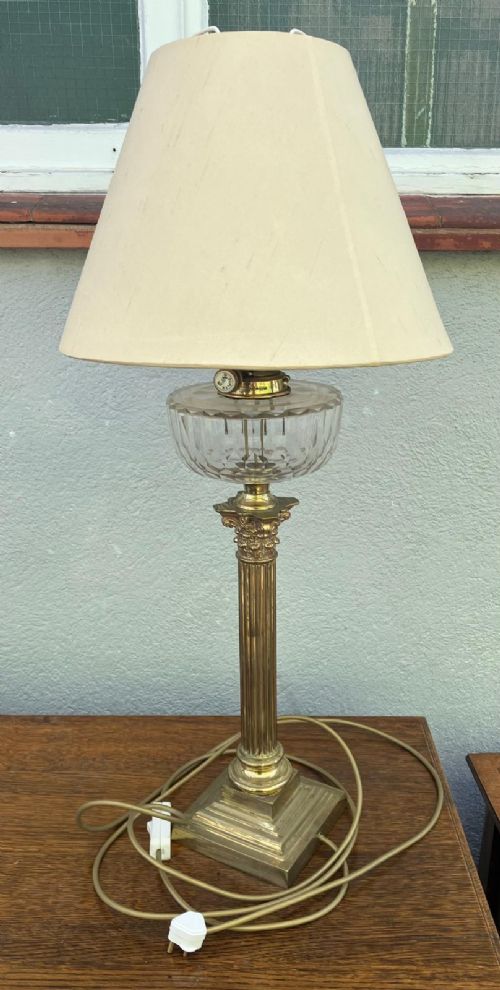
- A classical architectural column form featuring acanthus leaf ornamentation on the capital. This style appears frequently on nineteenth-century table and standard lamps.
- Duplex burner
- A double-wick oil burner mechanism popular in the Victorian era, often stamped with maker names like Hinks. These mechanisms form the upper section of many converted oil lamps.
- Telescopic
- An adjustable shaft design allowing the height of a standard or table lamp to alter via sliding brass tubes. This mechanism enabled users to direct light precisely.
- Altar candlestick
- A tall, heavy ecclesiastical candlestick intended for church use, typically cast in brass or bronze. Collectors frequently find these converted into robust floor or table lamps.
- Cloisonné
- An ancient metalworking technique using wire compartments filled with enamel paste to create decorative patterns. Pieces employing this finish often serve as the body of an adapted lamp.
Converted Brass Lamp: Frequently Asked Questions
How do I safely wire a converted brass lamp?
Professional electricians typically run modern cord through the existing central channel or burner assembly, ensuring the historic metal components are properly earthed.
Using modern insulated brass lampholders maintains compatibility with contemporary shades while preserving the exterior antique appearance.
Can I remove the electrical conversion?
Most conversions utilise the original openings of the burner or drill discreet channels through existing structural voids rather than altering primary exterior surfaces.
Reverting the piece generally requires removing modern wiring and reinstating the original oil font, burner components, or candle spike.
How do I date a brass lamp?
Dating relies on manufacturing techniques, style markers such as Gothic Revival or Art Nouveau motifs, and stamped maker details on the brass components.
Comparative examination of base weights, patination, and secondary materials like opaline glass or porcelain further helps narrow the period of origin.
Where should I place a standard lamp?
Telescopic and standard floor lamps suit corners of living spaces or beside armchairs where their height provides adequate overhead illumination.
Their substantial metal bases offer stability in high-traffic areas while introducing nineteenth-century vertical form to modern interiors.