
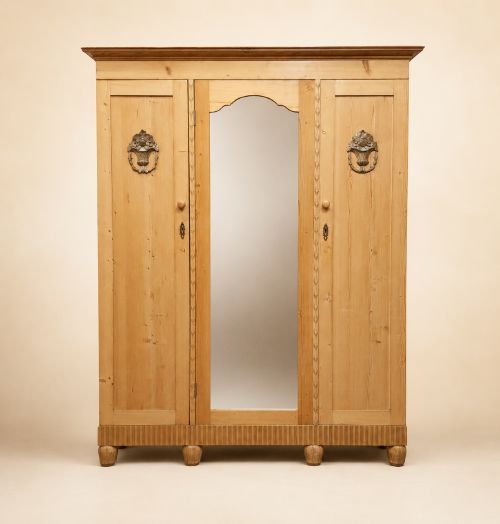
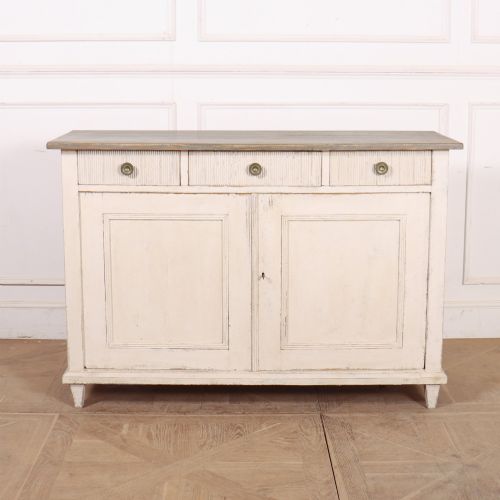
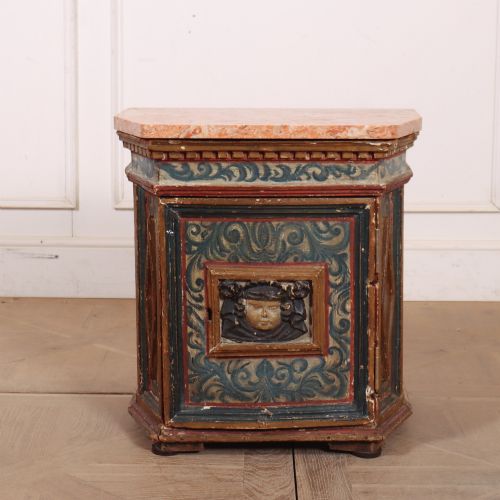
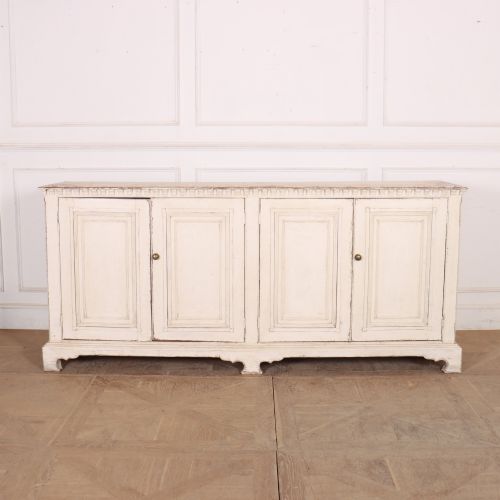
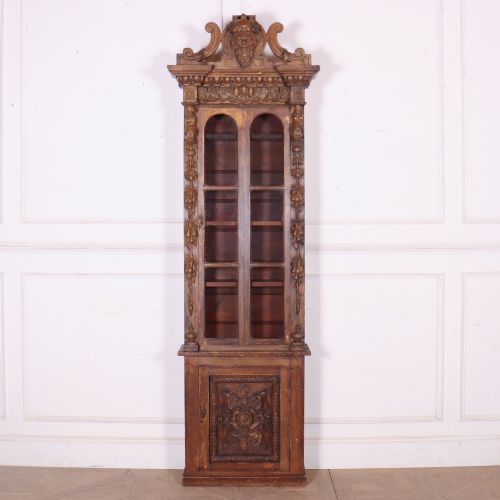
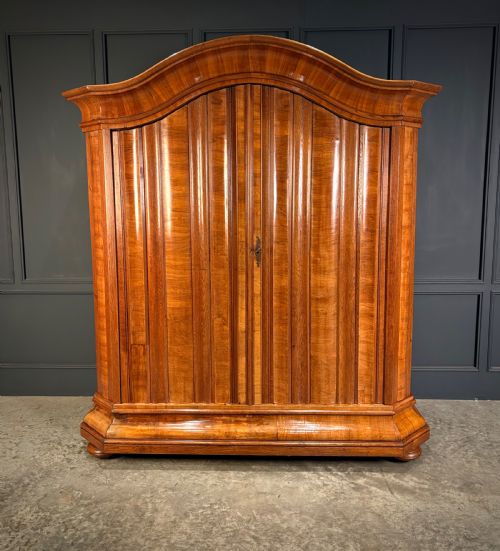
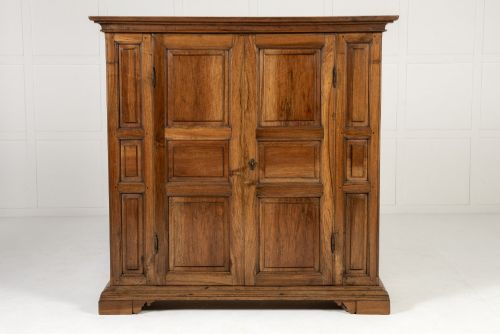
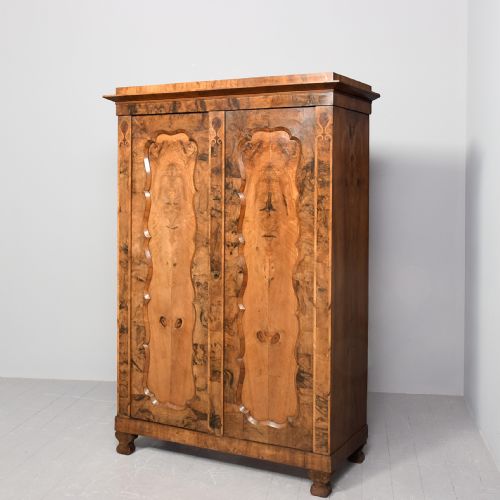


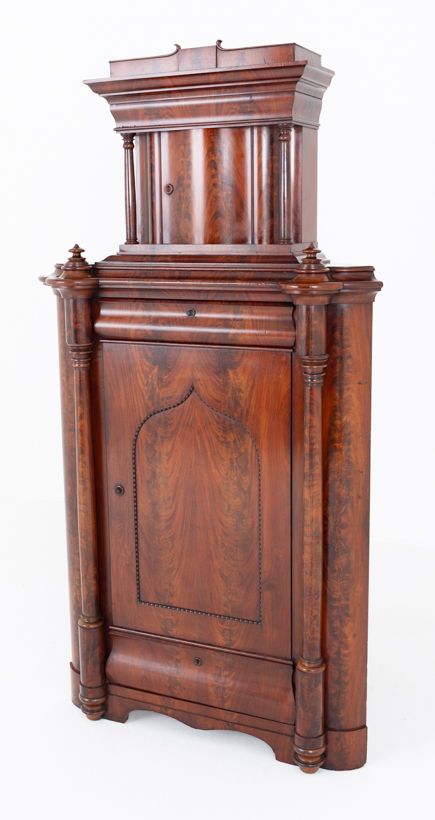

Continental Wooden Cupboard
A continental wooden cupboard brings solid architectural presence and rich regional character to a room, offering generous storage through centuries-old craftsmanship.
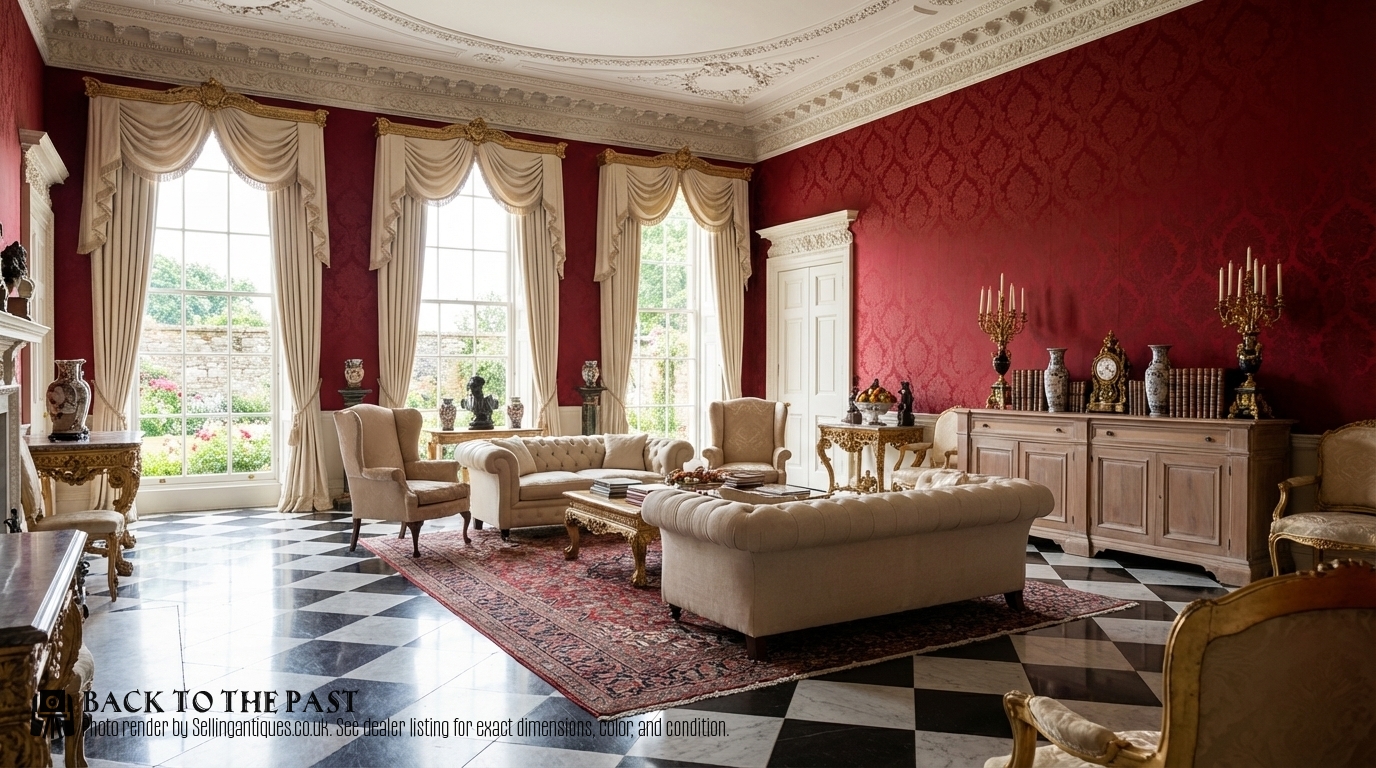
Continental Wooden Cupboard
A continental wooden cupboard encompasses a diverse group of storage furniture originating from European workshops, spanning stately Italian walnut sideboards to painted Hungarian hall wardrobes. These pieces serve practical household needs while displaying distinct regional styles such as French Country, Italian Baroque and Biedermeier.
The selection on this page relies heavily on seventeenth, eighteenth and nineteenth-century examples, alongside pieces from the Victorian era and the decades around nineteen hundred. Forms range from monumental armoires and corner cabinets to chimneypieces, wall units and compact apothecary cabinets.
Italian examples feature prominently in walnut, while northern European pieces frequently showcase painted pine, oak and fruitwoods. Buyers encounter everything from grand architectural credenzas to simpler provincial marriage cupboards and storage units.
How they were made
Cabinetmakers constructed these pieces using solid timbers like oak, walnut, pine and limewood, frequently augmented by walnut veneers, kingwood and rosewood on finer urban commissions. Structural joinery relied on traditional framing techniques designed to accommodate natural timber movement over decades.
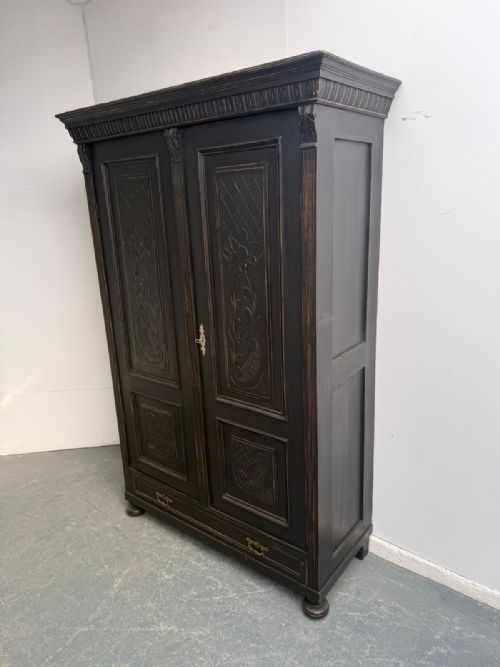
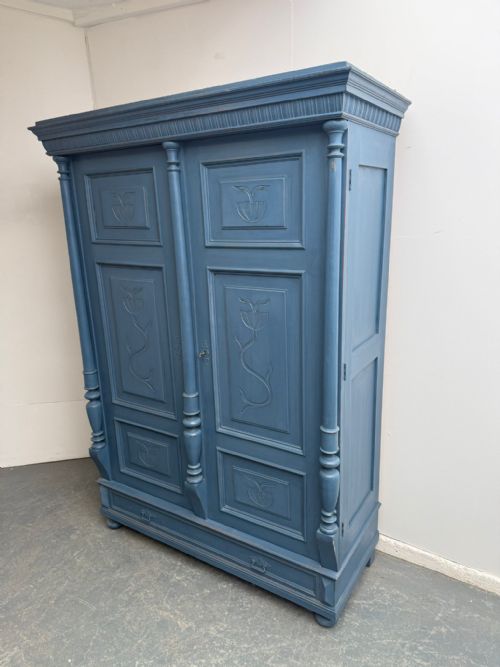
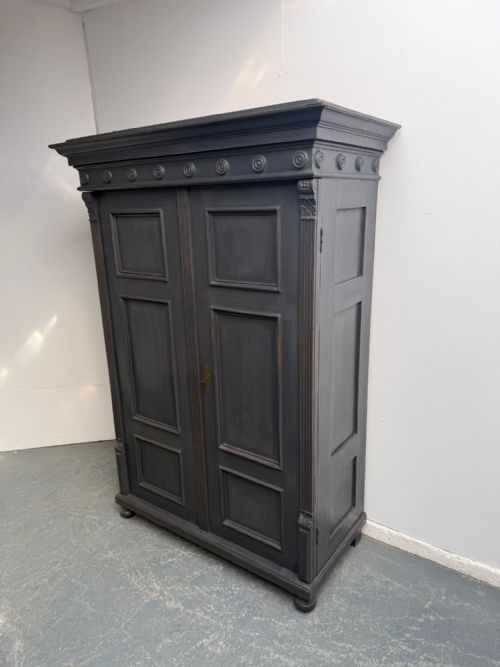
Surface treatments define a substantial portion of these cupboards, ranging from clear polished finishes and dark wax highlights to decorative layered paintwork in blues, blacks and greys. Metal elements such as iron hardware, brass fixtures and ormolu mounts provide functional reinforcement and decorative contrast.
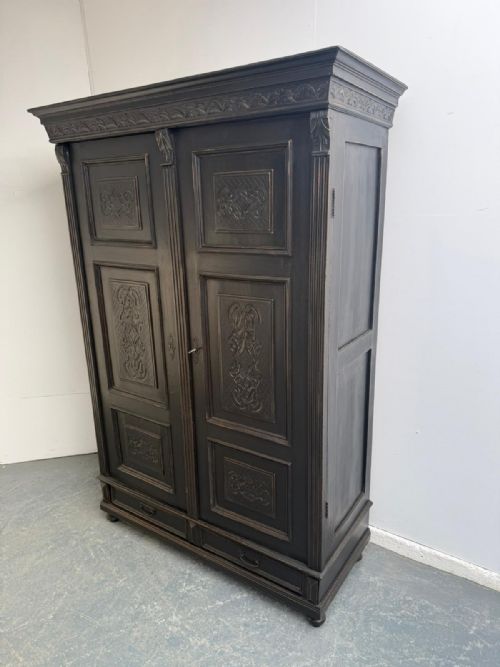
Carving and inlay work appear across various regional styles, from restrained geometric patterns to exuberant Baroque motifs and Renaissance Revival ornamentation. Glazed sections incorporate glass panels for display purposes, while specialised pieces integrate marble tops and steel safe components.
Several Hungarian hall wardrobes flaunt striking black and blue painted finishes, proving past generations loved a bold hallway statement as much as we do.
What varies in quality
Quality in a continental wooden cupboard often rests on the choice of timber and the ambition of its construction, moving from utilitarian pine storage to figured walnut architectural cabinetry. The depth and execution of hand-carved elements, as well as the sophistication of marquetry or applied veneers, distinguish high-status commissions from provincial work.
The integrity of original surface finishes significantly influences the character of painted or polished pieces, where untouched historic paint or rich patination elevates an object. Hardware integrity, including period brass handles, working iron locks and original hinges, signals the overall preservation and original grade of the furniture.
The Continental Wooden Cupboard Glossary
- Armoire
- A large tall wardrobe or cupboard, typically featuring double doors enclosing shelving or hanging space. These substantial pieces often anchor the proportions of a traditional bedroom.
- Enfilade
- A suite of rooms or a long cabinet designed with a sequence of matching doors or sections. In storage furniture, it refers to an elongated sideboard or credenza with multiple bays.
- Credenza
- A sideboard or buffet cabinet historically used for displaying food or valuables. Italian examples from earlier centuries often display monumental proportions and heavy walnut construction.
- Biedermeier
- A central European style dating from the nineteenth century prioritizing clean lines and domestic comfort over excessive ornamentation. These pieces highlight the natural grain of woods like walnut and birch without heavy carving.
- Apothecary cabinet
- A specialised storage unit fitted with multiple small drawers or compartments historically used for medicines and dry goods. Original examples retain a functional, compartmentalised charm.
Continental Wooden Cupboard: Frequently Asked Questions
How do I style a continental cupboard at home?
A large continental wooden cupboard works best as a focal point in a hallway, dining room or living space, providing substantial vertical presence. Let the natural grain or historic painted finish stand alone without overcrowding the surrounding walls.
Interior shelving accommodates books, tableware or linens, turning functional storage into an architectural display. Pair these pieces with simpler modern furniture to let their historic character ground the room.
What is the difference between an armoire and a wardrobe?
While both terms describe tall storage furniture, an armoire traditionally refers to a more ornate, architectural cupboard with deep historic roots in continental Europe. They frequently feature fitted interior shelves rather than modern hanging rails.
Wardrobes often lean toward utilitarian garment storage, though regional pieces from Scandinavia and Hungary blur these lines with decorative painted exteriors. Both serve as impressive alternatives to built-in closets.
How do I care for antique wood and painted finishes?
Maintain antique timber by keeping pieces away from direct heat sources and sudden humidity changes that cause wood to expand or split. Apply natural beeswax sparingly to nourish unpainted surfaces and preserve the historic patination.
Clean painted cupboards gently with a soft, dry cloth and avoid harsh chemical cleaners that strip historic pigments. Inspect hinges and locks periodically to ensure doors hang true without straining old fixings.
How can I tell the period of a wooden cupboard?
Dating relies on observing construction methods, joinery types, hardware and stylistic cues characteristic of specific design movements. Seventeenth and eighteenth-century pieces often display hand-cut joinery, heavy mouldings and dense regional timbers like walnut or oak.
Nineteenth-century examples introduce broader stylistic revivals, machine-sawn elements and distinct finishes like Biedermeier veneers or Victorian painted effects. Comparing the proportions and decorative motifs against documented regional examples clarifies the era of origin.