
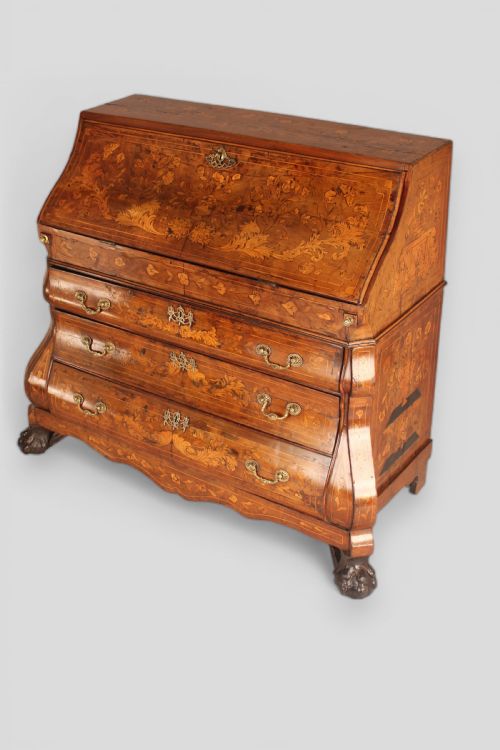


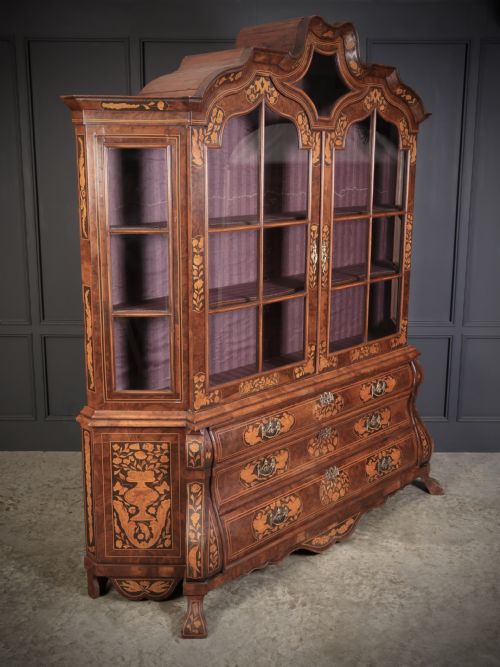


Continental Marquetry Chest
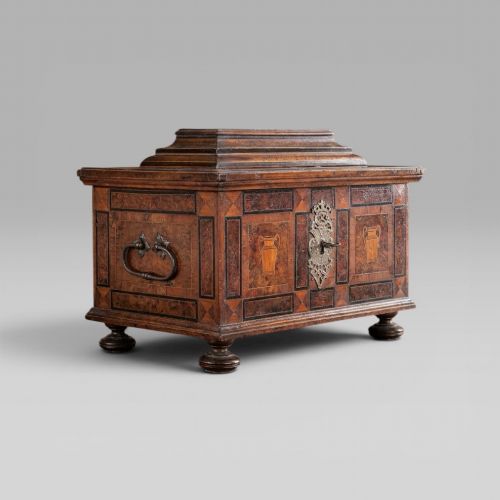
A continental marquetry chest brings rich floral imagery and figured timbers into a room through precise wood inlay.
Continental Marquetry Chest
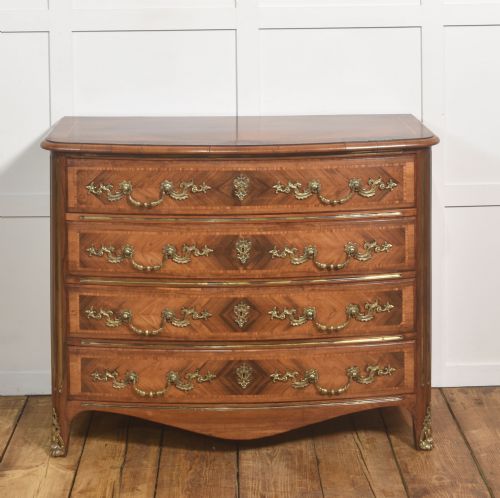
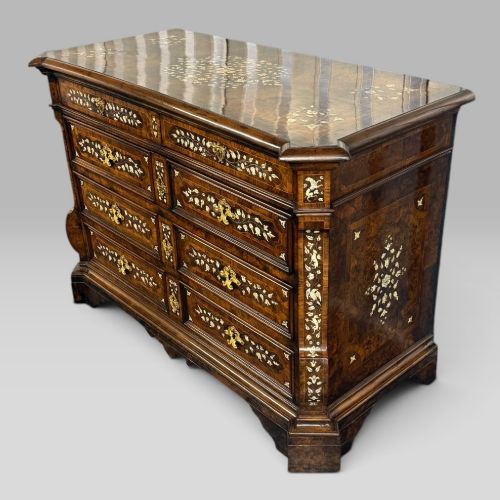
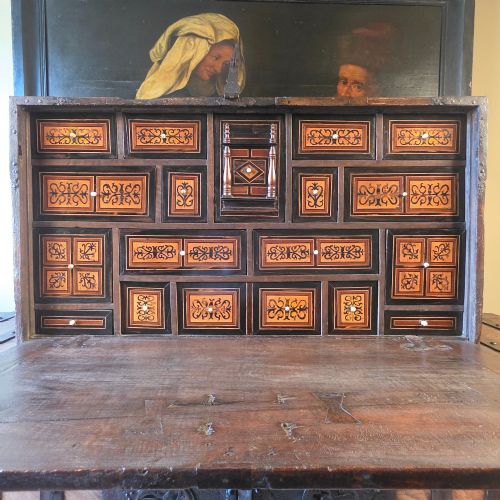
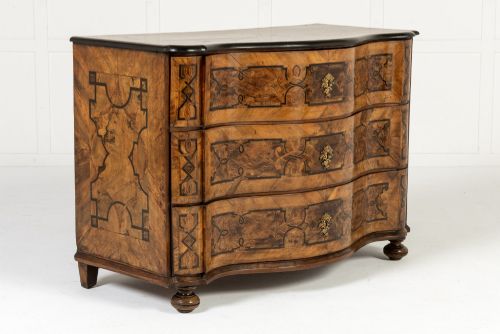
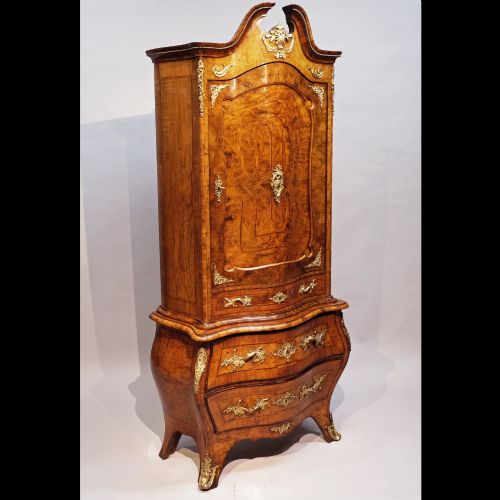
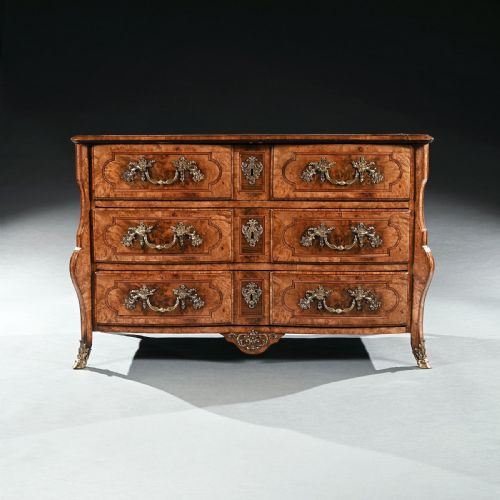
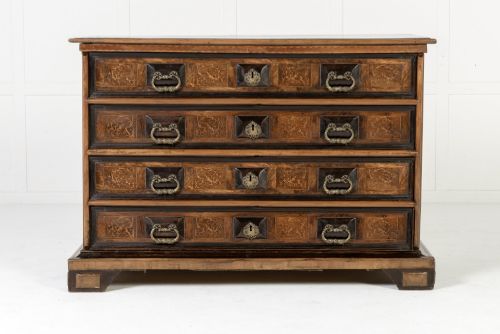
A continental marquetry chest provides practical storage whilst displaying intricate wood veneers arranged in floral and geometric patterns. These pieces range from compact caskets and cabinets to serpentine commodes and bombé chests.
The versions most commonly met on this page span the seventeenth, eighteenth, and nineteenth centuries, originating from workshops across France, Italy, Germany, Austria, and the Netherlands.
Makers shaped these carcases using native and exotic woods, often incorporating bombé contours and serpentine drawer fronts that showcase the decorative ambition of the period.
Materials and construction methods
Cabinet makers built the primary carcase using robust structural timbers such as oak and walnut, establishing a stable foundation for the decorative veneers.
Surfaces received intricate marquetry designs cut from fruitwood, burr walnut, burr maple, and satin birch, creating tonal contrast through contrasting grain directions.
Mounts in ormlou, brass, and iron frequently reinforced corners and handles, whilst marble slabs provided durable tops on selected commodes.
Listings feature walnut, fruitwood, burr maple, and satin birch veneers applied across seventeenth, eighteenth, and nineteenth-century forms.
Distinguishing quality across examples
The visual success of a piece rests on the precision of the veneer cutting and the natural harmony of the timbers selected for the marquetry design.
Advanced carcase shapes, such as pronounced bombé curves and serpentine fronts, demand greater joinery skill than straight-sided forms.
The integration of original cast ormolu mounts and authentic marble tops elevates the refinement of the finished cabinetwork.
Grand Ducal Workshops·Thomas Hache of Grenoble
The Continental Marquetry Chest Glossary
- Marquetry
- Decorative patterns formed by fitting together thin slices of wood veneer onto a structural carcase. This technique allowed makers to picture flowers, foliage, and architectural scenes across the drawer fronts and sides.
- Bombé
- A bulging or swelling contour profile seen on the front and sides of certain chests and commodes. The curved shape requires skilled shaping of the underlying timbers before the veneer is applied.
- Commode
- A low chest of drawers or cabinet developed in continental Europe during the seventeenth and eighteenth centuries. These pieces often feature decorative marquetry and shaped marble tops.
- Serpentine
- A furniture front or top curving in a concave-convex-concave line. This flowing movement adds visual complexity to walnut and fruitwood chests.
- Ormolu
- Gilded bronze mounts applied to furniture for decoration and edge protection. These metal fittings complement the inlaid timber surfaces.
Continental Marquetry Chest: Frequently Asked Questions
What periods do these chests come from?
The pieces span from the seventeenth century through the eighteenth and nineteenth centuries, reflecting shifts in baroque, rococo, and regional continental styles.
Earlier examples often display architectural inlay and robust walnut construction, whilst later pieces embrace profuse floral marquetry and curved outlines.
How were these chests used originally?
Owners utilised these cabinets and commodes in principal rooms for storing textiles, documents, and personal valuables. Their decorative surfaces also served to display porcelain and ceremonial objects.
Larger chests provided substantial drawer space in bedchambers and reception rooms across European households.
How do I place a marquetry chest in a modern room?
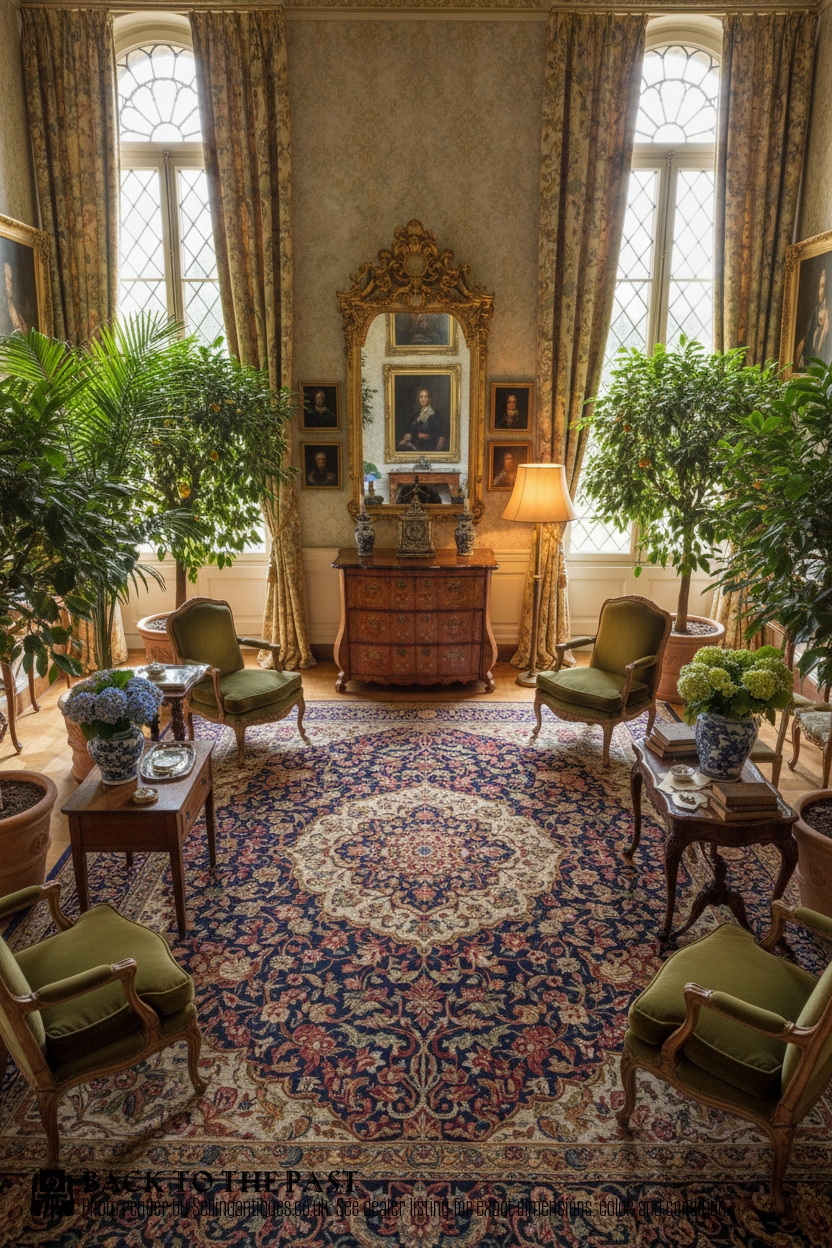
These chests function well as focal points in living spaces, hallways, or bedrooms where their figured woods and inlay can be appreciated. Their warm walnut and fruitwood tones pair effectively with both contemporary and traditional interiors.
Keep them away from direct heat sources and strong sunlight to protect the delicate wood veneers.
How do I tell regional styles apart?
Dutch and German pieces frequently employ dramatic bombé profiles with dense floral marquetry, whilst Italian examples often feature architectural walnut framing and restrained inlay.
French pieces from the Louis XV and Regence periods tend toward flowing serpentine contours paired with delicate fruitwood and ormolu mounts.