




Continental Gothic Wood Carving
Continental gothic wood carving brings tangible devotion into a room through centuries of hand-chiselled figures, saints and furniture.
Continental Gothic Wood Carving
These pieces encompass religious sculptures, statues of saints, and structural furnishings like cupboards, bookcases, and chests originating from European workshops. When exploring continental gothic wood carving, one encounters sacred figures such as the Madonna and Child, St. John the Baptist, and various angels rendered in solid timber.
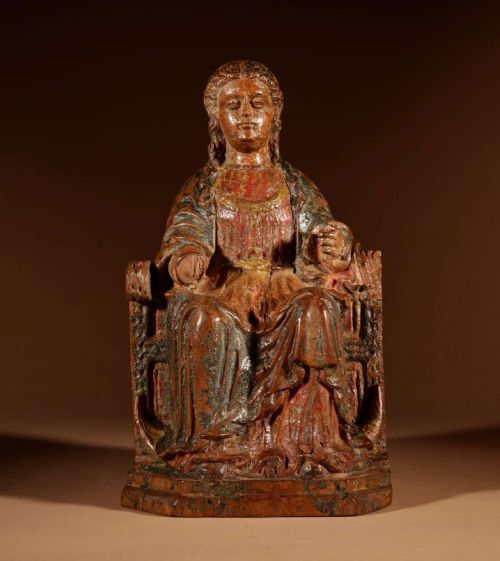
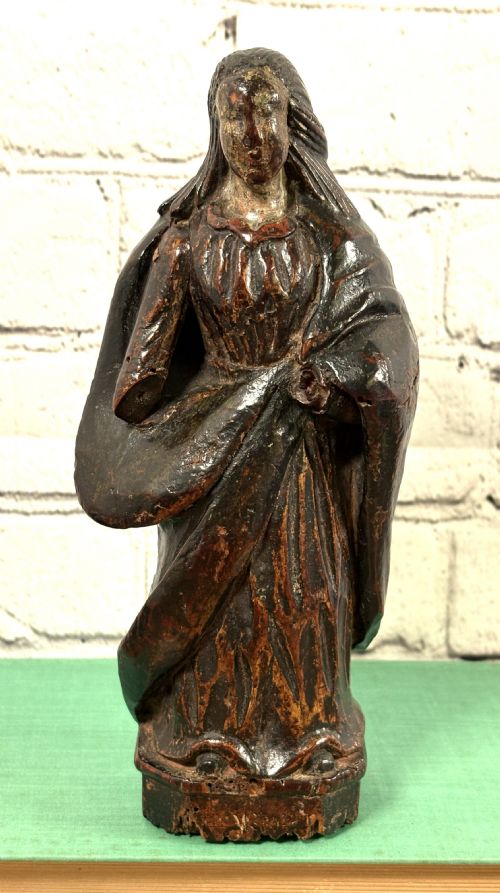
The selections span multiple eras, ranging from pre-sixteenth century medieval examples and sixteenth-century limewood carvings to later nineteenth-century gothic revival interpretations. Figures sit on thrones or stand with remnants of polychrome paint and gesso, alongside occasional candle holders and sideboards.
Buyers frequently find individual wooden heads of Christ, paired saints, and devotional panels alongside larger architectural storage pieces. Each item reflects the shifting stylistic boundaries between late medieval gothic, renaissance, and baroque traditions across continental Europe.
Materials and construction methods
Carvers shaped these forms primarily from hardwoods and close-grained timbers including oak, walnut, limewood, chestnut, and pine. Oak and chestnut provided structural integrity for larger sideboards and chests, while limewood and walnut allowed artisans to execute deep, intricate folds in drapery and facial expressions.
Many figurative sculptures received an application of gesso as a ground layer before painters added polychrome pigments and giltwood finishes. Metal elements occasionally reinforced structural joins or formed functional components on candlesticks and cabinets.
Continental Gothic Wood Carving Retail Price Guide 2026
Typical asking prices for continental gothic wood carving among the pieces listed under this phrase on Sellingantiques today, from the lower quarter to the upper quarter. They describe what is for sale here now, not the wider market.
A tiny cherub rests quietly at the feet of one seventeenth-century saint.
Distinctions in quality and execution
Survival of original surface treatments marks another division. Pieces retaining untouched early polychrome, gesso, or historic giltwood command greater appreciation than those stripped bare to the raw timber by later interventions.
The Continental Gothic Wood Carving Glossary
- Polychrome
- Painted in several colours. This surface treatment was commonly applied over gesso on religious wooden figures.
- Limewood
- A soft, pale timber favoured by continental carvers. Its fine grain permits intricate undercutting without splintering.
- Gesso
- A plaster mixture applied to wood surfaces. It acts as a smooth preparation layer for gilding and paint.
- Anna Selbdritt
- An iconographic term for Saint Anne with the Virgin Mary and the Christ Child. These grouped wooden sculptures date to the late medieval period.
- Giltwood
- Wood coated with a thin layer of gold leaf. It appears on sixteenth and seventeenth-century continental altarpieces and figures.
Continental Gothic Wood Carving: Frequently Asked Questions
How do I identify a true period piece?
Examine the timber shrinkage, tool marks left by hand chisels, and the natural oxidation of the wood beneath any surface finish. Genuine early carvings show consistent grain movement and period-specific joinery appropriate to continental workshops.
Compare the style of the drapery and facial carving against dated examples from the same region. Secondary elements like old gesso or residual polychrome also help confirm the age of a carved figure.
Where should I place these carvings at home?
Place statues and figures on sturdy consoles, mantels, or within bookcase interiors where they remain stable and secure from foot traffic. Taller cupboards and chests function well as standalone statement pieces in hallways or reception rooms.
Keep wooden carvings away from direct heat sources, radiators, and strong sunlight to prevent the timber from splitting or warping. Stable room humidity preserves both the dry wood and any surviving historic paint.
How do I clean antique carved wood?
Dust the surface gently using a soft, dry natural bristle brush to clear debris from deep recesses and carved folds. Avoid using water, liquid polish, or chemical cleaners that can soften old gesso or strip historic finishes.
Leave surface patination undisturbed, as historic wax and wear contribute to the character of the object. Professional conservation is required only if structural instability arises.
What is the difference between gothic and renaissance pieces?
Gothic carvings emphasise vertical lines, pointed arches, and rigid, solemn figures with stylized drapery folds. Renaissance pieces introduce classical proportions, naturalistic poses, and greater spatial depth.
Transition pieces often combine gothic structural forms with early renaissance facial detailing and ornamentation. Examining the overall silhouette helps distinguish between medieval devotional works and later revival items.