

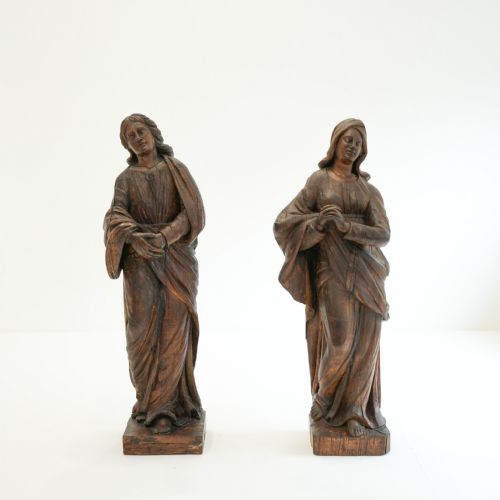


Continental Church Carving
Continental church carving brings sacred history into the domestic interior through centuries of devotional figures and liturgical fittings.
Continental Church Carving
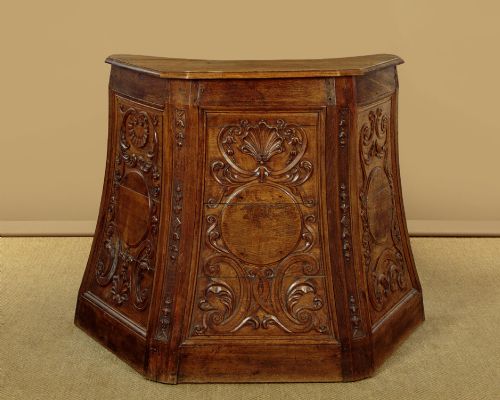
When you search for continental church carving, you encounter sacred wooden sculptures, figures of saints, and altar accessories originating from European ecclesiastical spaces. These pieces span from late medieval workshops through the Renaissance and Baroque periods into the nineteenth-century Gothic Revival.
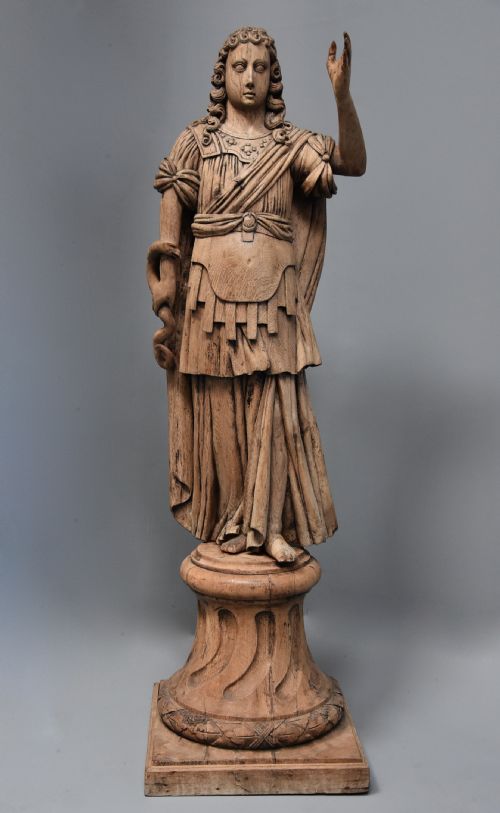
You are most likely to meet substantial oak figures, polychrome saints, and giltwood altar candlesticks or pricket sticks. Many of these items served a devotional function in churches before finding their way into secular collections as decorative art.
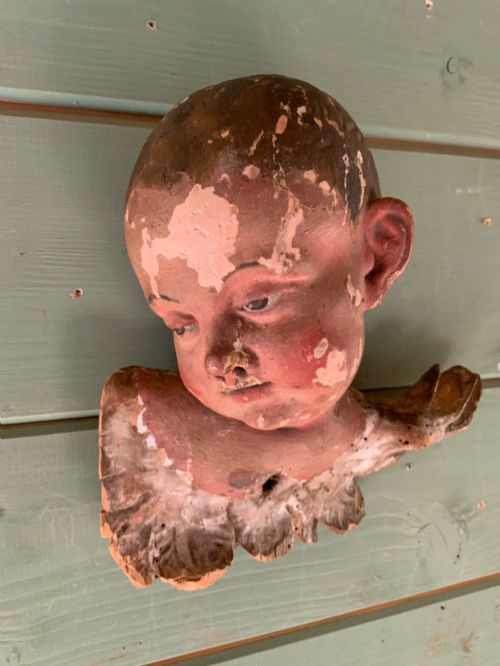
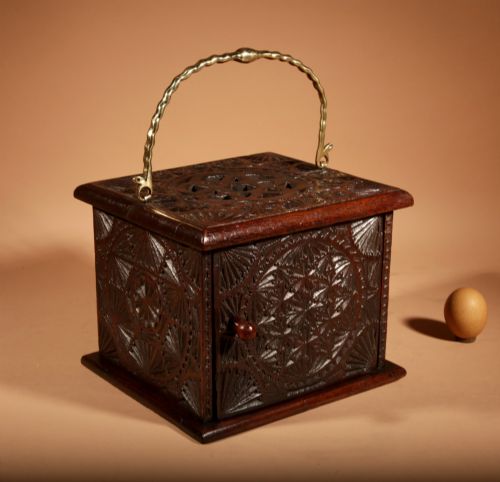
The selection ranges from life-size representations of figures like St. John the Baptist and St. Roche down to smaller cherub heads and domestic foot warmers. Each piece carries the physical marks of its ritual origin and the specific stylistic vocabulary of its region.
Materials and Construction Techniques
Many surfaces received layers of gesso before being finished with polychrome paint, gold leaf, or giltwood decoration. This complex layering of pigment and metal gave the figures a rich visual presence suited to dim liturgical interiors.
Listings feature items spanning the sixteenth to the nineteenth century, encompassing oak, walnut, limewood, gesso, and polychrome finishes.
Distinctions in Quality and Execution
The standard of carving rests upon the anatomical precision of the hands and face, alongside the fluid handling of drapery. Master carvers achieved a naturalism and emotional weight that set their work apart from simpler folk art production.
The preservation of original surface treatments, including early polychrome pigment and gold leaf, largely dictates the integrity of a piece. Later overpainting or stripped surfaces alter the visual balance and historical continuity of the object.
The Continental Church Carving Glossary
- Polychrome
- Decoration consisting of several colours applied to wood or stone sculpture. This technique was widely used to bring realistic flesh tones and vibrant garments to religious figures.
- Pricket Stick
- A candlestick featuring a central metal spike upon which a large wax candle is mounted. These served as altar candle-holders in ecclesiastical settings.
- Giltwood
- Timber that has been coated with a thin layer of gold leaf or gold powder. It creates a reflective surface that catches candlelight within church interiors.
- Gesso
- A plaster-like mixture used as a smooth base for paint and gilding on wooden sculptures. It allowed carvers to refine details before applying colour.
- Baroque
- An ornate artistic style prevalent from the seventeenth to the eighteenth century, characterised by dramatic movement and rich surface decoration. Figures from this period often display dynamic poses and sweeping garments.
Continental Church Carving: Frequently Asked Questions
What is a pricket stick?
A pricket stick is a form of altar candlestick that uses an upright metal spike to hold a large candle in place rather than a socket. These items formed part of liturgical furnishings on church altars.
Over time, many of these candle-holders transitioned from ecclesiastical settings into private collections, where they function as decorative objects.
How do I identify a saint figure?
Saint figures often carry specific attributes or objects associated with their martyrdom or life story, such as books, orbs, or implements of their trade. These symbols helped worshippers identify the holy personage in church settings.
Sculptures of figures like St. John the Baptist or St. Roche display distinct iconographic details that separate them from general religious carvings.
Where were these carvings displayed?
These wooden sculptures and liturgical elements originated inside European churches, abbeys, and chapels, where they adorned pulpits, altars, and rood screens. They were designed to inspire devotion and instruct congregations.
Today, collectors place these pieces within domestic interiors as sculptural focal points that connect modern spaces with historic European craftsmanship.