



Carved Wood Angel
A carved wood angel brings centuries of ecclesiastical devotion and Continental craftsmanship directly into a room.
Carved Wood Angel
A carved wood angel encompasses church carvings, architectural salvage, and devotional figures spanning from the sixteenth century into the Victorian era. These pieces appear as full sculptural figures, kneeling pairs, high-relief wall panels, and individual cherub heads.
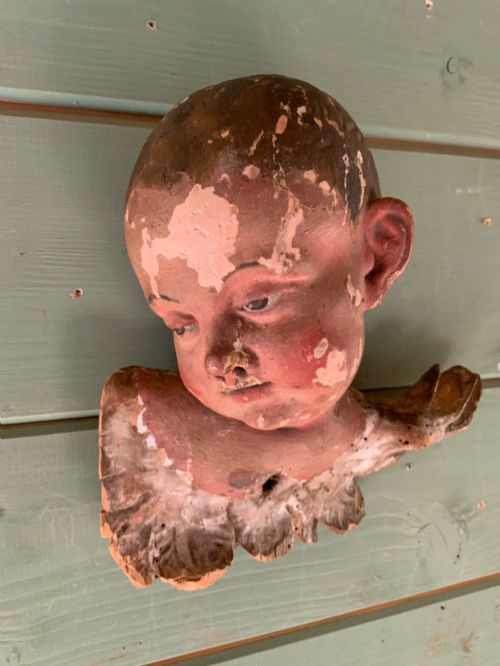
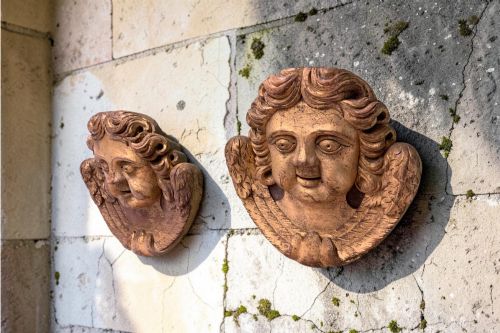
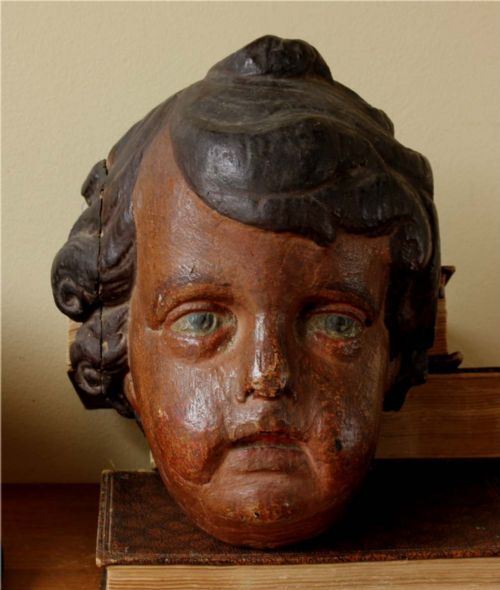
The version most commonly encountered on this page is the eighteenth-century putto or cherub head, often originating from French or Italian ecclesiastical contexts. These range from standalone wooden figures to architectural fragments designed to adorn altars and walls.
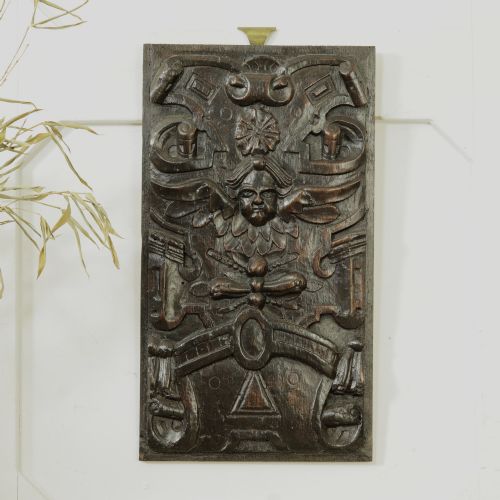
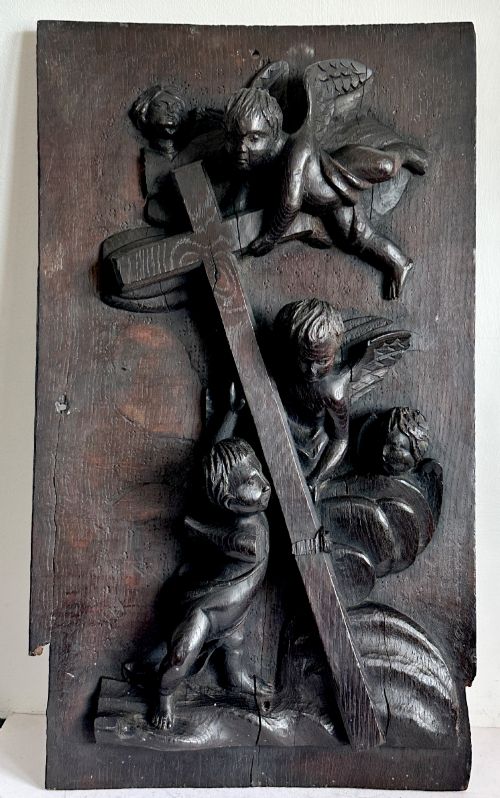
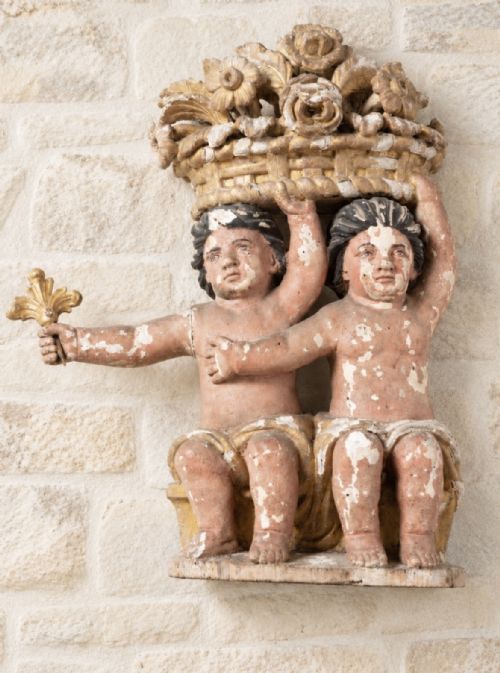
Other recurring forms include seventeenth-century oak panels and nineteenth-century Baroque-style wall brackets. Collectors also find pairs of carved wooden candlesticks and fragmentary sculptures representing saints or celestial beings.
How they were made
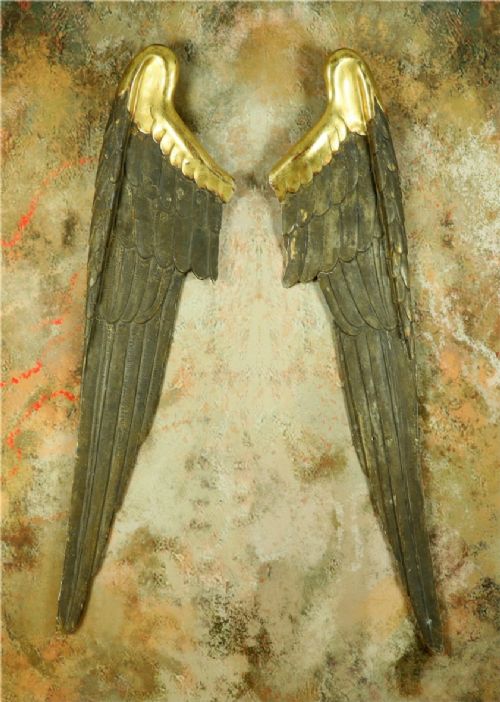
Carvers shaped these figures primarily from solid timber such as oak and various softwoods, employing hand chisels and gouges to create intricate drapery and facial expressions. Many surfaces received a preparation of gesso before being finished with gold leaf, silver, or polychrome paint.
Continental workshops frequently applied polychrome paint and gilding to enhance the theatricality of Baroque and Renaissance designs. Architectural fragments and wall reliefs were integrated directly into church interiors before finding their way into the antique market.
Listings feature materials including carved wood, gesso, gold leaf, oak, and polychrome paint, spanning periods from the sixteenth to the nineteenth century.
What varies in quality
The distinction between ordinary workshop output and superior carving lies in the depth of the relief and the anatomical sensitivity of the hands and face. Master carvers captured fluid movement in hair and wings, whereas simpler pieces rely on stiff, formulaic incisions.
The integrity of the original surface finishes, such as aged gold leaf and early polychrome pigment, dictates the visual power of a piece. Retaining untouched historical paint layers elevates a carving far above examples stripped or heavily restored in later centuries.
The Carved Wood Angel Glossary
- Putto
- A representation of a human infant, usually winged, found frequently in Renaissance and Baroque art. These figures often symbolize divine presence or earthly love in religious sculpture.
- Polychrome
- Decorated in multiple colours, typically applied as paint over gesso or wood. This technique gave ecclesiastical carvings a lifelike appearance in dim church interiors.
- Gesso
- A plaster mixture applied to wood surfaces to provide a smooth base for gilding and painting. It is commonly found beneath the gold leaf on nineteenth and eighteenth-century figures.
- High-relief
- A sculptural technique where figures project significantly from the background plane. This method creates strong shadows and a powerful three-dimensional effect on oak panels.
- Baroque Revival
- A nineteenth-century architectural and decorative style that revived the dramatic forms of the seventeenth century. Pieces from this period emulate earlier Italian and French ecclesiastical designs.
Carved Wood Angel: Frequently Asked Questions
How were carved wood angels originally used?
These figures populated churches, abbeys, and private chapels as decorative elements on altars, choir stalls, and architectural paneling. They served to inspire devotion and elevate sacred spaces through dramatic theatrical design.
Over time, many pieces transitioned from active religious contexts into domestic collections as architectural salvage or standalone sculptures.
How do I date a carved wood angel?
Dating relies on stylistic clues, tool marks, and the choice of timber, such as early seventeenth-century oak compared to later softwoods. Baroque curves and sixteenth-century fragment forms provide clear chronological markers.
Surface finishes like early gesso and layered polychrome paint also help establish the historical period of manufacture.
How do I live with a wooden angel at home?
These sculptures adapt well to placement on mantelpieces, walls as brackets, or mounted as high-relief panels. They bring historic texture and warmth to modern and traditional interiors alike.
Display them away from direct heat sources to protect the underlying timber and fragile historic surface finishes.
What is the difference between a cherub and a putto?
Art historical convention often uses putto to describe secular or classical infant figures, while cherubs carry specific religious connotations in ecclesiastical contexts. Both terms frequently overlap in descriptions of antique carved figures.
On this page, both types share the common heritage of European church woodworking and sculptural tradition.