
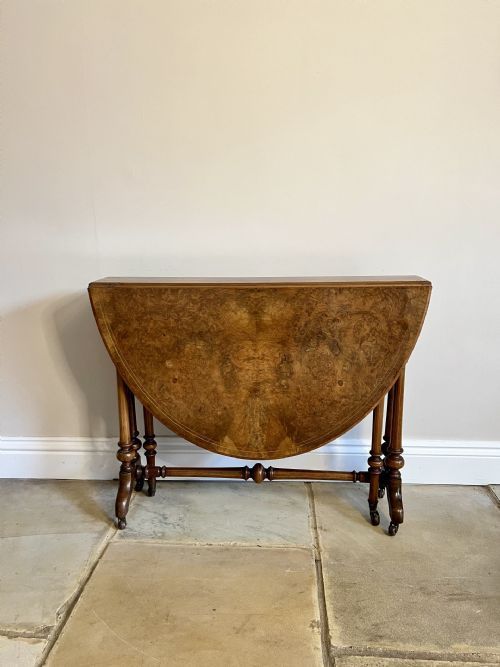


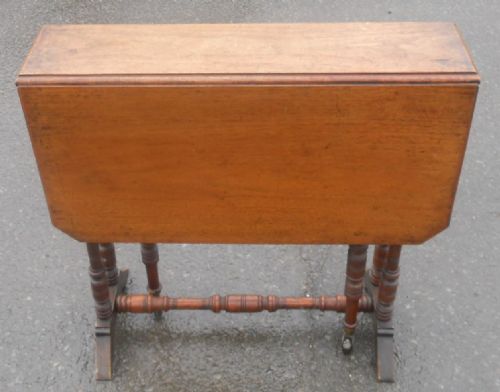

Compact Walnut Dining Table
A compact walnut dining table offers rich timber grain and clever folding leaves for everyday rooms, combining period character with genuine daily utility.
Compact Walnut Dining Table
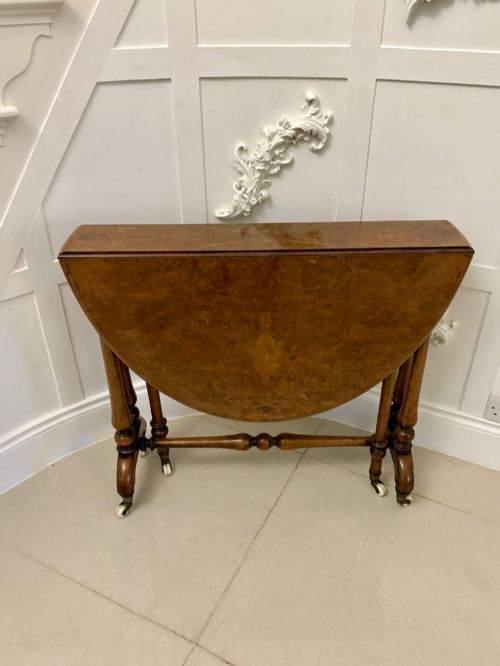
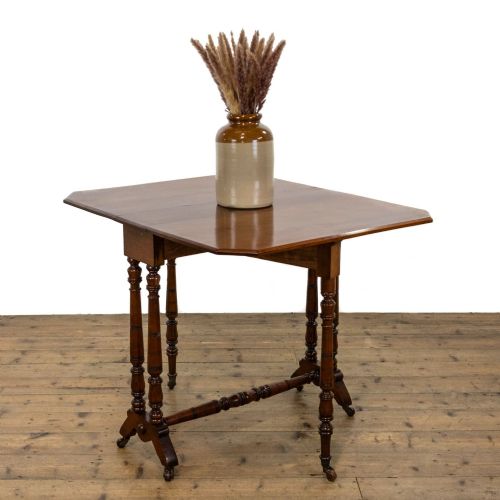
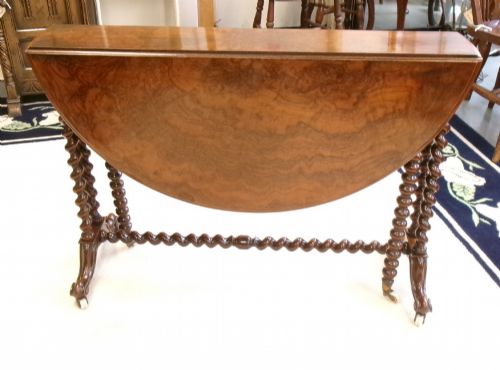
When you search for a compact walnut dining table, you encounter drop leaf tables, gateleg tables, and Sutherland tables made from walnut and burr walnut. These pieces suit modern spaces because their folding mechanisms allow them to shrink when not in use.
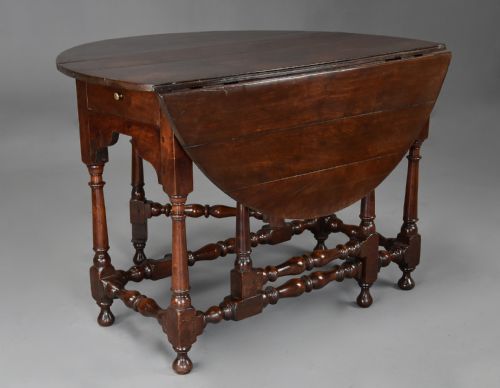
The selection on this page spans from early eighteenth century gateleg examples to Victorian Sutherland tables and Edwardian drop leaf coffee tables. Victorian pieces dominate the offerings, usually featuring oval tops supported by gate leg frames.
Makers utilised rich walnut timbers to create occasional tables that function reliably for dining or display in smaller rooms. The variety covers both solid walnut and highly figured burr walnut veneers.
How they were made
Cabinet makers constructed these tables using walnut and burr walnut veneers laid over secondary timbers, alongside solid walnut for structural frames. Brass hinges and metal fittings often secure the folding drop leaves and gateleg actions.
Surfaces received careful polishing to bring out the natural figure of the wood, sometimes accented with ceramic castors or subtle inlay work. The gate leg and Sutherland mechanisms rely on hinged wooden flaps that swing out to support the extended leaves.
Early gateleg makers engineered folding frames so reliable that centuries later, the timber flaps still swing out with welcoming grace.
What varies in quality
Quality rests primarily in the choice of timber, separating standard plain walnut from deeply figured burr walnut with striking grain patterns. Superior examples display refined proportions, crisp turning on the leg supports, and finely fitted drop leaf joints.
The integrity of the folding mechanism and the original finish contribute heavily to the standing of a piece. Finer tables maintain their original surface patination and smooth operation across the gate leg frames.
The Compact Walnut Dining Table Glossary
- Sutherland table
- A narrow table with exceptionally wide drop leaves supported by swinging gate legs. This form originated in the Victorian era and folds down to a very slim profile.
- Gateleg table
- A table with hinged leaves supported by legs that swing outward like a gate. Early eighteenth century versions often employ robust turned timber stretchers.
- Burr walnut
- Wood taken from a walnut tree growth or burl, yielding swirling patterns of grain. Cabinet makers prized this material for decorative table tops.
- Drop leaf table
- A table featuring a fixed central section and hinged flaps that lower or rise. This design maximises floor space in compact rooms.
- Patina
- The surface sheen and colour developed by wood over decades of handling and age. Fine patination shows deep warmth across the walnut timber.
Compact Walnut Dining Table: Frequently Asked Questions
What is a Sutherland table?
A Sutherland table is a specific drop leaf design where the leaves are exceptionally wide and the supporting legs swing out on a gate action. They fold down into a remarkably slim profile for storage against a wall.
Victorian makers favoured this form for occasional dining and tea, using figured burr walnut to create decorative surfaces that look striking even when folded.
How do gateleg tables work?
Gateleg tables utilise hinged legs that pivot outward from the central frame to support the folding leaves when raised. This clever framework provides sturdy support for dining without requiring permanent bulky legs.
Early eighteenth century and Victorian examples both rely on this tested mechanism to transition between a compact console shape and an open dining surface.
Is burr walnut different from regular walnut?
Burr walnut comes from a specialised growth or burr on the tree, creating intricate, swirling grain patterns rather than straight lines. Craftsmen prized this figured veneer for the top surfaces of fine occasional and drop leaf tables.
Plain walnut was typically reserved for structural frames and legs, while the burr veneer took centre stage on the main panels.
Can these tables be used for everyday dining?
These tables adapt easily to daily use because their folding leaves allow you to adjust the surface area to suit the room. When extended, they provide adequate space for meals while remaining remarkably space efficient.
Their sturdy gate leg and drop leaf mechanisms ensure they hold up well to regular lifting and lowering in modern homes.
How do I distinguish Victorian from earlier tables?
Victorian tables on this page often feature slender Sutherland frames, ceramic castors, and sometimes inlay work around the top edges. Eighteenth century gateleg tables generally display heavier turned supports and simpler, pegged timber construction.
Examining the turning styles, hardware, and structural joints helps reveal the specific period of manufacture.