


Compact Oak Shelving
Compact oak shelving brings together sturdy timber and clever proportions to solve storage dilemmas in smaller rooms.
Compact Oak Shelving
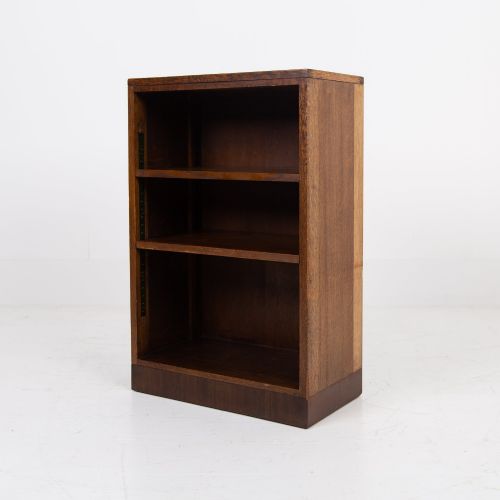
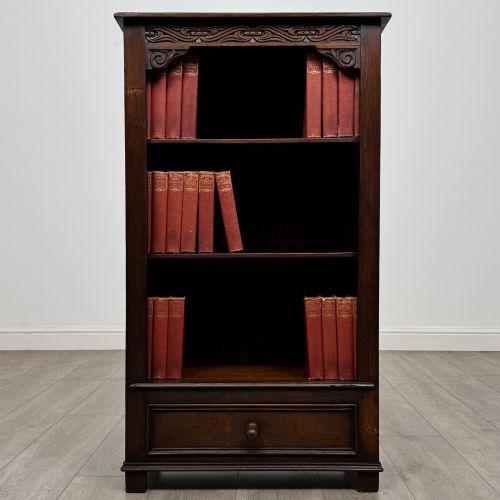
Compact oak shelving consists of small bookcases and writing bureaux designed to hold books and papers without dominating a room. These pieces appear primarily from the Edwardian era, alongside items from the 1910s, 1920s, and 1930s.
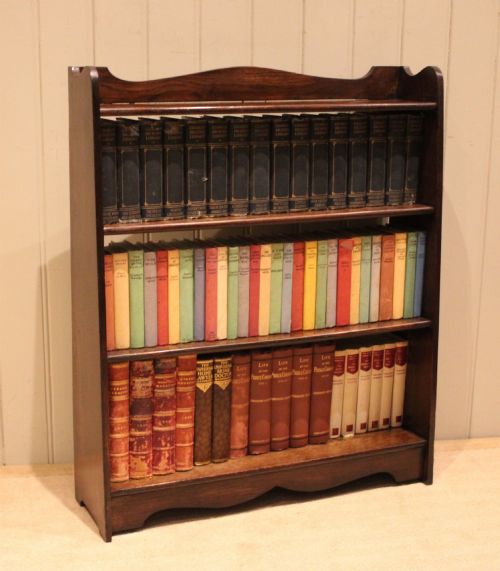
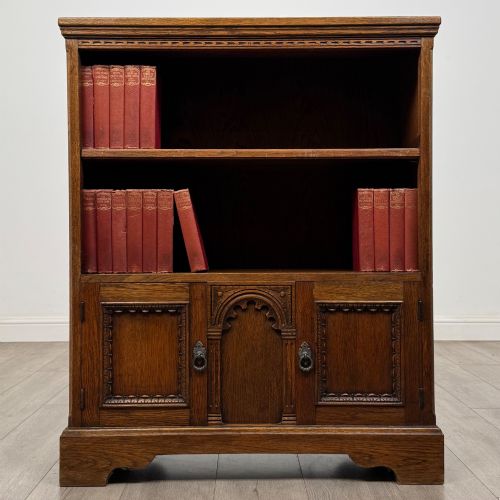
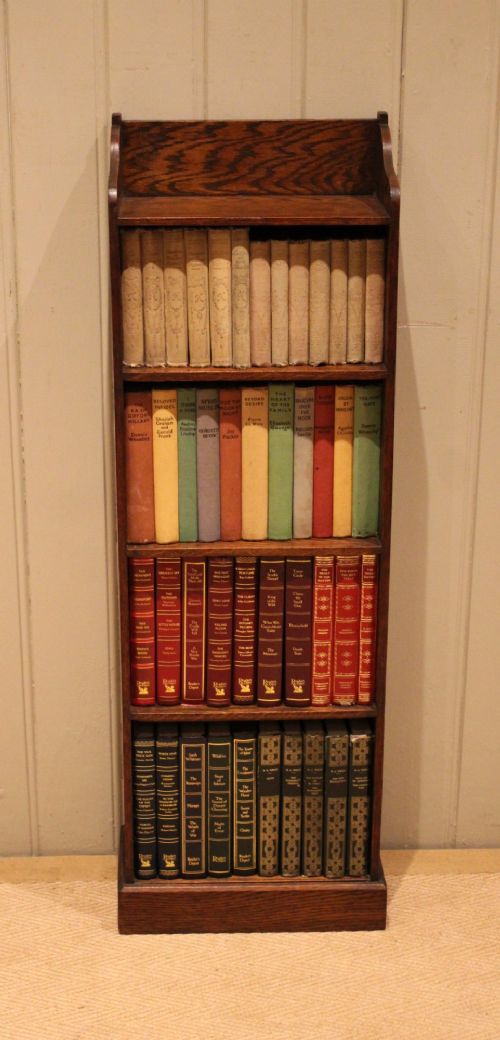
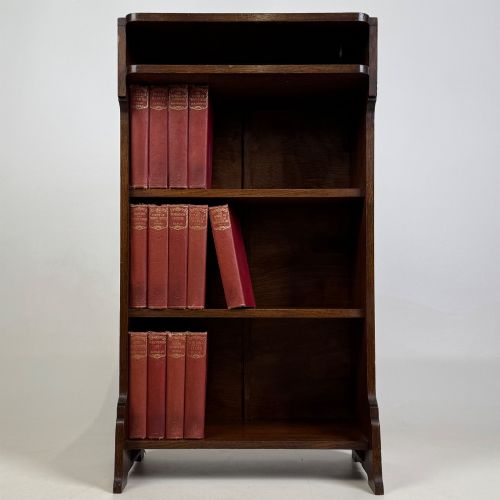
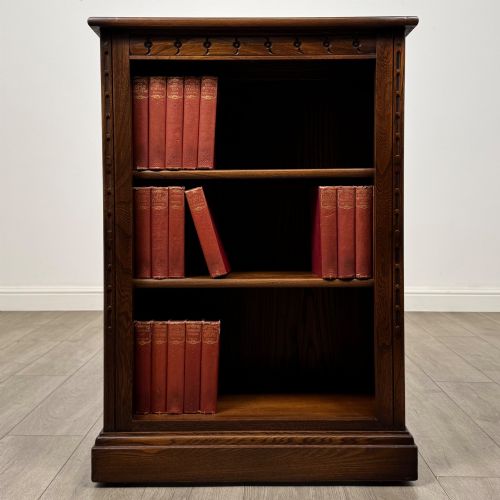
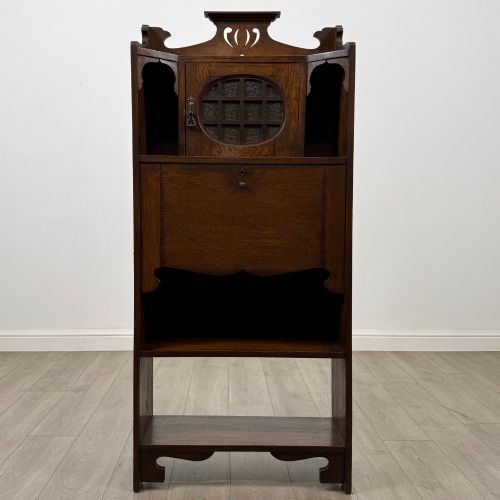
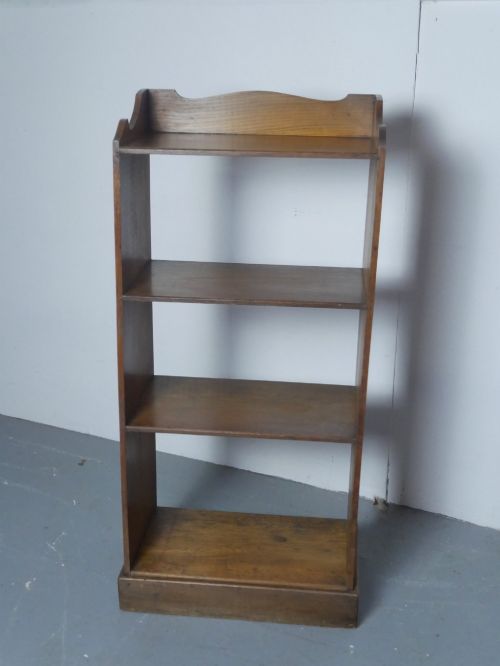
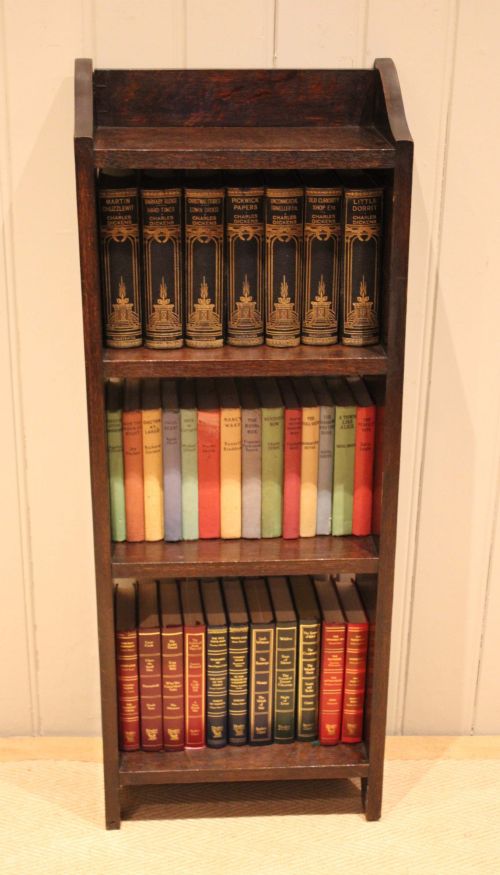
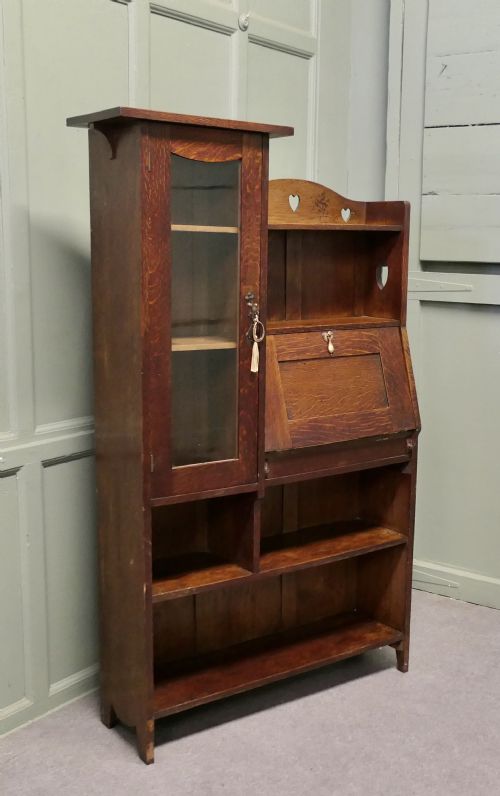
Buyers will most frequently find open bookcases of modest proportions, often featuring angled shelves or simple upright sides. Writing bureaux also feature among the selection, combining shelving space with a drop-down writing surface.
How they were made
Joiners built these pieces using solid oak, occasionally selecting fruitwood for specific details, and shaped them according to Edwardian, Arts and Crafts, and Jacobean Revival styles. Construction relied on traditional timber joints to ensure stability in smaller frames.
Metal, brass, and iron hardware provide structural reinforcement and handle drops on bureaux, while leather panels sometimes line writing surfaces. Glass doors and lead details occasionally appear on fitted compartments, alongside interior leather accents.
Listings span periods from the late nineteenth century to the 1930s, featuring oak alongside metal, brass, leather, and glass.
What varies in quality
The standard of timber selection and joinery determines the structural integrity of each piece. Better examples display carefully matched grain patterns and solid backboards rather than thin veneer.
Refined stylistic details, such as the balanced proportions of a dwarf bookcase or the crisp execution of Arts and Crafts carvings, distinguish finer pieces from simpler utilitarian items.
The Compact Oak Shelving Glossary
- Bureau
- A writing cabinet featuring a sloping flap that opens to reveal a fitted interior of small drawers and pigeonholes. These items frequently incorporate open shelves below or above the writing surface.
- Dwarf bookcase
- A low piece of furniture designed to sit beneath window height while holding a modest collection of volumes. French examples often display subtle scaling differences compared to English counterparts.
- Golden oak
- A bright, warm timber finish popular during the late nineteenth and early twentieth centuries. This tone highlights the natural grain structure typical of Arts and Crafts furniture.
- Open bookcase
- A shelving unit without doors, allowing direct access to the book spines. Edwardian makers produced these in diminutive sizes for domestic studies and bedrooms.
Compact Oak Shelving: Frequently Asked Questions
What periods do these pieces date from?
The selection spans from the late nineteenth century through the Edwardian era and into the 1920s and 1930s. Most items reflect early twentieth-century domestic production.
Design influences range from traditional English country styles to Arts and Crafts simplicity and Jacobean Revival details.
How were compact oak shelves used originally?
These items provided practical storage for personal libraries and writing materials in smaller Victorian and Edwardian rooms. Open shelves held daily reading volumes close to hand.
Bureaux combined a compact desk space with shelving, allowing correspondence and book storage within a single footprint.
How do I style a small oak bookcase at home?
Pair these low pieces with neutral walls to let the warm oak grain stand out as a natural focal point. Their modest height makes the top surface ideal for displaying small lamps or decorative objects.
Keep the surrounding space uncluttered to preserve the airy proportions characteristic of dwarf and open bookcases.
How do I distinguish Edwardian oak from earlier styles?
Edwardian pieces often embrace lighter golden oak tones and simpler, functional lines compared to heavy Victorian furniture. Arts and Crafts influence during this period brought subtle hand-finished details to standard domestic items.
Earlier nineteenth-century examples tend to feature deeper timber patination and more pronounced revival ornamentation.