

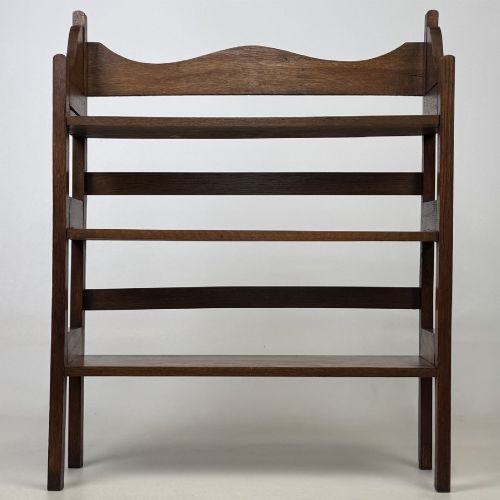
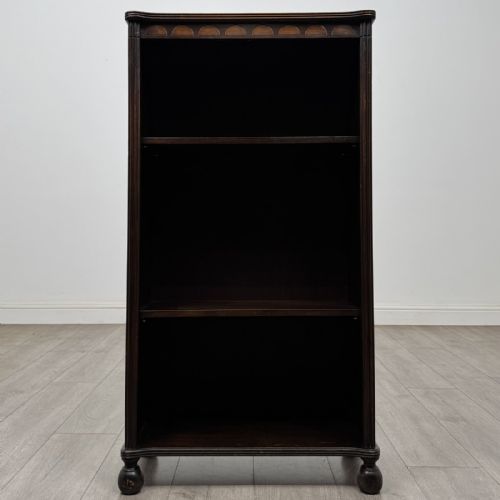
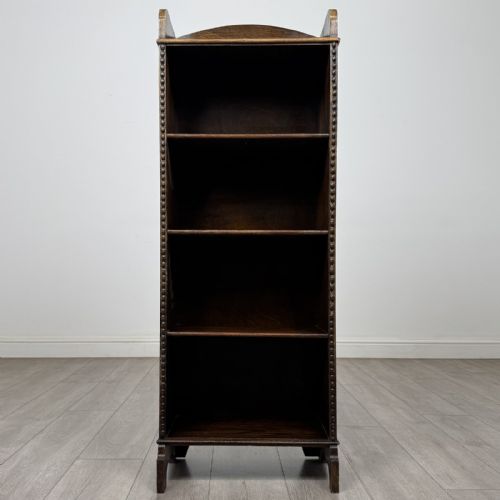

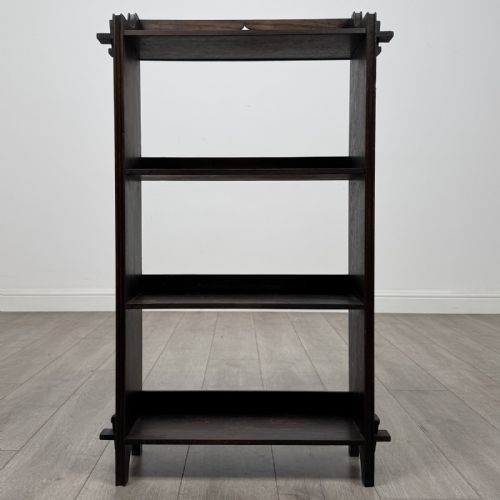


Compact Oak Bookshelves
Compact oak bookshelves are sturdy, space-saving timber pieces designed to hold volumes efficiently in smaller rooms while adding character to an interior.
Compact Oak Bookshelves
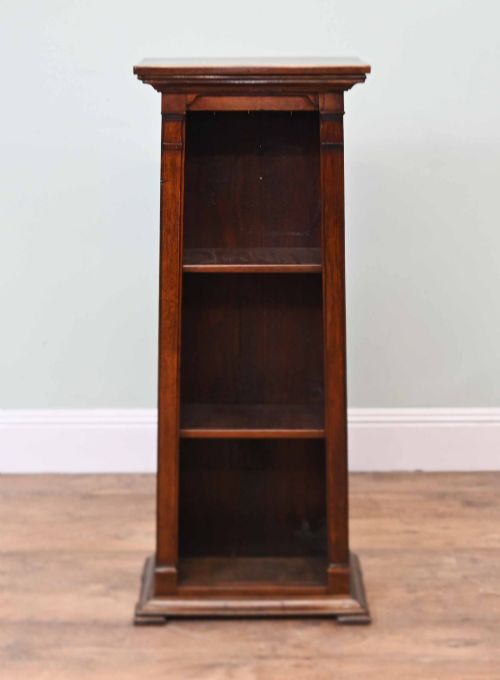
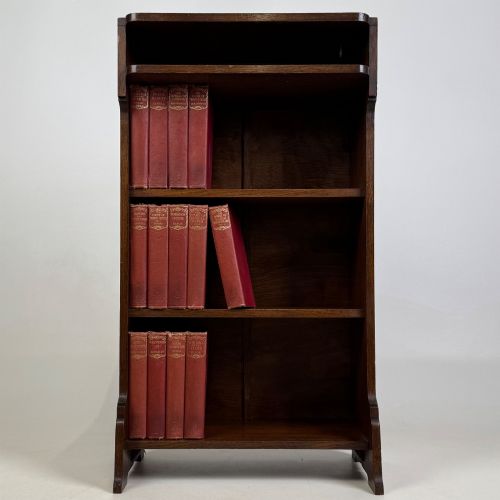
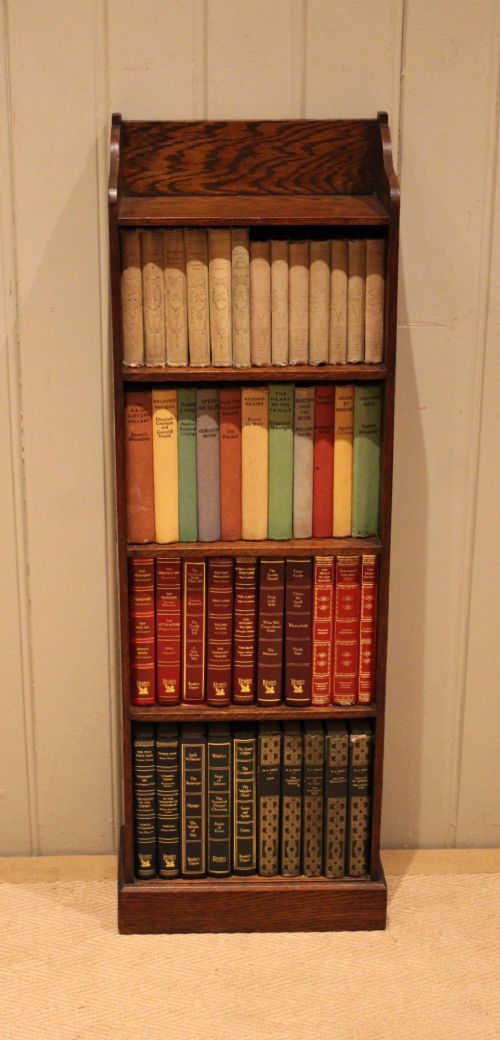
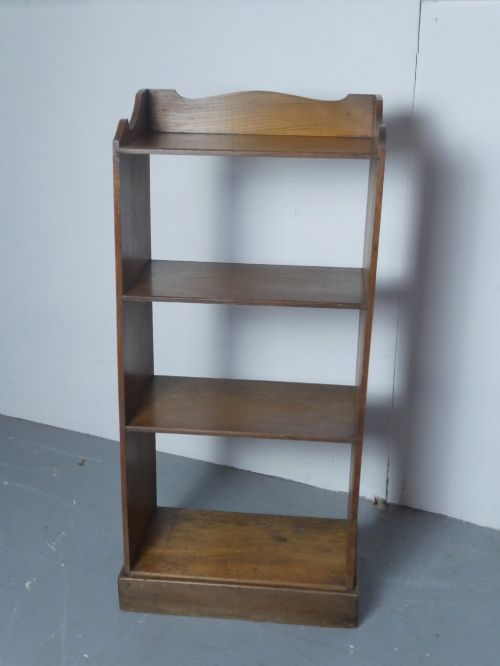
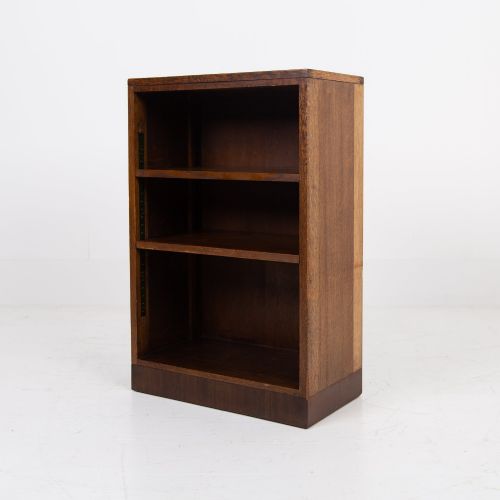
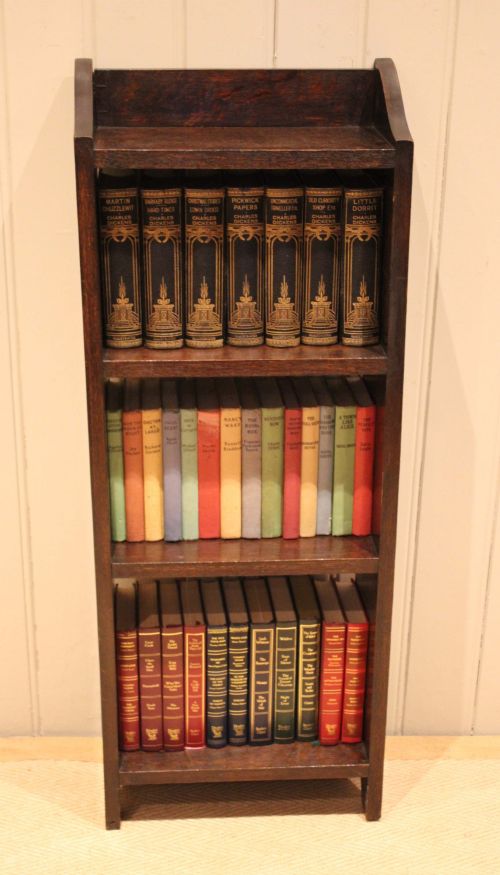
Compact oak bookshelves provide practical shelving for modest spaces, drawing on periods from the nineteenth century through the early twentieth century. These pieces appear frequently in Edwardian formats and around the nineteen-twenties, often taking the form of narrow or small open bookcases.
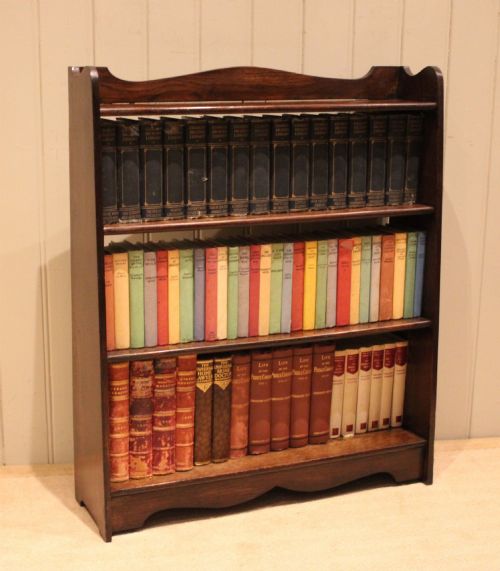
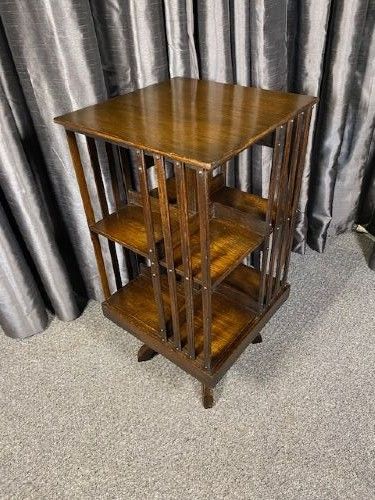
Buyers seeking compact oak bookshelves encounter designs featuring arched or raised galleries, carved edges, and occasional lower drawers. Variations include slim profiles, angled shelves, and revolving formats suited to tight corners.
Styles range from Arts and Crafts and Jacobean Revival to early twentieth-century traditional and English country. These variations reflect the utilitarian yet decorative aims of makers working primarily in oak and fruitwood.
Materials and construction
Construction relies heavily on solid oak, frequently paired with secondary timbers such as fruitwood and reinforced with iron or metal elements. Leather accents occasionally appear on top surfaces, adding texture to the timber framework.
Joinery methods reflect the period of manufacture, encompassing straightforward pegged shelving, carved detailing along edges, and integrated lower drawers or doors. Makers utilised timber grain to enhance the visual appeal of smaller proportions without adding unnecessary bulk.
Compact Oak Bookshelves Retail Price Guide 2026
Typical asking prices for compact oak bookshelves among the pieces listed under this phrase on Sellingantiques today, from the lower quarter to the upper quarter. They describe what is for sale here now, not the wider market.
Listings feature oak, fruitwood, and leather materials across Edwardian, Arts and Crafts, and Art Deco styles.
Assessing quality and proportion
Quality in compact oak bookshelves rests on the crispness of carved details, the integrity of the timber selection, and the balance of the proportions. Pieces featuring architectural elements like raised galleries or carved doors demonstrate finer craftsmanship.
The choice of materials also distinguishes standard utility from superior output, particularly where figured oak grain meets thoughtful integration of fixtures like metal hinges or leather inserts. Sturdiness of the standing frame and clean execution of narrow dimensions indicate higher workshop standards.
Ercol
The Compact Oak Bookshelves Glossary
- Gallery
- A raised decorative border along the top edge of a bookcase, designed to keep items secure. These often feature arched or pierced cut-outs.
- Arts and Crafts
- A design movement prioritising traditional craftsmanship, visible construction, and simple forms. Pieces from this style often display honest timber surfaces with minimal applied ornamentation.
- Jacobean Revival
- A style drawing on seventeenth-century motifs, characterised by dark finishes, geometric carving, and sturdy proportions. It frequently appears in pieces from the late nineteenth and early twentieth centuries.
- Dwarf bookcase
- A low-standing piece of furniture designed to sit beneath window height or within restricted wall spaces. These emphasise horizontal reach over vertical capacity.
- Revolving bookcase
- A compact shelving unit mounted on a rotating pivot base, allowing access to volumes from multiple angles in a confined footprint.
Compact Oak Bookshelves: Frequently Asked Questions
What periods do these bookcases cover?
The available pieces span from the late nineteenth century through the nineteen-thirties, with strong representation from the Edwardian era and the nineteen-twenties. Early twentieth-century traditional and Arts and Crafts examples are particularly common.
Manufacturing dates draw on nineteenth-century foundations while reflecting the domestic demands of homes seeking space-saving wooden storage.
How were compact bookcases used?
These pieces served as functional storage for working libraries in smaller studies, bedrooms, and parlours where full-sized furniture proved impractical. Their modest footprints allowed placement in tight corners or narrow hallways.
Fitted variations with revolving mechanisms or leather tops also functioned as accessible side tables alongside seating.
Are these pieces made entirely of solid oak?
Construction primarily utilises solid oak, though secondary timbers such as fruitwood occasionally appear in internal or framing components. Metal hardware, iron brackets, and leather top inserts are also integrated into specific designs.
Grain patterns and timber cuts vary across the selection, influenced by the prevailing style of the specific decade.
How do I distinguish Edwardian examples?
Edwardian compact bookcases often feature characteristic details such as carved edges, raised galleries, or lower drawers fitted beneath open shelving. Their proportions remain narrow and light compared to heavier Victorian precedents.
Makers working in this period frequently combined traditional timber construction with compact scaling suited to contemporary urban rooms.