

Compact Mahogany Table
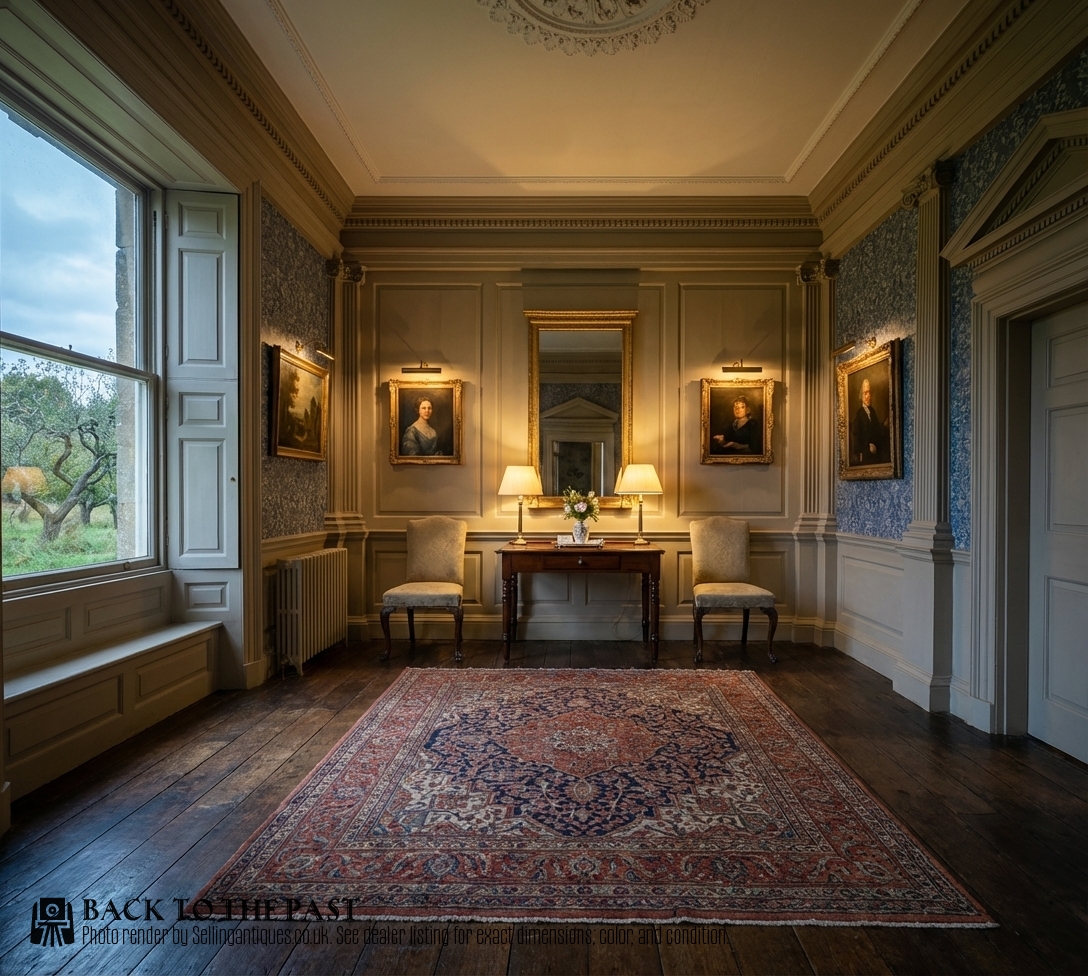
A compact mahogany table offers useful surface space in smaller rooms, combining rich timber with clever folding or drop-leaf designs.
Compact Mahogany Table
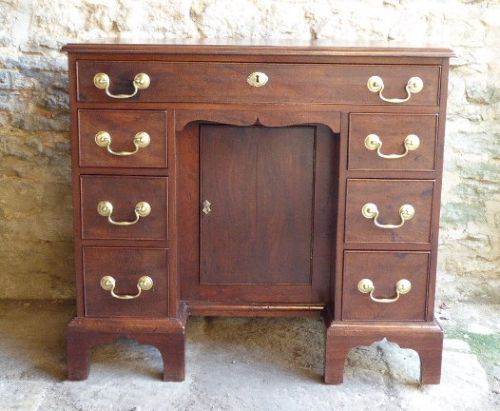
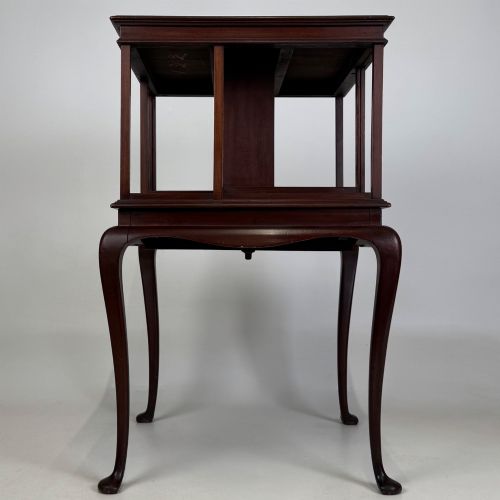
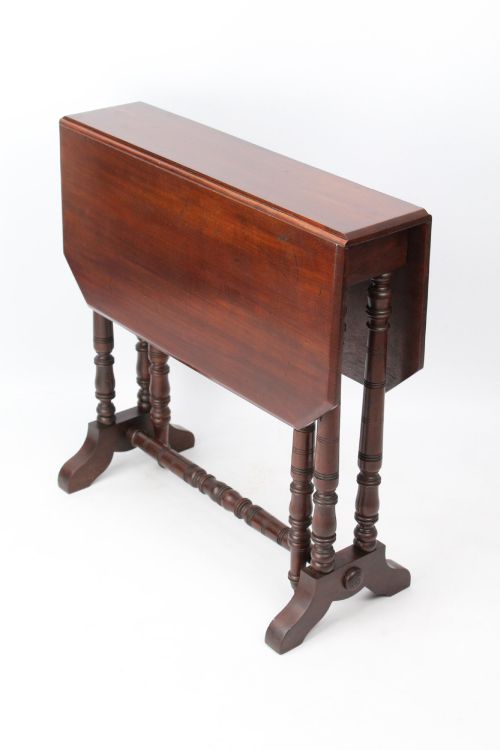
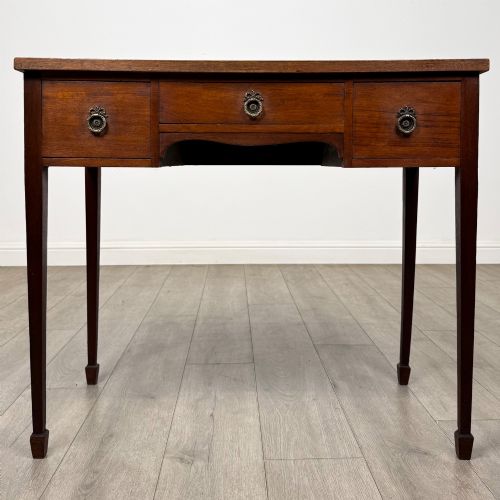
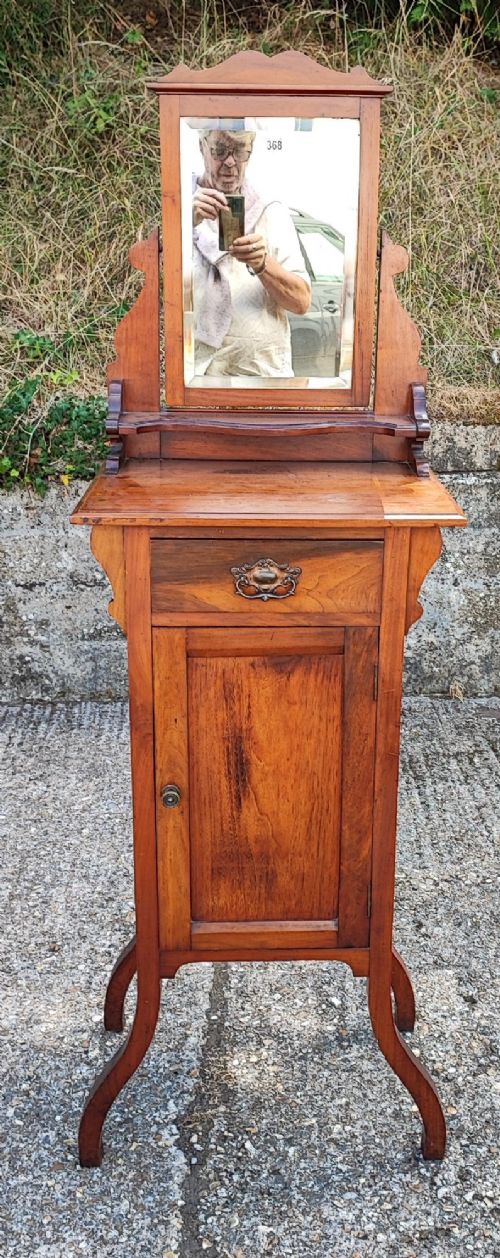
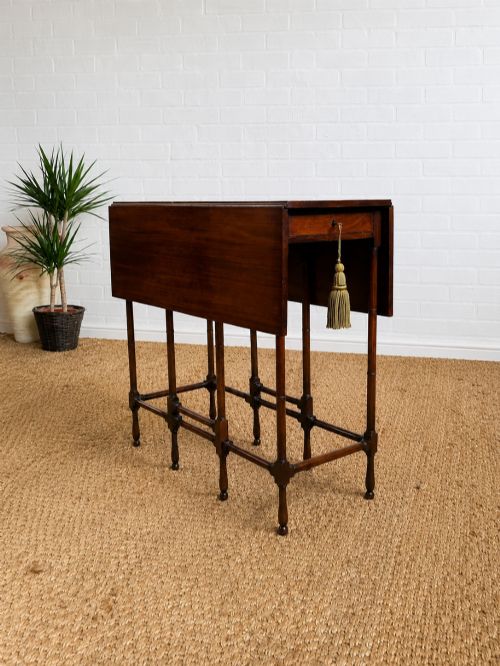
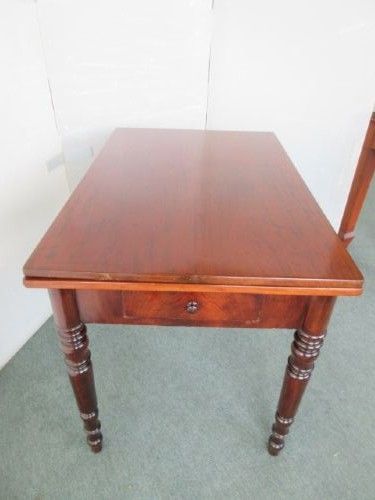
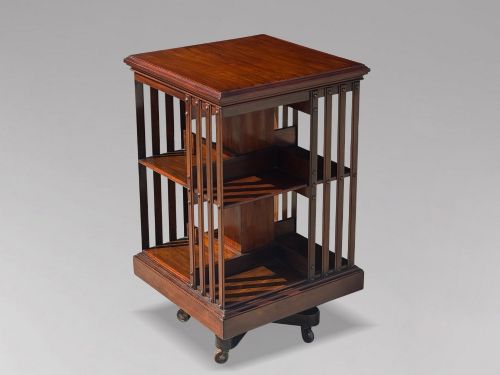
A compact mahogany table satisfies the constant demand for space-saving antique furniture that retains traditional character. When searching for a compact mahogany table, buyers encounter a variety of forms including side tables, writing desks, Sutherland tables, and revolving bookcases dating from the eighteenth century through the Edwardian period.
The Edwardian and Victorian eras supply the majority of these smaller pieces, often featuring drop-leaves, drawers, or folding tops to minimise their footprint. Georgian examples also appear, valued for restrained proportions and straightforward timber construction.
Makers utilised dense tropical timber alongside brass hardware and occasional satinwood inlay to create durable items intended for studies, bedrooms, and drawing rooms. These practical objects demonstrate how period cabinet makers solved spatial constraints without sacrificing traditional craftsmanship.
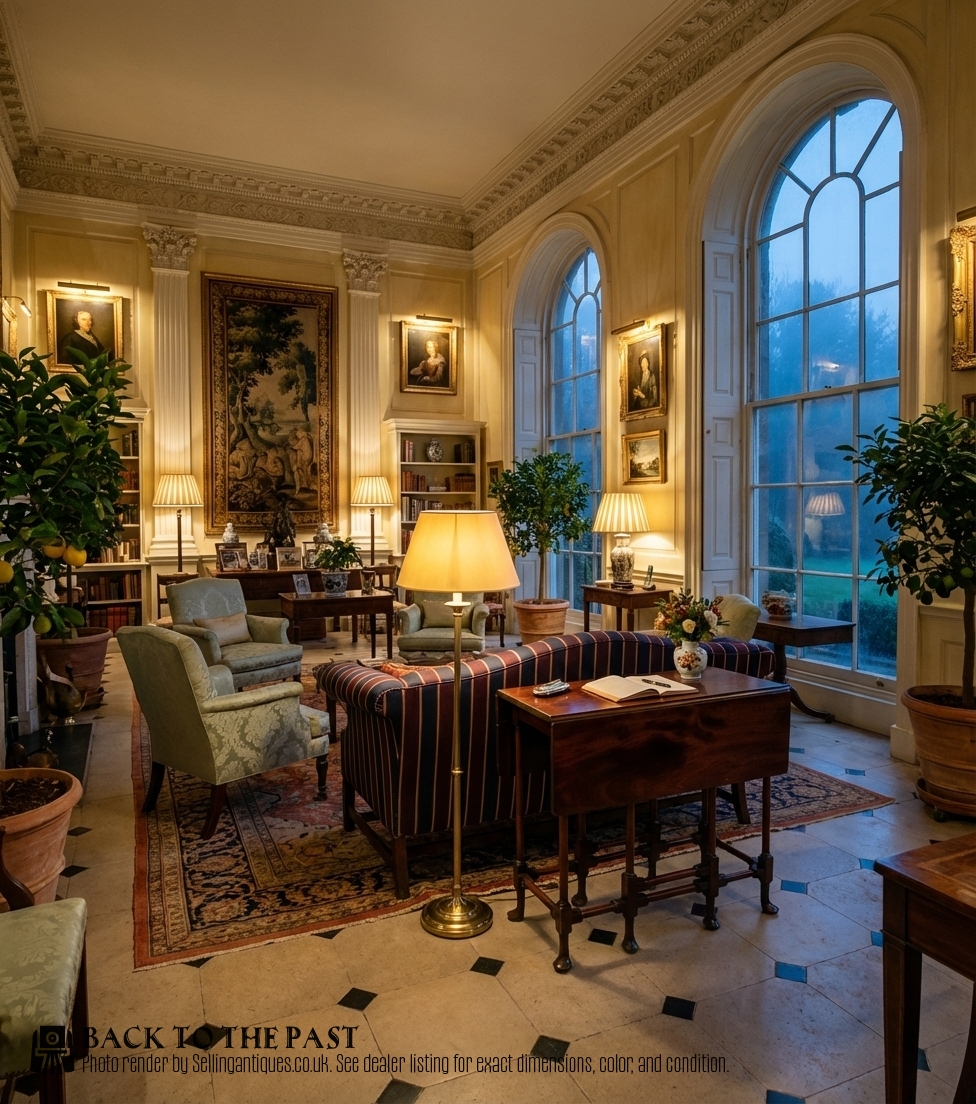
Materials and construction
Cabinet makers built these tables using solid mahogany or applied flame mahogany veneers over secondary woods, selecting timber for its deep grain and resilience. Workshops incorporated brass castors, hinges, and handles to facilitate movement and fold-down mechanisms on Pembroke and Sutherland tables.
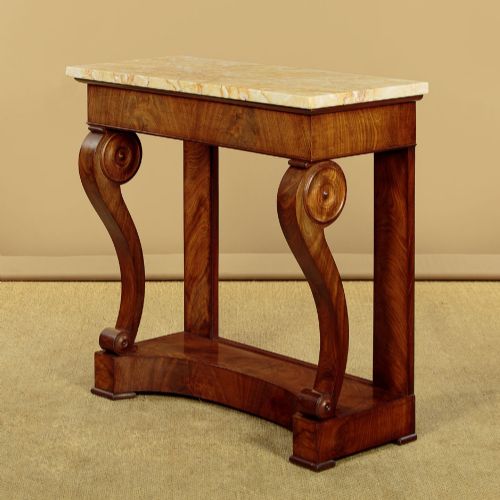
Detailing often included contrasting boxwood or satinwood inlay, alongside leather writing inserts and marble tops on specific desk and console variants. Turned legs, bamboo-turning, and drop-leaf pivots reflect the structural ingenuity required to make small furniture functional.
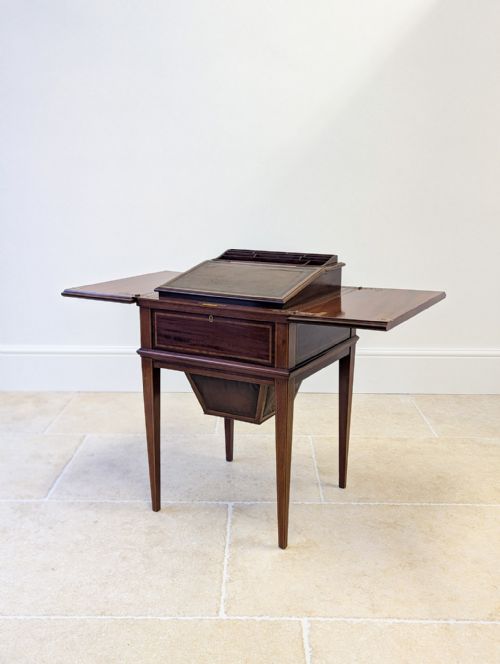
Some Edwardian desks hide clever metamorphic actions that transform a polite lady's writing table into a multi-tiered workspace with a single lift.
Judging quality in compact tables
Quality rests upon the selection of timber figures, such as symmetrical flame mahogany grain, and the crispness of inlaid stringing or satinwood banding. Superior pieces exhibit tight joinery, original brass hardware, and well-executed secondary timbers within drawer linings.
Proportion and ingenuity also distinguish finer items, particularly in metamorphic writing desks and folding card tables where hidden mechanisms must operate smoothly. Untouched surfaces with deep patination indicate better preservation than heavily stripped or over-polished examples.
Edwards and Roberts
The Compact Mahogany Table Glossary
- Sutherland table
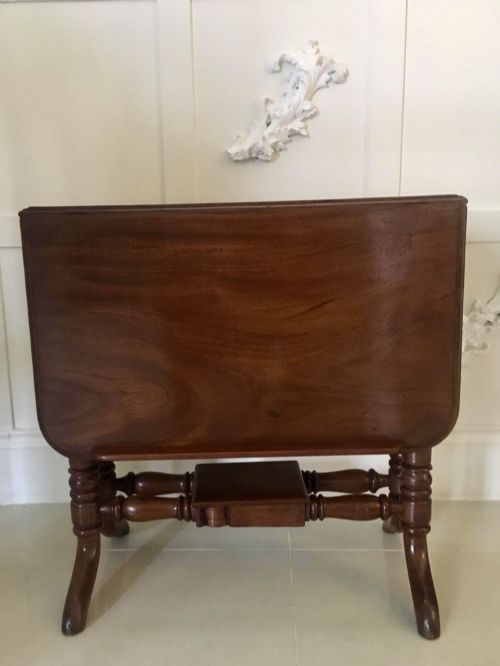
- A narrow drop-leaf table with exceptionally small flaps and slender gatelegs designed to fold flat against a wall.
- Pembroke table
- A small occasional table featuring two hinged leaves on opposite sides and usually one or two small drawers.
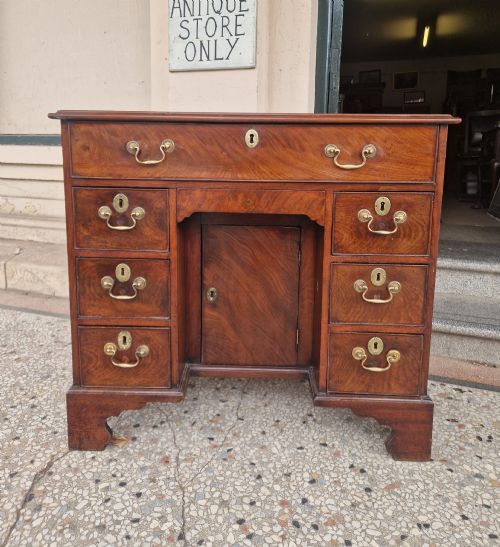
- Kneehole desk
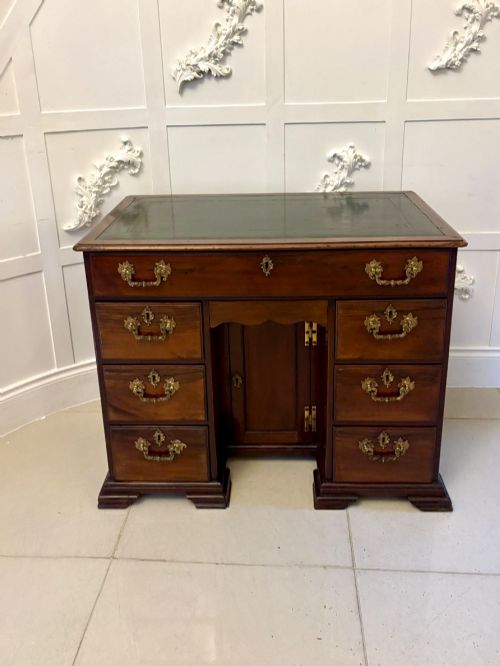
- A compact desk featuring a central recess for the knees flanked by pedestals of small drawers.
- Metamorphic furniture
- Pieces designed to transform into different objects, such as a writing table converting into a games surface or library steps.
- Stringing
- A thin inlaid line of contrasting wood used to edge panels and drawer fronts on eighteenth and nineteenth-century furniture.
Compact Mahogany Table: Frequently Asked Questions
What is a compact mahogany table used for?
These tables serve primarily as writing desks, bedside surfaces, small dining tables, or occasional stands in rooms where floor space is limited. Their folding leaves and drawers provide adaptable functionality for daily domestic tasks.
Historically, homeowners placed them in libraries, parlours, and bedrooms to hold books, writing materials, or decorative items without cluttering the interior.
How do I date an antique mahogany table?
Dating relies on examining construction methods, timber choice, hardware styles, and design characteristics associated with specific eras like the Georgian or Edwardian periods. Hand-cut dovetails, secondary woods, and original brasses offer reliable clues to the age of the piece.
Cabinet-making techniques evolved from the heavier solid timbers of the eighteenth century to lighter veneered designs and factory-assisted production in the late Victorian and Edwardian decades.
How do I care for antique mahogany furniture?
Maintenance involves keeping the timber away from direct sunlight and sudden temperature changes to prevent the wood from drying out or splitting. Gentle dusting with a dry, soft cloth preserves the polish without harming the historic finish.
Applying microcrystalline wax occasionally helps protect the surface and nourish the grain, avoiding silicone-based sprays that damage antique polishes over time.
Are drop-leaf tables sturdy enough for daily use?
Period drop-leaf and gateleg tables feature robust pivot joints and hinged wooden supports designed to bear weight securely when fully extended. Regular inspection of the hinge screws and leg pivots ensures the drop-leaf mechanisms remain safe for routine tasks.
While they accommodate dining or writing, excessive downward pressure on the unsupported outer edges of the leaves should still be avoided.