



Compact Mahogany Folding Table
A compact mahogany folding table offers ingenious space-saving design, bringing useful surfaces into small rooms through drop leaves, gatelegs and folding actions.

Compact Mahogany Folding Table
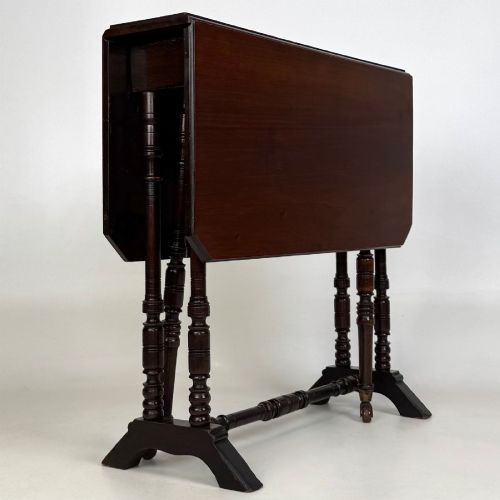
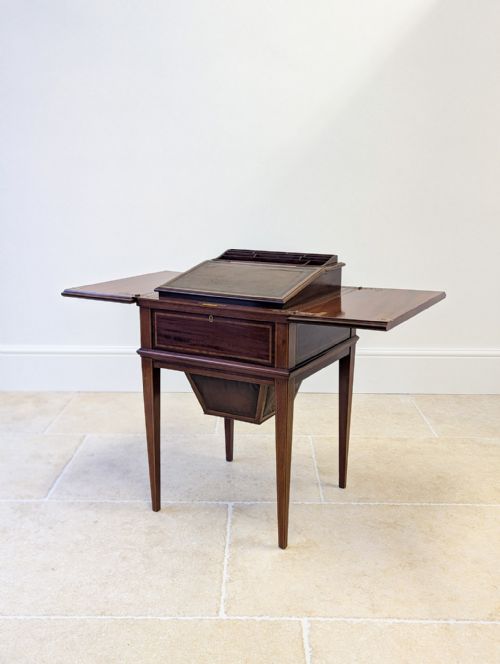
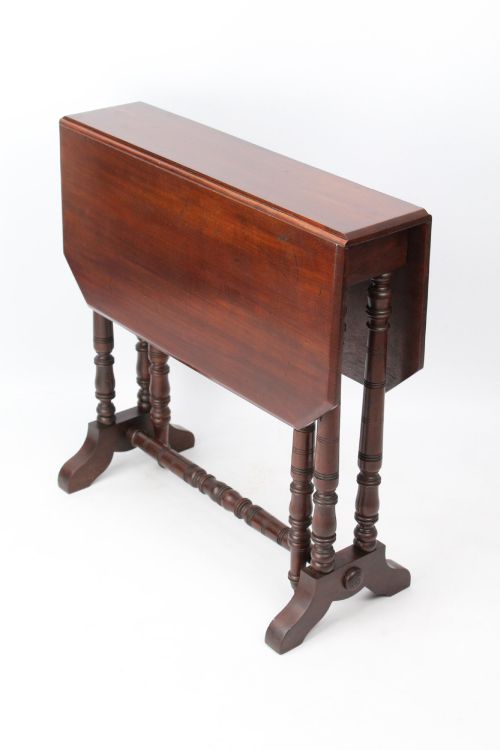
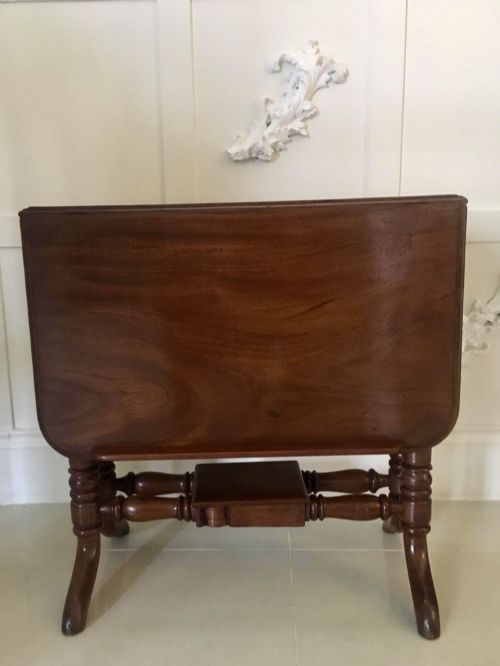
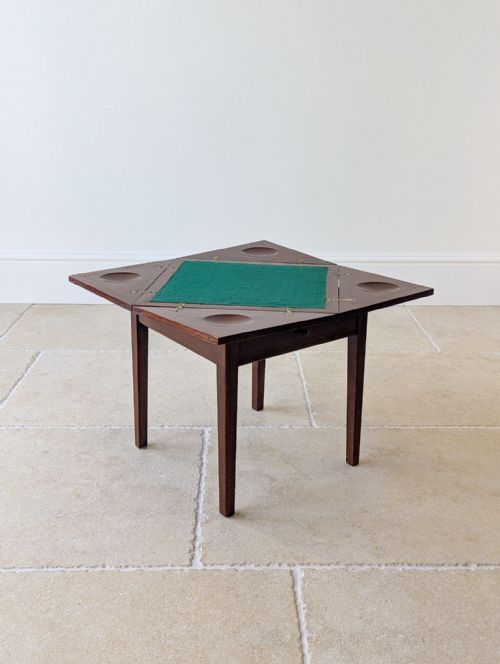
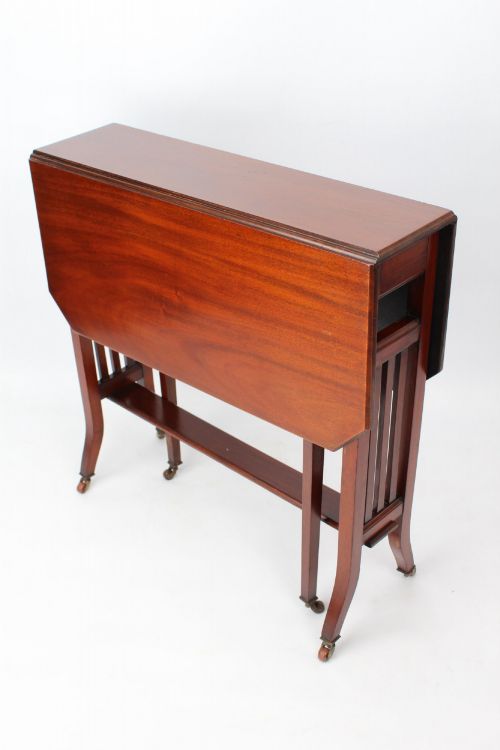
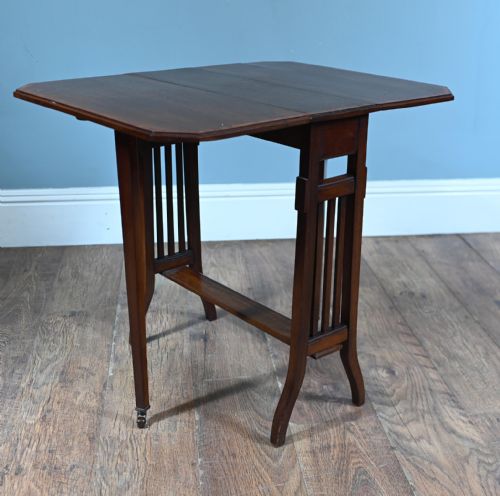
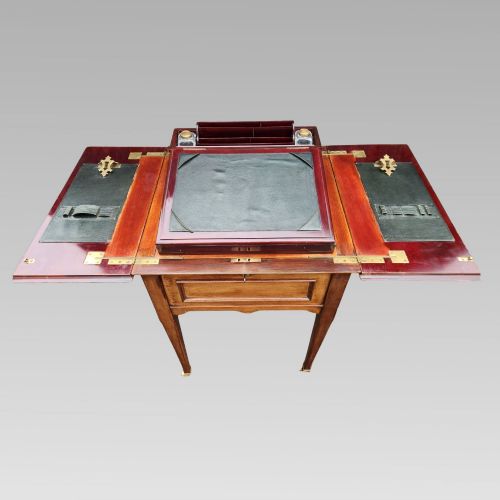
A compact mahogany folding table is primarily represented here by Sutherland tables, drop leaf tables, card tables and occasional tables spanning the Georgian, Victorian, and Edwardian periods. Buyers searching this phrase meet versatile pieces designed to fold down into narrow profiles when not in use.
The most common forms on this page are Edwardian and Victorian Sutherland tables featuring slender gateleg actions and drop leaves. Alongside these, occasional tables, spider leg tables and occasional drop leaf coffee tables provide practical surfaces that expand quickly.
Origins stretch from the 19th century through the early 20th century, encompassing Georgian styles, Arts and Crafts pieces, and later traditional designs. These tables serve as functional furniture for dining, writing or card games within restricted spaces.
Materials and Construction
Construction relies primarily on solid and veneered mahogany, often enhanced with satinwood inlay, boxwood stringing, brass fittings, and leather inserts. Structural integrity depends on sturdy gateleg mechanisms, folding actions and hinged drop leaves that support extended surfaces.
Cabinet makers utilised traditional joinery combined with clever pivoting frames, spider legs and double-action hinges to ensure stability when open. Surfaces frequently incorporate baize linings, ceramic castors or delicate banded borders to finish the timber.
Listings span the Georgian, Victorian, and Edwardian periods, utilising mahogany alongside satinwood, brass, leather, and baize.
Assessing Quality
Quality rests upon the crispness of the inlaid satinwood, the tightness of the timber grain, and the smoothness of the folding or gateleg mechanism. Superior examples display precise joinery, balanced proportions when closed, and careful selection of figured mahogany.
Finer pieces maintain rigid stability across their drop leaves and hinges without wobble, while lesser examples exhibit looseness in the pivoting frames or simpler, unadorned timber surfaces.
The Compact Mahogany Folding Table Glossary
- Sutherland table
- A narrow drop-leaf table with particularly slender gate legs designed to fold completely flat. This form allows the leaves to drop almost vertically at the sides.
- Gateleg table
- A table with legs on a swinging framework that pulls out to support a folding leaf. The hinged gate provides sturdy support beneath the extended top.
- Satinwood inlay
- Ornamental contrasting wood fitted into recesses within the mahogany surface. This technique creates delicate borders and geometric patterns characteristic of Edwardian pieces.
- Baize
- A coarse woollen material resembling felt used to line card tables and writing surfaces. It provides a soft, durable texture for playing games or writing.
- Spider leg
- Extremely slender turned wooden legs utilised on lightweight occasional tables. They offer maximum clearance with minimal visual weight.
Compact Mahogany Folding Table: Frequently Asked Questions
How do Sutherland tables work?
Sutherland tables utilise narrow fixed central sections and wide drop leaves supported by pivoting gate legs. When lifted, the hinged leaves rest securely on these swinging wooden frames.
Dropping the leaves allows the entire table to fold into a remarkably slim profile for storage against a wall.
Where were these tables used?
These tables served primarily in drawing rooms, parlours and bedrooms where flexible floor space was essential. They functioned as impromptu dining surfaces, card tables or writing desks.
Their compact nature suited smaller Victorian and Edwardian homes that required multipurpose furniture.
How do I date a folding table?
Dating relies on stylistic details, timber characteristics and construction methods visible in the legs and hinges. Georgian pieces often feature heavier timbers and simpler drop leaves, while Edwardian examples frequently display satinwood inlay and spider legs.
Victorian pieces sit between these styles with robust gateleg actions and occasional ceramic castors.
Are these tables sturdy enough for daily dining?
Most compact folding tables provide reliable support for casual meals, tea or writing tasks when properly opened. The gateleg mechanism distributes weight evenly across the swinging legs.
Care should be taken not to place excessive downward pressure on the outer edges of unsupported drop leaves.