

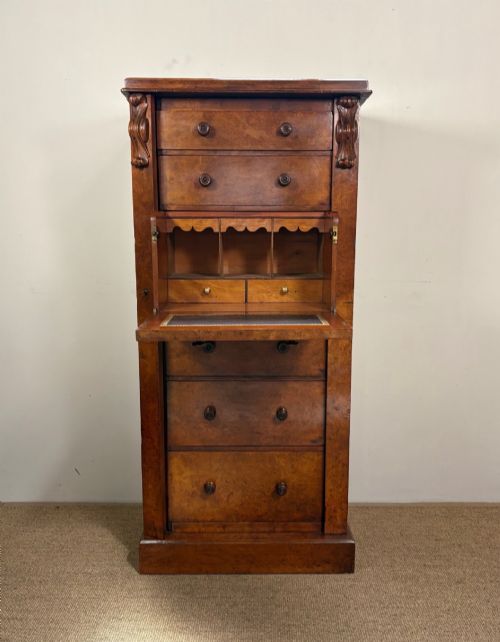
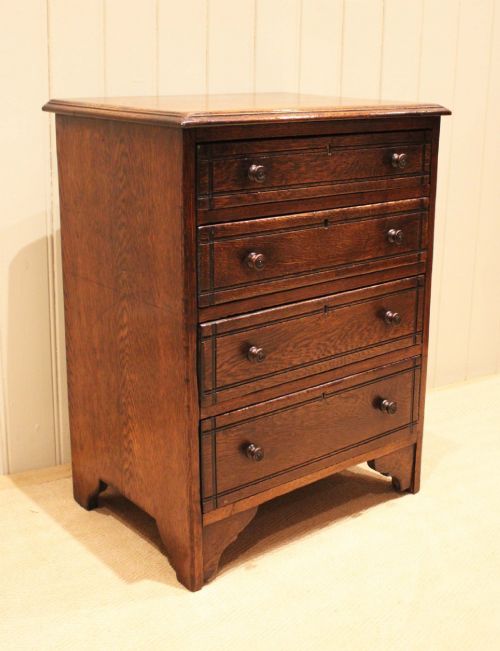
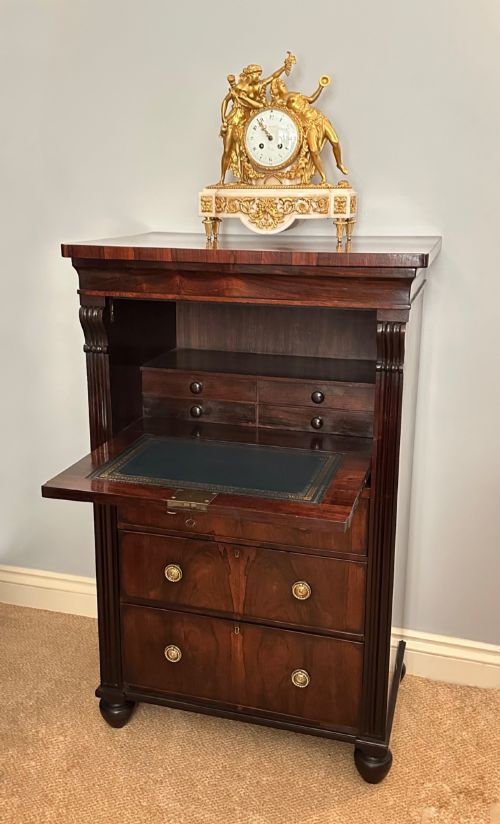
Compact Chest of Drawers
A compact chest of drawers offers scaled-down storage for smaller rooms, uniting period craftsmanship with practical proportions.
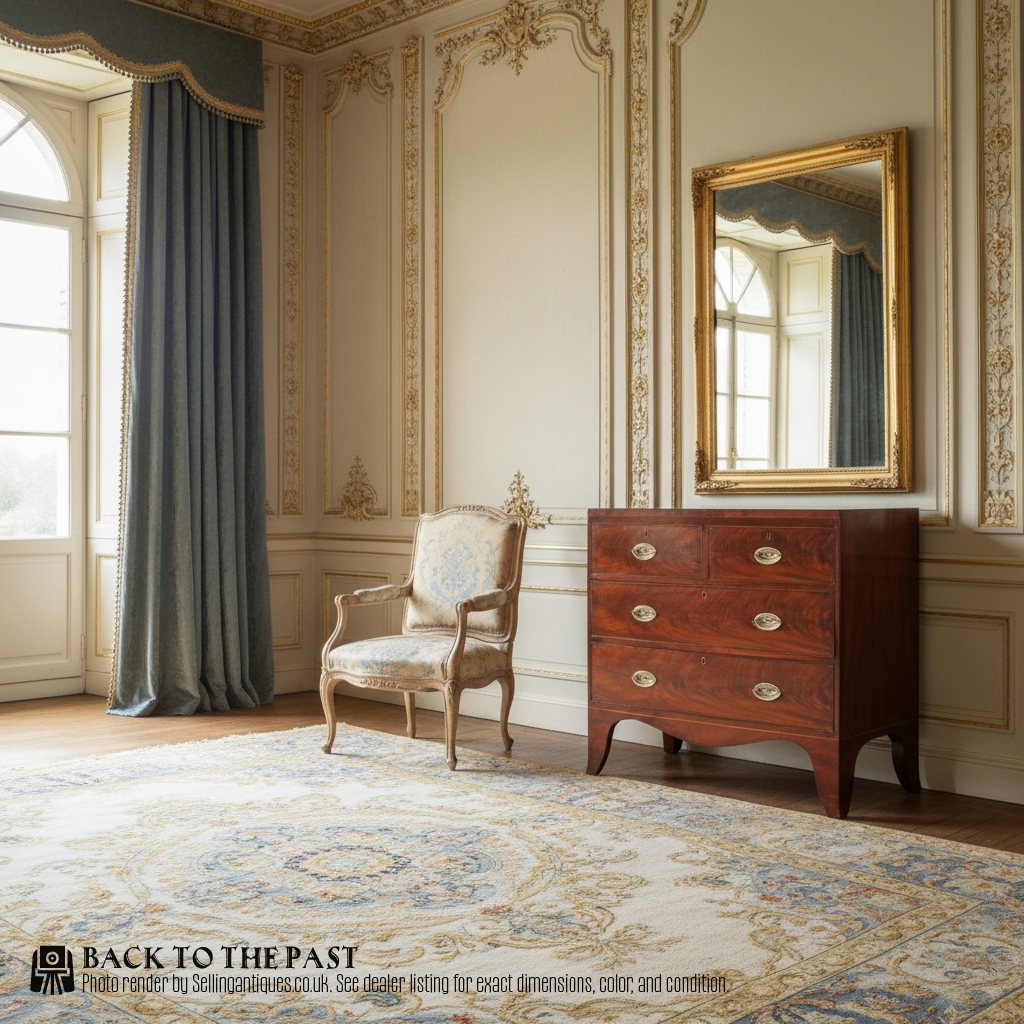
Compact Chest of Drawers
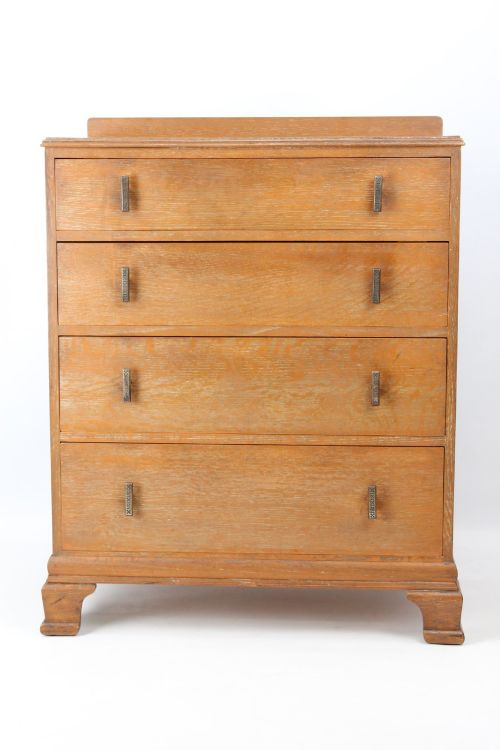
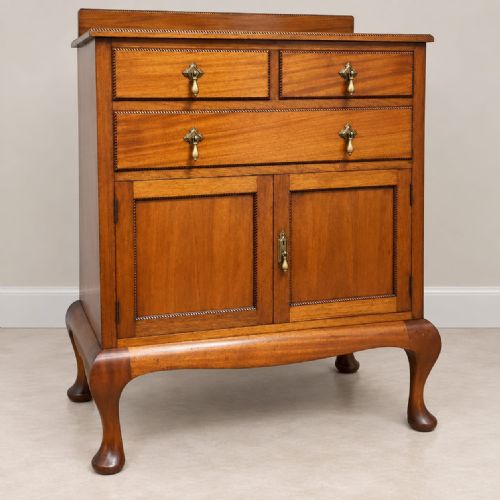
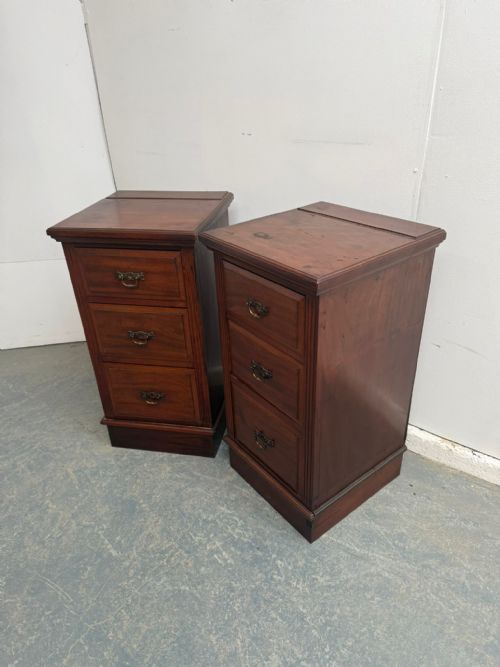
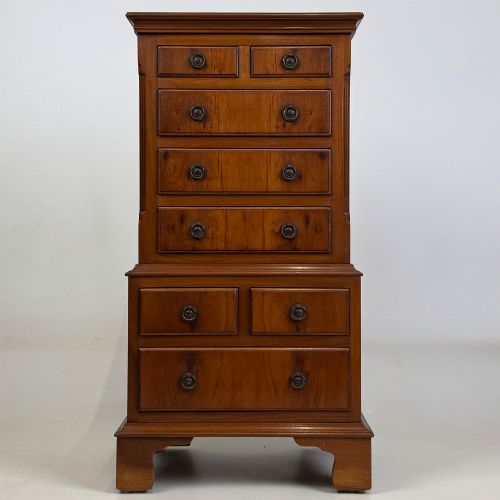
A compact chest of drawers provides reduced dimensions for tighter interior spaces while retaining the storage utility of larger case pieces. Buyers searching for a compact chest of drawers will encounter forms spanning the eighteenth, nineteenth, and twentieth centuries.
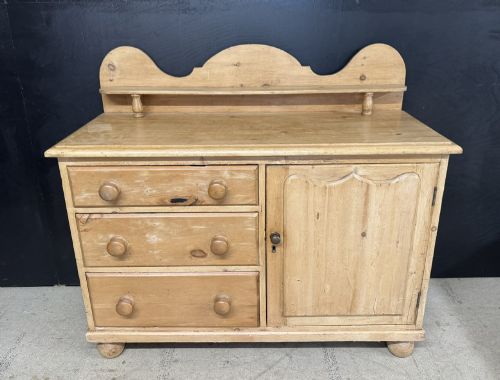
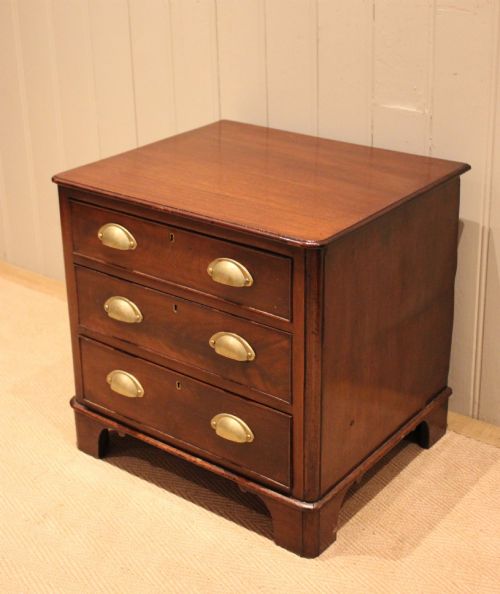
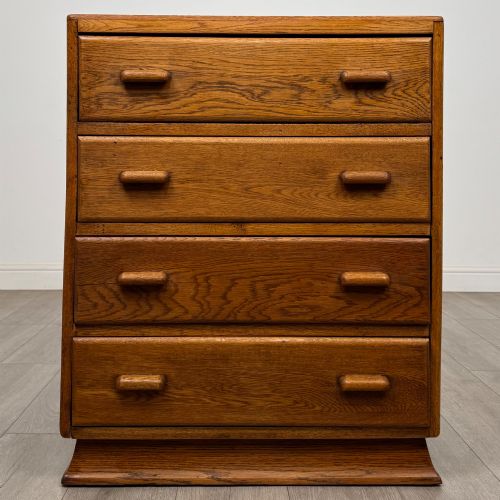
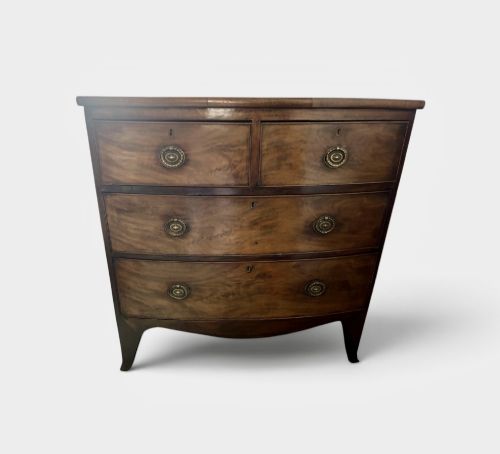
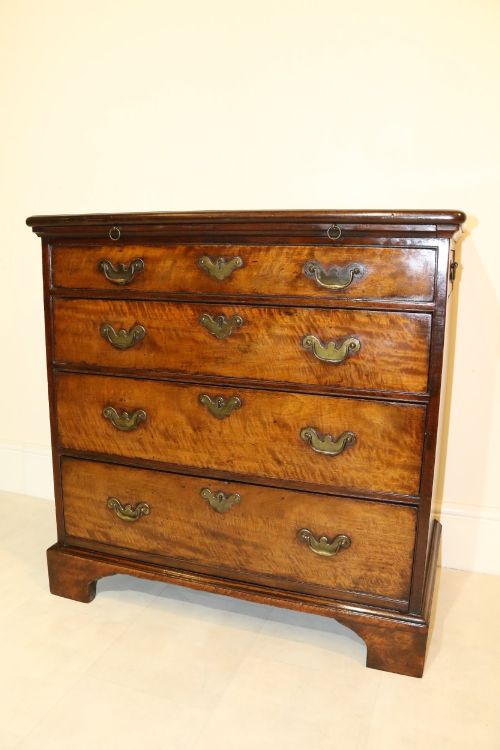
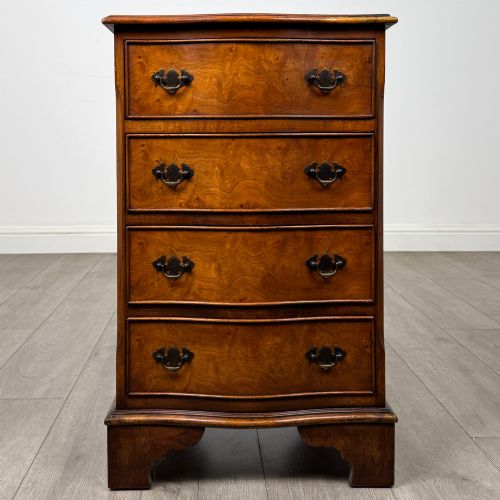
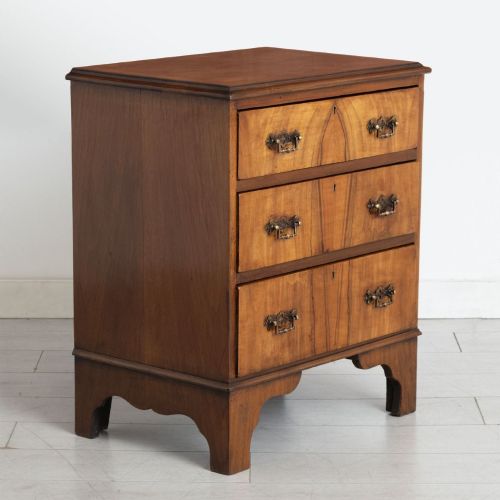
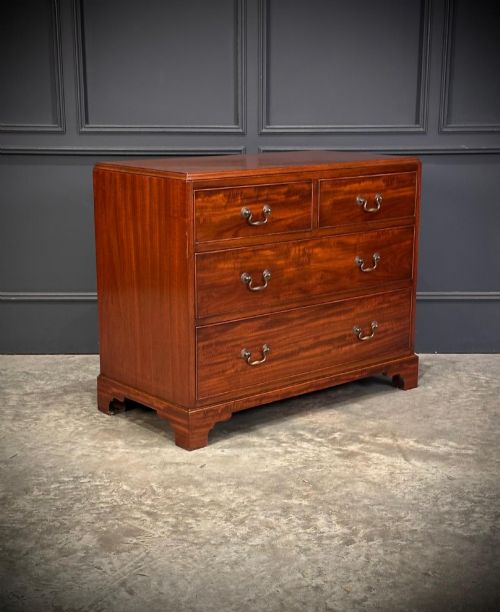
The selections on this page appear in various regional British woods, including mahogany, oak, and walnut. Common iterations include bachelor chests, bow front designs, tallboys, and bedside cabinets.
Earlier Georgian and Regency examples sit alongside Victorian iterations and later Art Deco interpretations. Each variation prioritises smaller footprints without sacrificing internal drawer capacity.
How They Were Made
Cabinet makers utilised dense hardwoods such as mahogany, oak, and walnut, often applying burr walnut or rosewood veneers to primary surfaces. Solid secondary timbers such as pine appeared on drawer linings and internal framing.
Construction techniques involved dovetailed drawer joints, bracket feet, or plinth bases, paired with cast brass drop handles or pull knobs. Selected pieces incorporate folding writing flaps, leather surfaces, or specialised locking mechanisms.
The archive includes specialised forms such as bachelor chests, Wellington chests, and compactum wardrobes.
What Varies in Quality
Quality rests in the selection of figured timber grains, such as flame mahogany or burr walnut, matched evenly across drawer fronts. Superior execution shows in crisp cabinet mouldings, tight corner dovetails, and intact original brass hardware.
Proportion and structural integrity define the upper tier of surviving examples. Pieces retaining original surface patination, sound bracket feet, and working locks command greater consideration than heavily altered or stripped items.
The Compact Chest of Drawers Glossary
- Bachelor's chest
- A small domestic storage chest featuring a fold-over top or pull-out writing slide. These pieces date predominantly from the eighteenth and nineteenth centuries.
- Bow front
- A convex curved cabinet front that projects outwards in the centre. This configuration appears frequently on Georgian and Victorian pieces.
- Tallboy
- A tall vertical chest of drawers, often constructed in two stacked sections. They maximise vertical storage while maintaining a narrow footprint.
- Wellington chest
- A vertical locking chest featuring a hinged side pilaster that secures all drawers simultaneously. These date largely from the nineteenth century.
- Compactum
- A multi-functional wardrobe or storage cabinet combining drawers, hanging space, and shelves. Art Deco and Edwardian variations utilise this format.
Compact Chest of Drawers: Frequently Asked Questions
What is a compact chest of drawers?
A compact chest of drawers is a scaled-down storage unit designed to fit narrow spaces or smaller rooms. These pieces maintain traditional drawer configurations while reducing overall width and depth.
They appear across multiple historic periods, offering functional storage without dominating a domestic interior.
How were these chests used historically?
Historically, these smaller chests served bedrooms, dressing rooms, and private studies for personal linen and documents. Variations like bachelor chests included writing surfaces for correspondence.
Bedside iterations held night lighting and personal items, adapting standard furniture forms to restricted chamber spaces.
How do I identify a Georgian compact chest?
Georgian examples display dense mahogany or oak timbers, hand-cut dovetail joints, and characteristic bracket feet or ogee base mouldings. Proportions remain restrained, often featuring bow fronts or pull-out slides.
Hardware consists of cast brass drop handles mounted on backplates, reflecting eighteenth-century joinery standards.
What wood types are most common?
Mahogany remains the predominant timber across eighteenth and nineteenth-century examples, often selected for its stability and rich grain. Oak and walnut appear frequently in earlier and later periods.
Decorative veneers like burr walnut, rosewood, and birds-eye maple decorate high-status pieces from the Victorian and Art Deco eras.
How do I style a period chest today?
These chests function effectively as bedside tables, hallway surfaces, or living room accent pieces. Their reduced dimensions allow placement in awkward architectural corners or tight landings.
Pairing antique wood tones with contemporary or traditional surroundings highlights their practical scale and historic character.