


Column Leg Occasional Table
Column leg occasional table examples bring compact surfaces into sitting spaces, pairing slender central supports with practical tops.
Column Leg Occasional Table
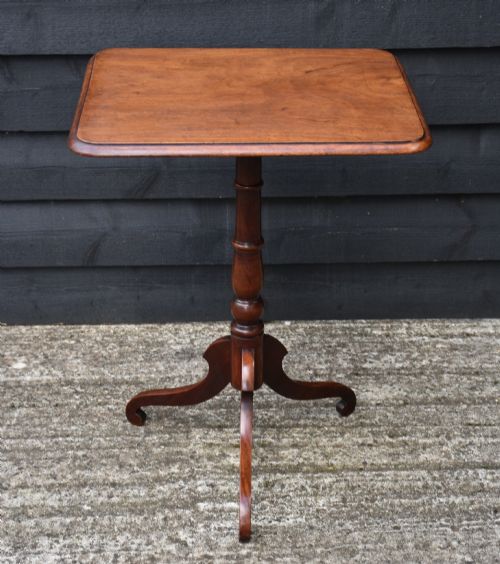
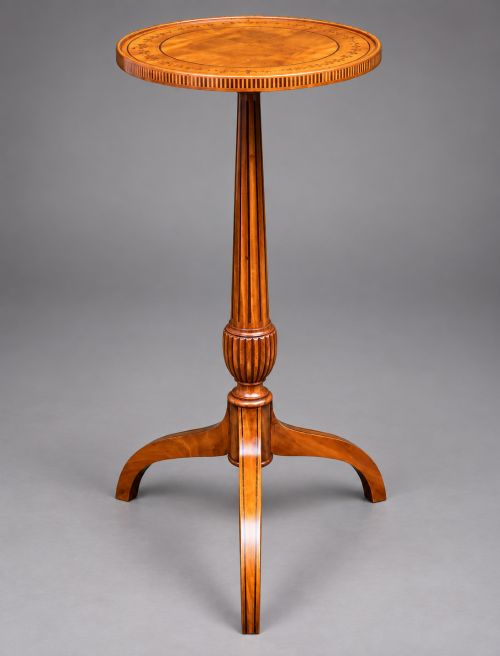
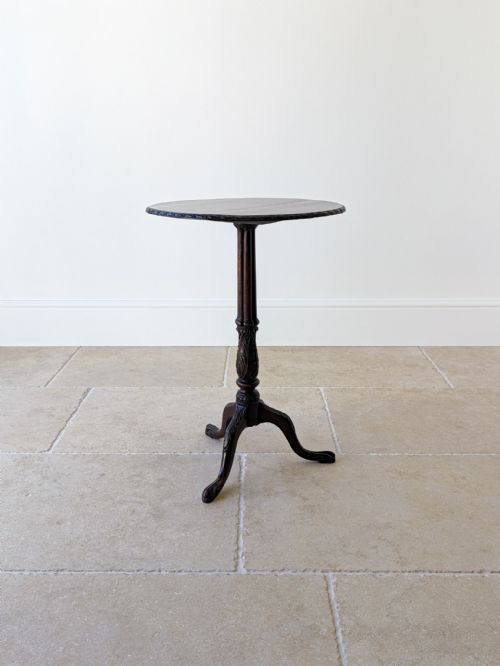
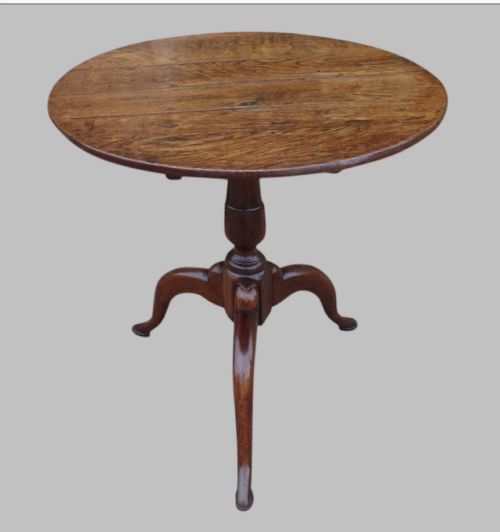
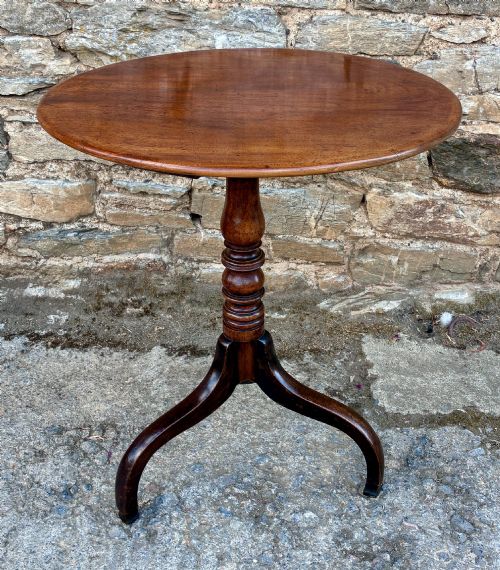
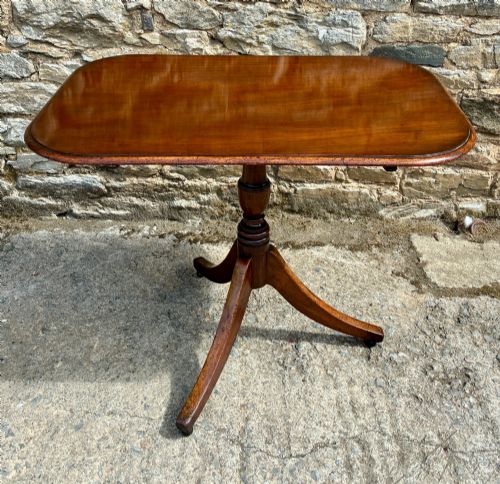
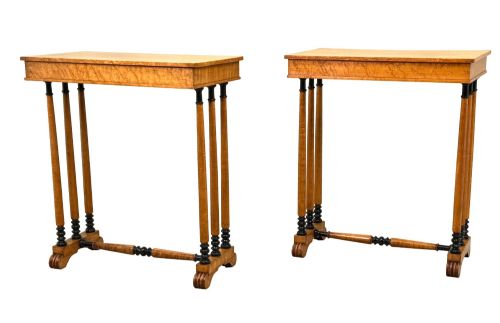
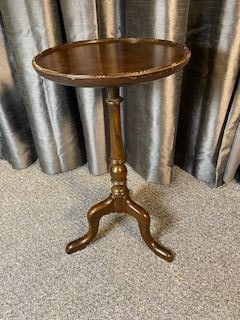
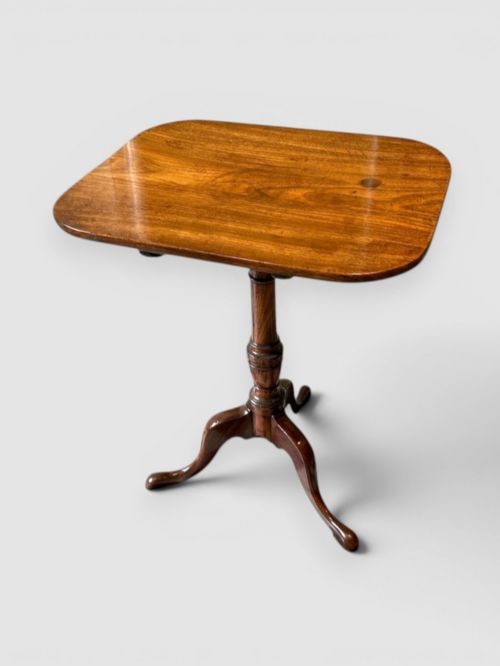
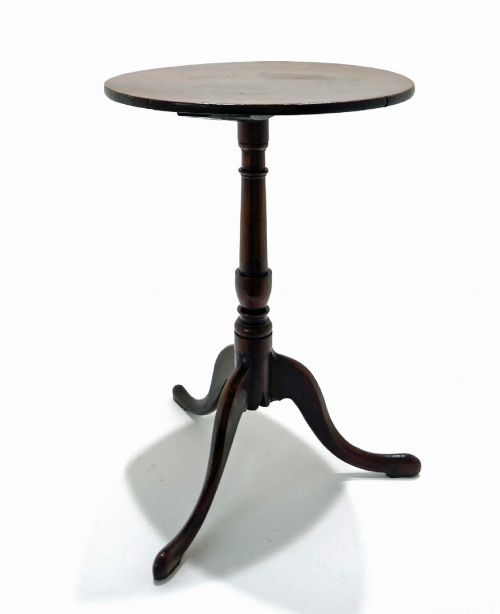
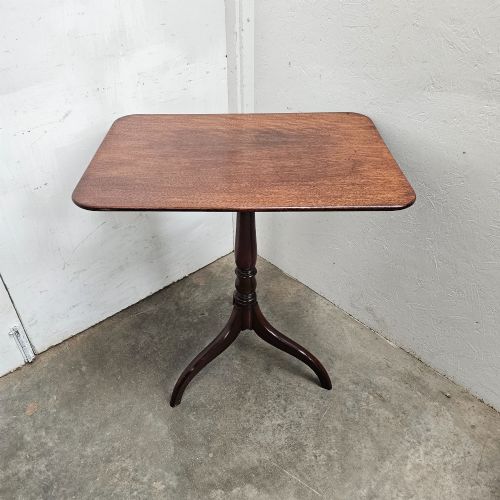
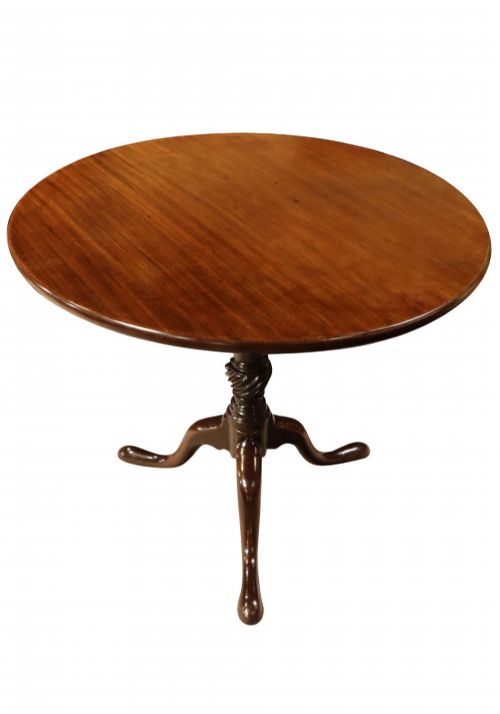
A column leg occasional table provides a sturdy yet compact surface supported by a central upright rather than standard corner legs. These pieces appear frequently across Georgian, Regency and Victorian periods, often taking the form of wine tables, tripod tables or lamp tables.
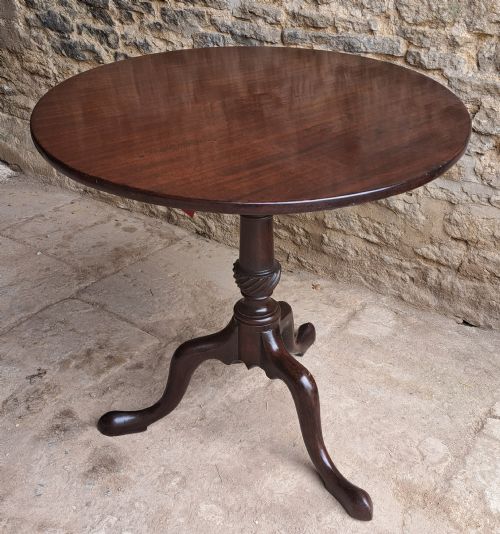
The format suits smaller rooms and corners where a bulky piece would overwhelm the floor plan. Buyers encounter circular, rectangular and oval tops resting upon turned, spiral twist or slender pillars.
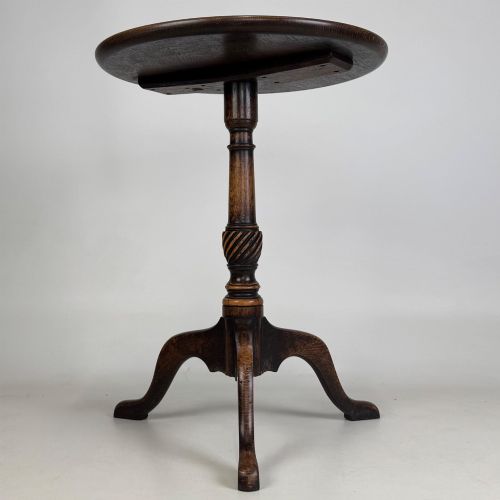
Many examples incorporate tilt top or snap top mechanisms, allowing the surface to fold vertically when not in use. This clever design lets the table stand flat against a wall, saving valuable space in historic interiors.
How they were made
Cabinet makers relied heavily on timber selection, utilising dense hardwoods like mahogany, oak and walnut for both stability and visual richness. Burr elm, birdseye maple and amboyna also appear, chosen for their distinctive figuring.
Turnery lathes shaped the central columns, producing smooth cylinders, barley twists or faceted posts that anchored the tripod or pedestal base. Brass fittings occasionally reinforced hinges and tilt mechanisms on folding tops.
Materials recorded across the selection include mahogany, oak, walnut, burr elm, iron and brass.
What varies in quality
The choice of timber grain sets superior pieces apart, with highly figured fiddleback or burr veneers indicating careful selection by the maker. Solid construction of the central column and leg joints ensures the table remains stable without wobble.
Fine craftsmanship shows in the crispness of the turnery and the precise fit of any tilting mechanisms. Subtle details like inlaid borders or carved tripod legs elevate a utilitarian object into a refined piece of furniture.
Shoolbred
The Column Leg Occasional Table Glossary
- Tripod base
- A three-legged support system commonly attached to the bottom of the central column. This design ensures the table remains steady even on uneven historical flooring.
- Tilt top
- A hinged mechanism allowing the tabletop to pivot into a vertical position. It enables the furniture to be stored compactly against a wall.
- Guéridon
- A small French occasional table supported by a central pillar or figures. These pieces often serve as decorative plant stands or lamp tables.
- Snap-top
- A spring-loaded or catch mechanism securing a tilting tabletop in the horizontal position. It prevents the surface from moving during normal use.
Column Leg Occasional Table: Frequently Asked Questions
What is a column leg occasional table used for?
These pieces serve as handy surfaces for lamps, drinks, books or decorative plants in living areas and bedrooms.
Their compact footprint allows them to fit snugly beside armchairs or into unused corners where larger furniture cannot go.
How do I identify a tilt top table?
Look underneath the tabletop for a wooden or brass catch mechanism that attaches the surface to the central column.
When released, the top pivots flat, a historical feature designed to save space when the room was cleared.
What woods were commonly used?
Mahogany, oak and walnut form the backbone of these pieces, selected for their strength and rich natural colour.
Finer examples incorporate decorative veneers like burr elm, birdseye maple or amboyna on the surface tops.
Are these tables sturdy?
The central column distributes weight downward onto a spread base, usually formed of three sweeping legs.
While compact, a well-made example remains balanced and stable for daily placement of lamps and small items.