
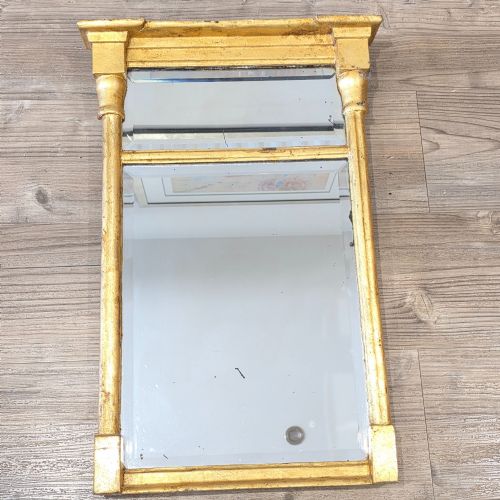
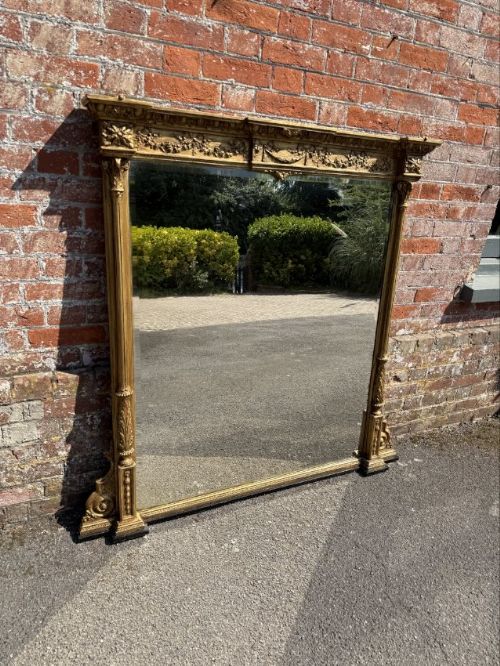
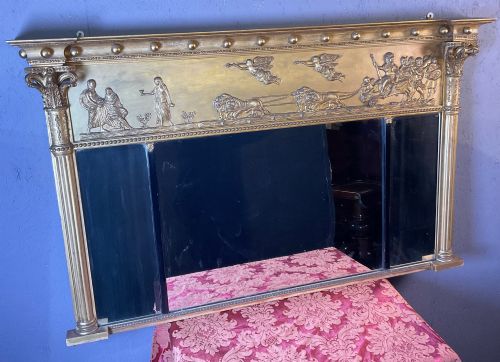

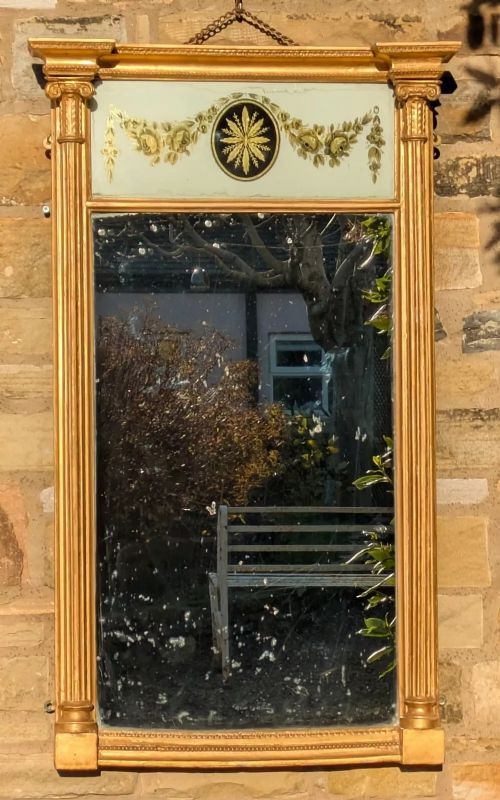
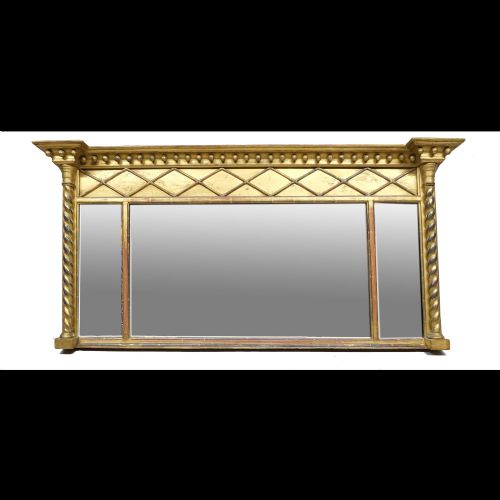
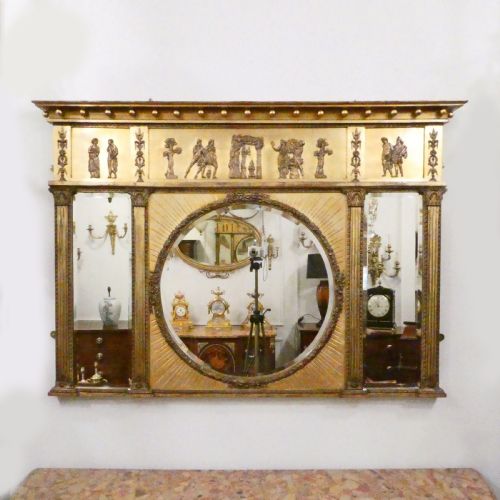


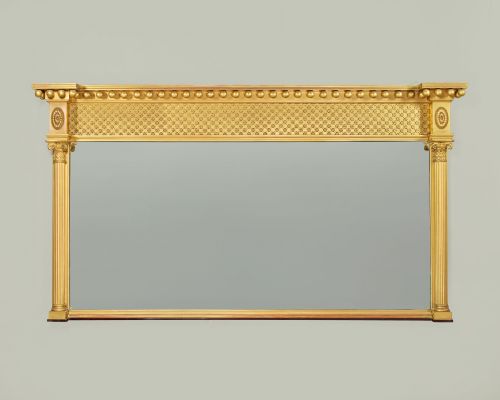


Column Gilt Overmantel Mirror
A column gilt overmantel mirror brings architectural presence and reflecting light to a room, spanning the Regency and Victorian periods.
Column Gilt Overmantel Mirror
A column gilt overmantel mirror is designed to hang above a fireplace, uniting the hearth with the rest of the room. When searching for a column gilt overmantel mirror, buyers encounter grand architectural pieces from the nineteenth century alongside refined pier mirrors.
The versions most commonly met on this page belong to the Regency and Victorian eras, often displaying classical column frames. These mirrors function as both decorative furnishings and practical sources of light in domestic interiors.
Materials and construction
Maker's workshops built these frames from carved wood, applying gesso and gold leaf to create a brilliant metallic surface. Composition ornaments often decorated the mouldings, paired with traditional mirror glass.
Makers utilised ebonised wood and parcel gilt details on specific pieces, whilst others incorporated verre eglomise panels above the primary glass.
Listings span the nineteenth century, encompassing Regency, Victorian, and Edwardian periods with forms including pier mirrors and triptych overmantels.
Assessing quality and craftsmanship
Quality rests in the crispness of the carved wood and gesso ornamentation, particularly around the columns and acanthus decoration. Superior examples display deep, even gilding and well-proportioned architectural frames.
The refinement of secondary details, such as triptych divisions or painted highlights, distinguishes the finest pieces from simpler wall mirrors.
The Column Gilt Overmantel Mirror Glossary
- Overmantel mirror
- A large horizontal mirror designed specifically to hang above a fireplace mantelpiece. These pieces often anchor the decorative scheme of a reception room.
- Pier mirror
- A tall vertical mirror made to fit the wall space between windows. They frequently share the architectural columns seen on larger overmantels.
- Gesso
- A plaster-like mixture applied to wood frames to provide a smooth base for gilding. Skilled artisans carved intricate details directly into this surface.
- Verre eglomise
- A cold decoration technique involving gilding and painting on the reverse of glass panels. It appears on select Regency mirrors above the main glass.
- Triptych mirror
- A mirror divided into three distinct vertical sections within a single frame. This format was popular during the Regency period.
Column Gilt Overmantel Mirror: Frequently Asked Questions
Where should an overmantel mirror hang?
These mirrors traditionally sit directly above a fireplace mantelpiece to reflect light and architectural details across the room. They also function effectively on principal walls in high-ceilinged reception rooms.
Ensuring secure wall fixings is essential given the substantial weight of carved wood and gesso frames from the nineteenth century.
What defines a pier mirror?
A pier mirror is proportioned to hang on the narrow wall space between windows, known as the pier. They share stylistic elements with overmantels but often feature taller, narrower dimensions.
Many examples incorporate column supports and decorative upper panels suited to nineteenth-century drawing rooms.
How do I identify a Regency mirror?
Regency mirrors frequently display classical architectural motifs, including gilt columns, acanthus leaves, and neoclassical details. The frames often utilise carved wood and gesso finished in gold leaf.
Triptych glass divisions and painted parcel gilt surfaces also indicate the Regency and William IV periods represented in these listings.
How do I care for giltwood frames?
Giltwood and gesso surfaces require gentle dusting with a dry, soft brush to protect the delicate metallic leaf. Avoid moisture and chemical cleaning agents, which can damage the historic finish.
Keeping the mirror away from direct heat sources helps preserve the underlying wood and composition ornaments.