
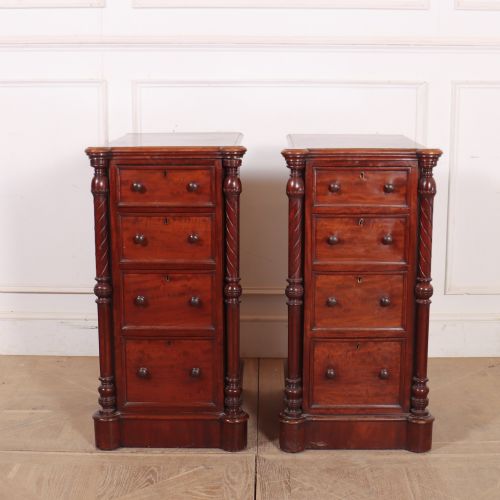


Column Bedside Cupboard
These column bedside cupboard pieces bring architectural form and closed storage to a bedroom, offering sturdy mahogany or pine surfaces topped with marble or wood.
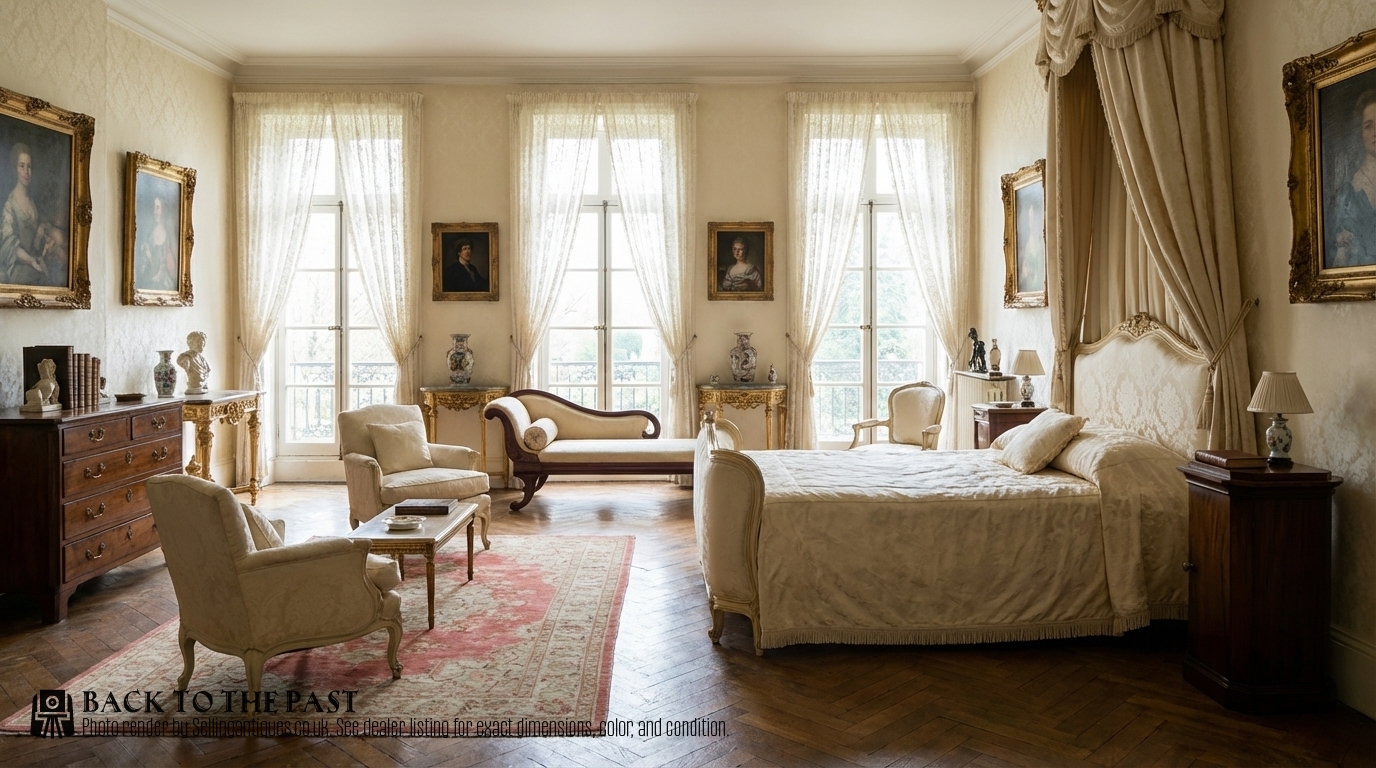
Column Bedside Cupboard
When you search for a column bedside cupboard, you find vertical storage forms shaped like architectural pillars or cylinder cabinets, originating from nineteenth-century workshops. The pieces span Victorian, Regency, and Biedermeier styles, featuring cylindrical bodies, mahogany timbers, and marble tops.
Most examples you meet on this page date from the Victorian era and the mid-nineteenth century, constructed as single pedestals or pairs of bedside chests. These vary from plain mahogany pot cupboards to French Empire and Continental marble-topped nightstands.
The objects serve primarily beside a bed or as lamp stands, combining a small footprint with enclosed shelving or drawers. Their forms draw directly on classical architecture, using column designs and pediment details.
Materials and construction methods
Cabinet makers built these pieces using solid hardwoods like mahogany and satinwood, alongside softer pine and oak for internal framing and carcass work. Selected timbers received polished finishes to highlight natural grain patterns, while alternative pieces used painted surfaces or faux marble treatments.
Marble tops appeared frequently on nineteenth-century Continental and French Empire examples, providing a durable and cool surface for daily bedroom use. Brass fittings such as handles, hinges, and mounts complemented the darker wood tones and structural columns.
Cylindrical and architectural column designs required precise timber bending and curved door construction, joining staves around a central cavity. Pedestal cabinets often incorporated recessed panel doors or pivoting cylinder mechanisms to conceal interior storage.
Materials recorded on this page include mahogany, satinwood, pine, oak, marble, and brass.
Distinctions in craftsmanship and materials
Quality separates simple utility furniture from pieces finished with figured mahogany veneers, fine satinwood, or heavy inset marble tops. Better examples exhibit crisp architectural moulding on the columns and smoothly operating cylindrical doors that align precisely with their frames.
The integrity of the internal carcass and drawer construction indicates the standard of workshop output, distinguishing standard Victorian production from finer Regency or Biedermeier cabinet work. Uniformity in pairs, matched wood grains, and original brass hardware elevate a piece above single mismatched items.
The Column Bedside Cupboard Glossary
- Pedestal cabinet
- A freestanding vertical cabinet designed to stand on the floor, typically featuring a single door enclosing a cupboard space. These forms often double as bedside tables or display stands.
- Pot cupboard
- A small bedroom cabinet originally constructed to house a chamber pot behind a single door. Many nineteenth-century examples now serve general bedside storage purposes.
- Biedermeier
- A Central European style spanning the mid-nineteenth century, known for clean lines, warm fruitwood or mahogany veneers, and minimal ornamentation. This aesthetic prioritises domestic utility alongside classical restraint.
- Cylinder cabinet
- A piece featuring a rounded, circular body constructed with curved panels or tambour doors. These items utilise vertical space efficiently while offering continuous curved surfaces.
- French Empire
- A nineteenth-century design movement inspired by classical Roman and Greek antiquity, characterised by architectural symmetry and contrasting dark woods. Pieces often incorporate marble tops and restrained brass mounts.
Column Bedside Cupboard: Frequently Asked Questions
What is a column bedside cupboard used for?
These cabinets serve as bedside storage for lamps, books, and personal items while concealing contents behind a door. Their compact vertical footprint suits smaller spaces alongside a bed.
Historically, similar forms held chamber pots or washing equipment, but modern rooms utilise them as lamp stands or nightstands.
How do I date a Victorian column cabinet?
Dating relies on timber selection, construction techniques, and stylistic markers associated with nineteenth-century periods. Mid-Victorian pieces often display dense mahogany, hand-cut dovetails, and classical column details.
Later Victorian examples may incorporate pine carcasses or painted finishes, reflecting changing manufacturing methods towards the end of the century.
Are marble top nightstands heavy?
The marble slabs fitted to these nineteenth-century stands add substantial weight to the top section of the cabinet. This heavy stone provides a stable, water-resistant surface for jugs, glasses, or lamps.
When moving the furniture, lifting the loose marble top separately from the wooden base prevents accidental damage.
How do I fit a cylinder cabinet into a modern room?
The rounded shape of a cylindrical cupboard softens angular corners in a bedroom or hallway without protruding too far into the floor space. These pieces function well independently as lamp stands or grouped as bedside tables.
The enclosed internal shelving keeps small objects out of sight, maintaining a tidy surface area.