
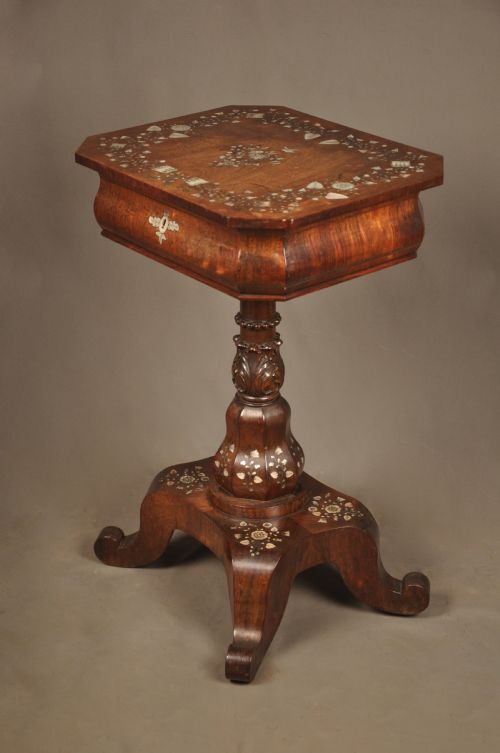
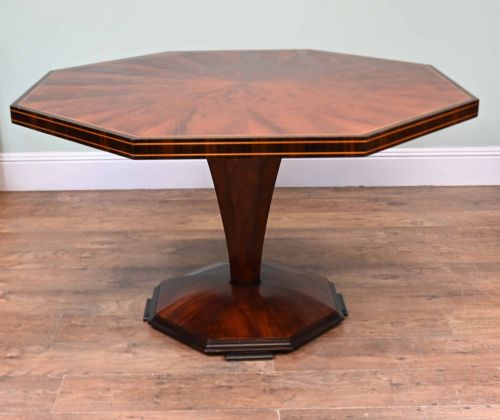
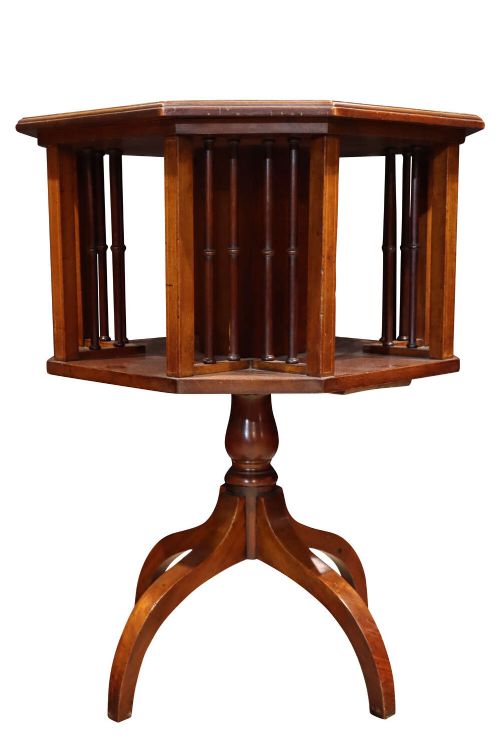
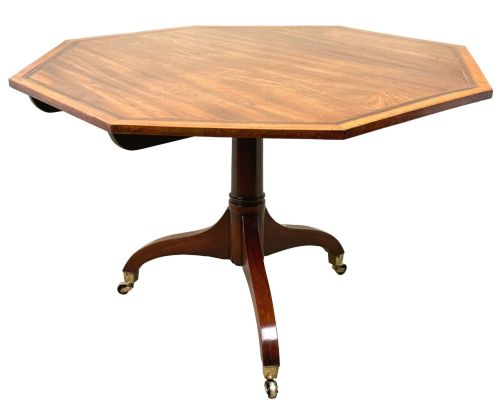
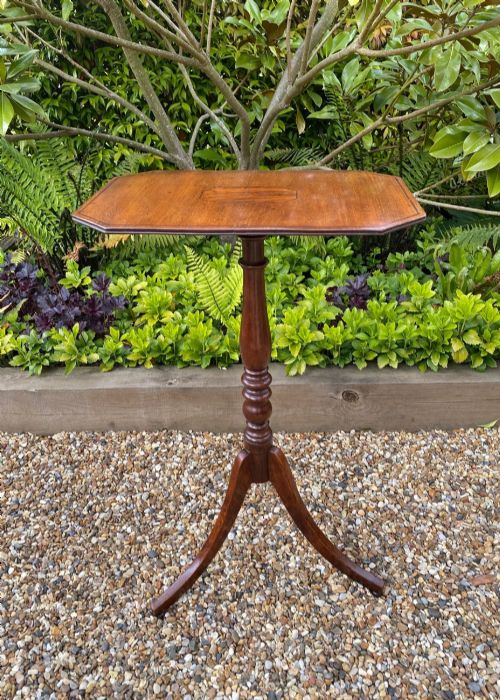
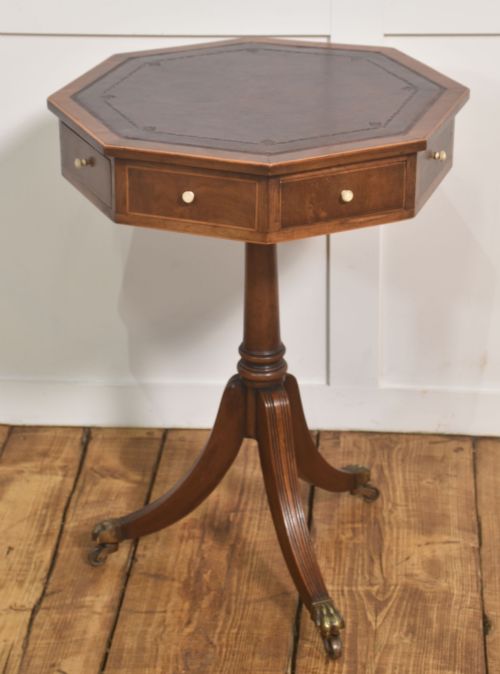
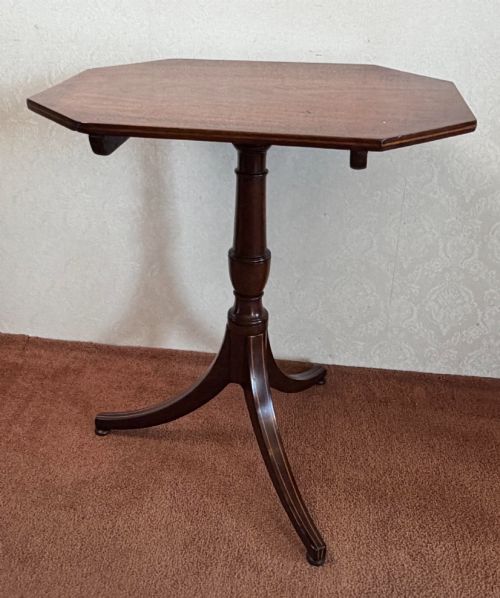
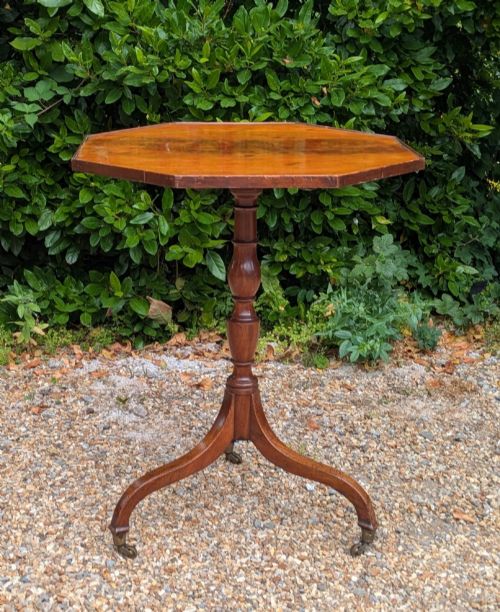
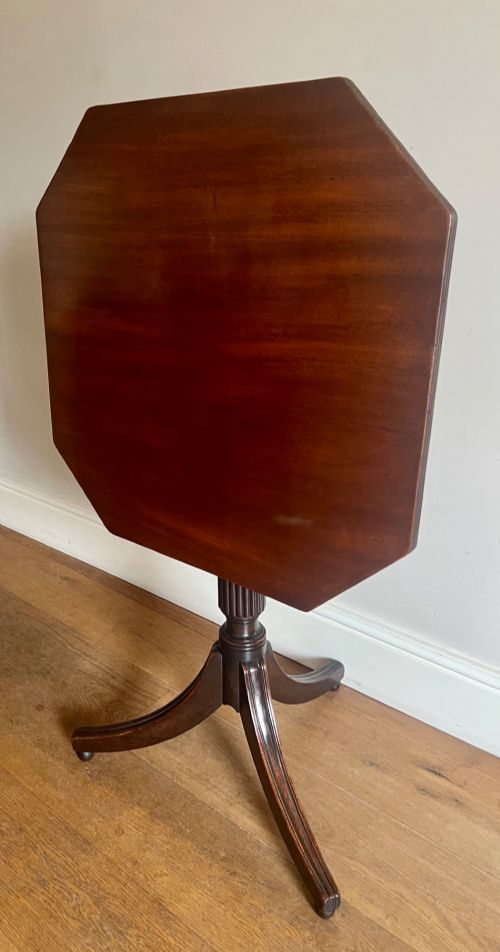
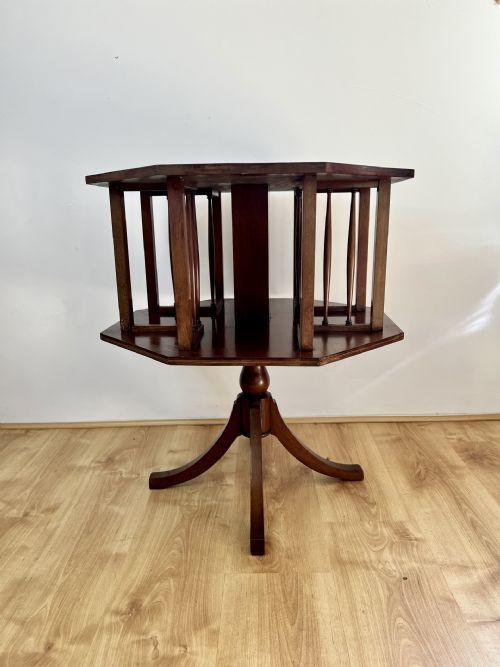
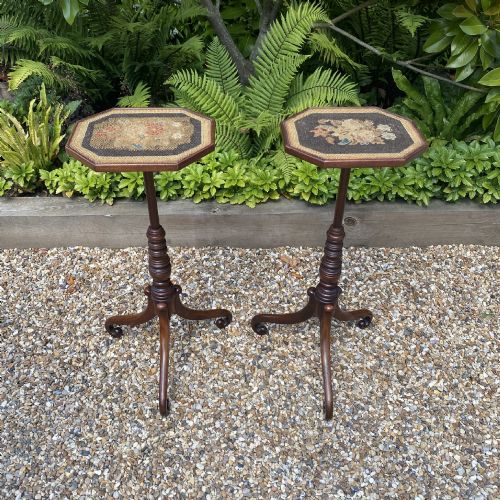
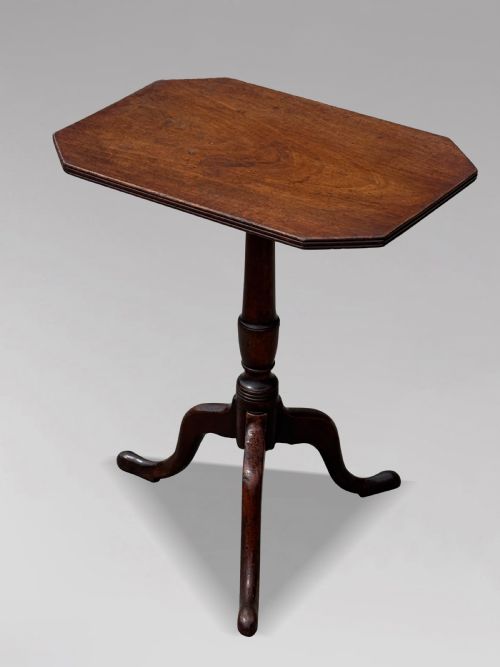
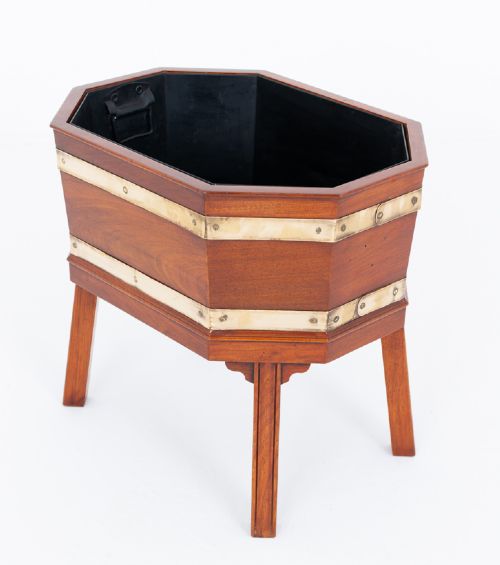
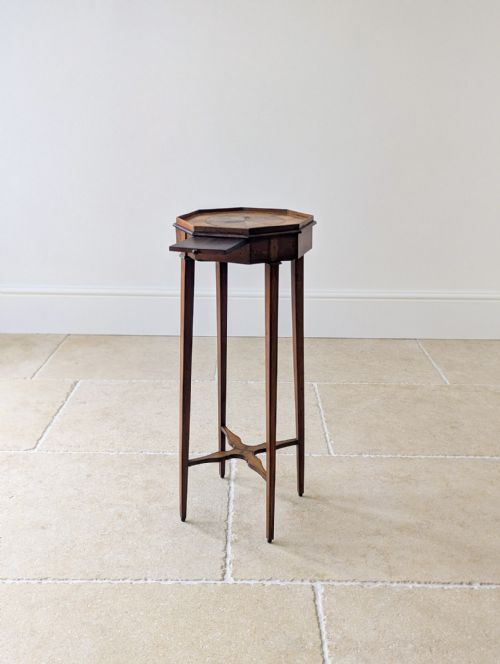
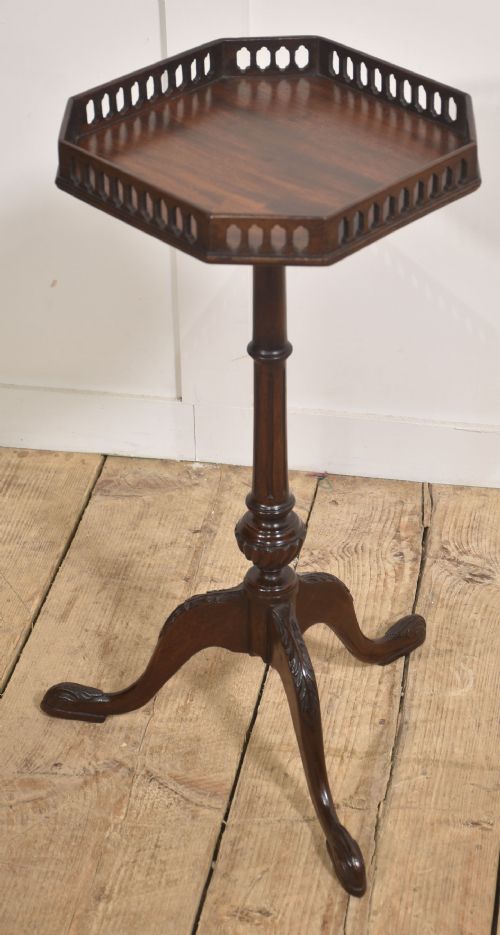
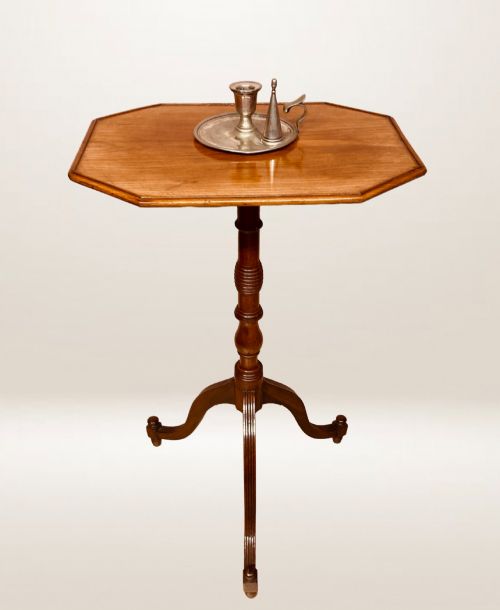
Octagonal Mahogany Pedestal
An octagonal mahogany pedestal balances geometric geometry with warm timber, anchoring a room as a wine table, lamp stand or drum table.
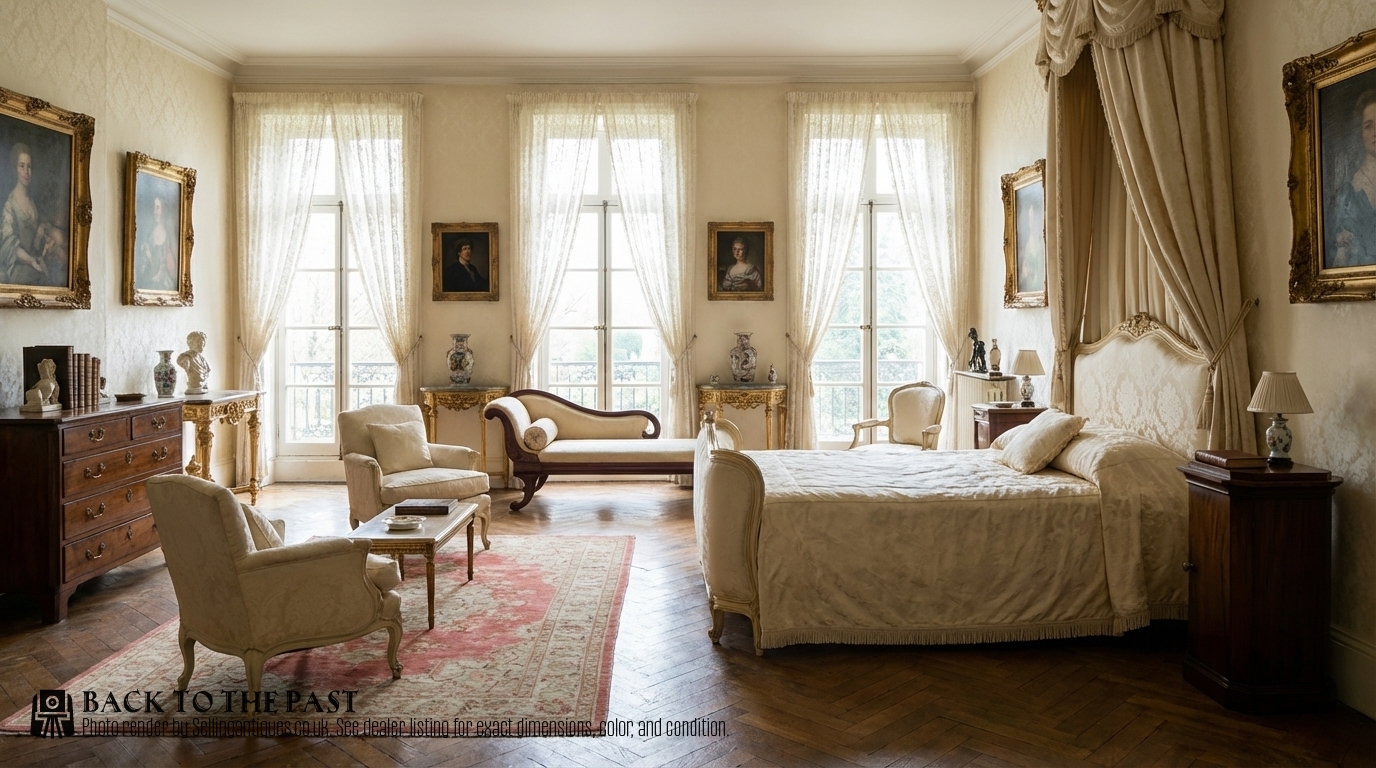
Octagonal Mahogany Pedestal
When searching for an octagonal mahogany pedestal, a buyer encounters pieces primarily formed as occasional tables, wine tables, lamp tables, and drum tables. These items span periods from the eighteenth century through the Georgian, Regency, William IV, and Victorian eras into Edwardian revivals.
The characteristic shape defines the top or the central pillar, often resting on a tripod base or a solid column. Occasional and lamp tables dominate the selection, bringing functional surfaces into reception rooms and studies.
Origins range across English workshops of the Georgian and Regency periods, alongside later Victorian interpretations and continental pieces. Selection varies from simple tilt-top designs to elaborate revolving bookcases and urn stands.
Materials and construction methods
Makers utilised solid mahogany and flame mahogany veneer, frequently enhanced with contrasting boxwood inlay, satinwood stringing, and brass details. Tops occasionally feature inset leather or marble surfaces supported by turned central columns.
Carpenters employed tilt-top mechanisms, snap-top actions, and sturdy tripod supports joined to central pillars. Timber selection prioritized figured grains to catch the light on multi-sided table surfaces.
Assessing craftsmanship and finish
Quality reveals itself in the crispness of the octagonal geometry and the depth of the mahogany grain. Superior examples display carefully matched veneers and subtle stringing rather than printed or heavy-handed decoration.
The stability of the pedestal and the smooth operation of tilt-top or revolving mechanisms distinguish master carpentry from standard production. Timber selection and the crisp carving of the central pillar separate fine period pieces from later revivals.
The Octagonal Mahogany Pedestal Glossary
- Tilt-top
- A hinged table top that pivots to a vertical position when not in use. This mechanism saved space in smaller Georgian and Regency rooms.
- Tripod base
- Three supporting legs radiating from the base of a central pillar. It provides stable floor contact on uneven historic floorboards.
- Drum table
- A circular or octagonal table with a deep frieze containing drawers, usually resting on a single central pedestal. They served as library or writing tables.
- Urn stand
- A small, tall table designed to hold a tea urn or lamp. These pieces often feature raised edges and slender legs.
Octagonal Mahogany Pedestal: Frequently Asked Questions
What rooms suit an octagonal mahogany pedestal?
These tables fit easily beside armchairs as lamp stands or serve as central display surfaces in hallways. Their compact footprint makes them practical for smaller spaces.
In larger reception rooms, an octagonal wine table or drum table functions well between seating or beneath a window. The geometric top provides a distinct contrast to curved upholstery.
How do I care for mahogany surfaces?
Keep timber away from direct sunlight and heat sources to prevent the wood from drying out or splitting. Dust regularly with a soft, dry cloth.
Apply a traditional beeswax polish sparingly to maintain the natural sheen of the mahogany. Avoid silicone-based sprays which can damage historic finishes over time.
Can I use a tilt-top table daily?
Tilt-top mechanisms function reliably when handled with care, but frequent pivoting puts stress on the original brass catch or wooden block. Lower the top gently rather than letting it drop.
Many owners leave the table in the flat position for everyday use. Use coasters to protect the polish from moisture and hot cups.
How do I distinguish Georgian from Victorian pieces?
Georgian furniture generally displays lighter proportions, finer timber selection, and restrained inlay work such as boxwood stringing. The carving on pillars tends to be sharper and more restrained.
Victorian pieces often feature heavier timber dimensions, darker finishes, and bolder turning on the central pedestal. Construction methods also shift slightly with the introduction of industrial machinery in the nineteenth century.