



Colonial Wooden Chair
A colonial wooden chair carries history in its timber, shifting from campaign day beds to heavy carved thrones across distant regions.
Colonial Wooden Chair
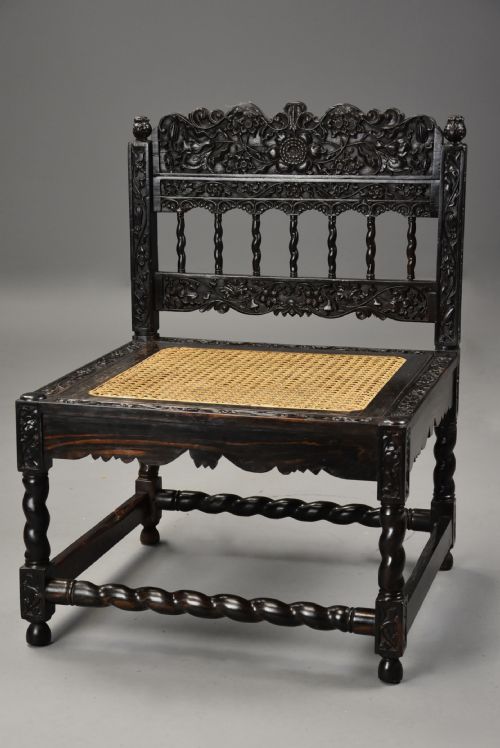
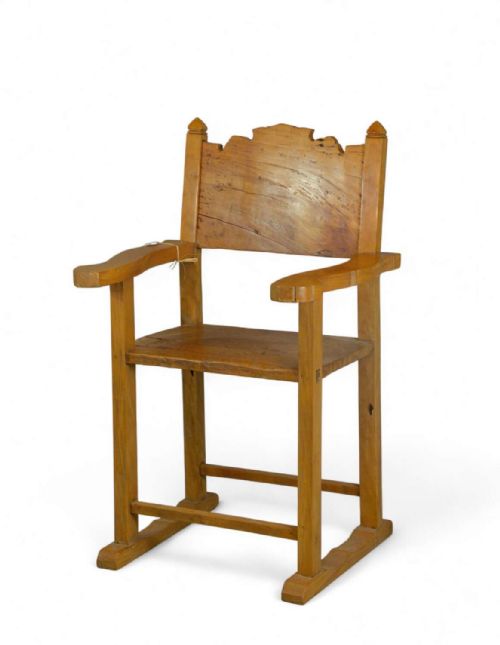
A colonial wooden chair represents global joinery traditions, ranging from the domestic seating of the American Cape Colony to the ornate verandas of British India and Ceylon.
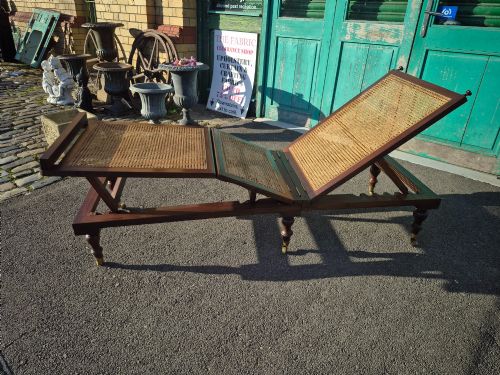
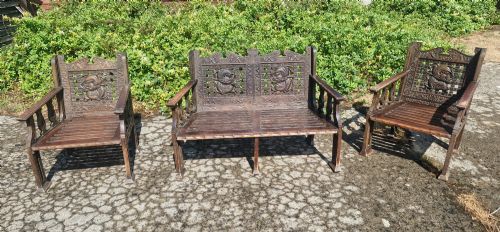
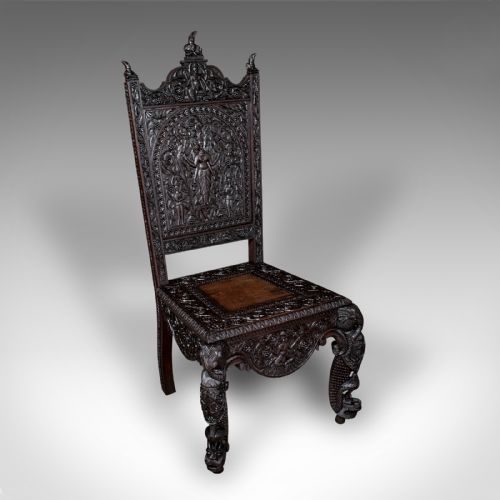
Buyers browsing this selection encounter forms as varied as campaign armchairs, folding chairs, low chairs, and monumental throne chairs.
The materials reflect regional resources, drawing upon teak, ebony, rosewood, satinwood, and general hardwood.
Judging quality and craftsmanship
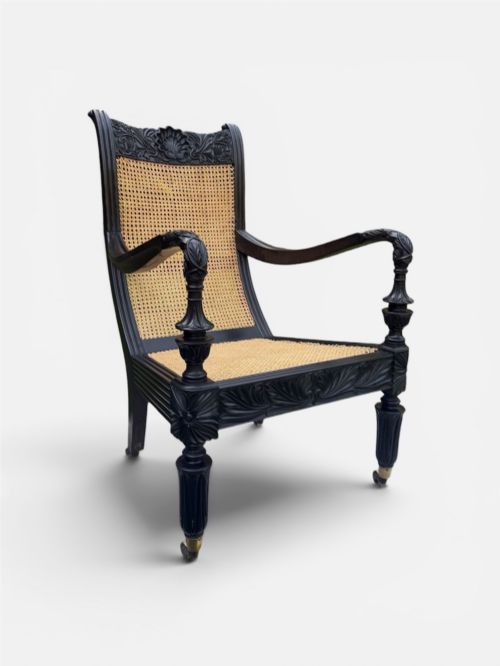
Quality rests upon the depth and sharpness of the hand carving, particularly in examples originating from Ceylon, Burma, and the Coromandel Coast.
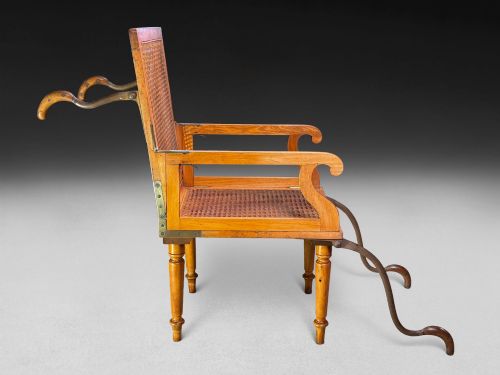
The integrity of the timber frame and the precision of brass campaign fittings or turned elements further distinguish superior examples from simpler regional utility pieces.
Some chairs are built so vast they demand their own horizon, perfect for anyone wishing to rule the conservatory like an absolute monarch.
The Colonial Wooden Chair Glossary
- Campaign chair
- A portable seating form designed for travel, often featuring folding mechanisms or detachable brass-mounted components. These pieces allowed officers and administrators to transport furniture across distant territories.
- Planters chair
- An armchair featuring extended sloping arms designed for resting the legs, common in colonial verandas and domestic settings. They prioritise climate-appropriate comfort and relaxation.
- Savonarola chair
- A folding chair constructed from multiple curved wooden slats intersecting in a scissors frame. This Renaissance revival form was adopted within Indian workshops.
- Cane
- Woven rattan strip material utilised for seats and backs in tropical climates. It provides flexible and breathable support.
- Throne chair
- A large, highly ornamental seating form often defined by deep carving and monumental proportions. These pieces served ceremonial or display functions in domestic interiors.
Colonial Wooden Chair: Frequently Asked Questions
What defines a colonial wooden chair?
These pieces originate from global trade and settlement regions, combining European furniture forms with local timbers and craftsmanship from India, Ceylon, Burma, South Africa, and America.
They span functional campaign items to heavily carved exhibition pieces made from native hardwoods.
How do I care for antique timber furniture?
Keep wooden surfaces away from direct heat sources and dramatic humidity fluctuations to prevent the timber from splitting.
Apply a traditional wax polish occasionally to nourish dense hardwoods like ebony, teak, and rosewood.
Where were these chairs manufactured?
Production occurred across former colonial territories and trading hubs, including workshops in the Coromandel Coast, Ceylon, Burma, and the Cape Colony.
Some examples also reflect American domestic manufacture from the nineteenth century.
How are campaign chairs different from standard seating?
Campaign furniture was engineered for transport, featuring folding frames, screw-in legs, or durable brass reinforcements.
This design enabled military officers and colonial administrators to pack and move their household goods easily.