





Colonial Tilt Top Table
A colonial tilt top table brings remarkable carved timber and folding top mechanisms from distant workshops directly into your interior.
Colonial Tilt Top Table
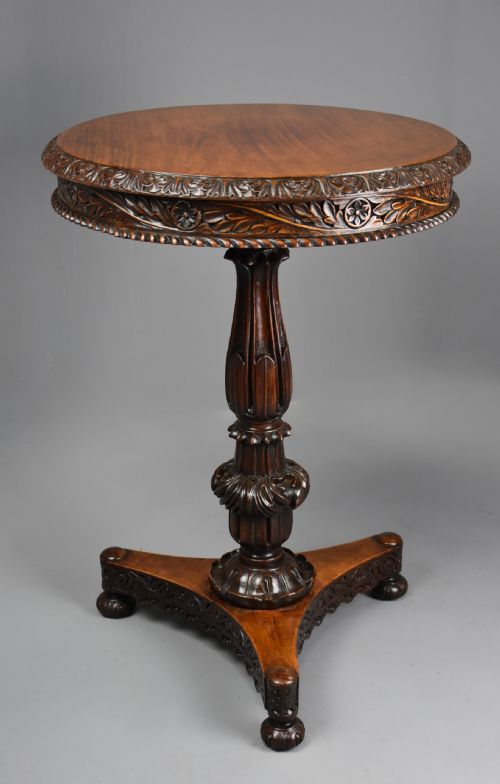
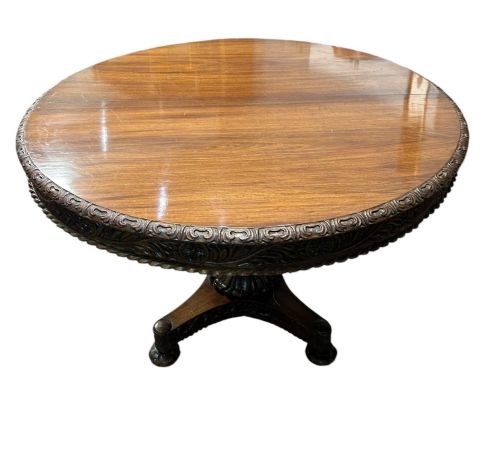
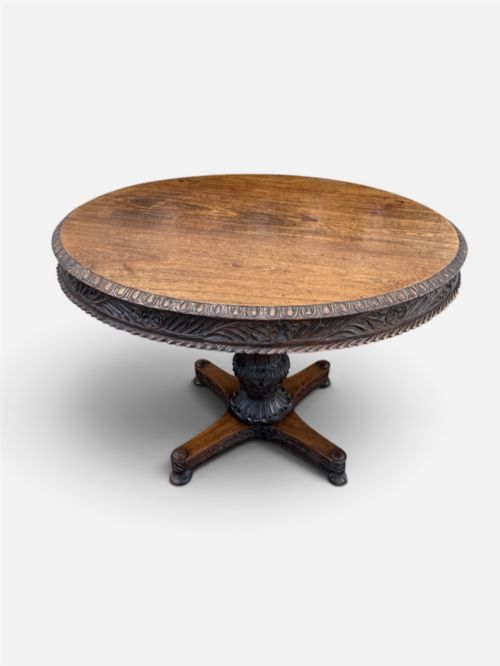
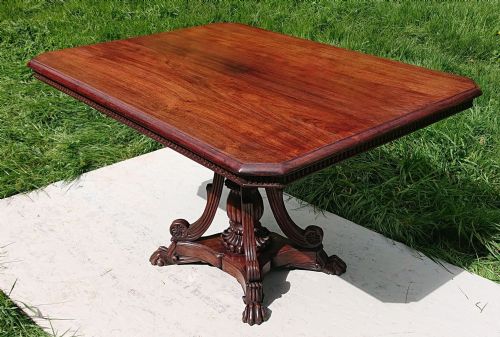
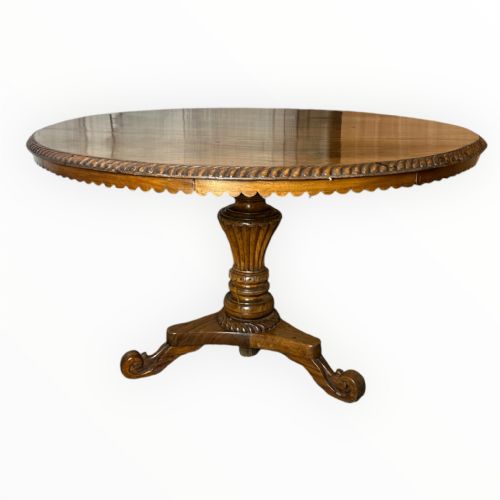
A colonial tilt top table represents a fascinating convergence of British furniture forms and indigenous craftsmanship from the nineteenth century. These pieces typically take the form of circular occasional, centre, or side tables designed with a hinged top that tips vertically when not in use.
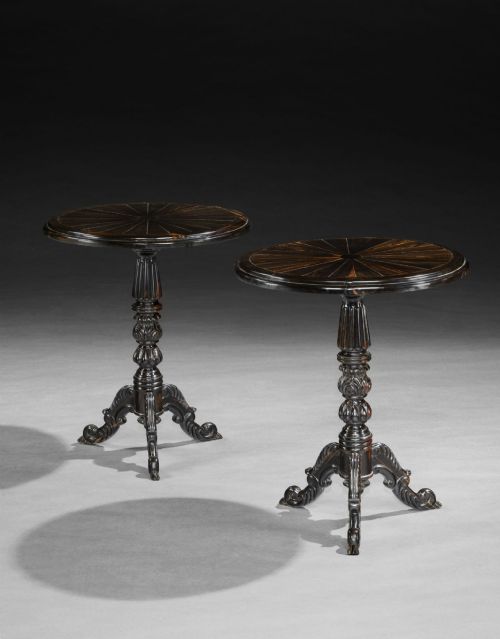
The examples gathered here showcase the rich stylistic crossover of the period, spanning Anglo-Indian, Anglo-Indian Colonial, and Anglo-Burmese designs. Buyers encounter circular surfaces supported by carved pedestals or tripod bases, reflecting the tastes of the Victorian era alongside regional traditions.
Origins stretch across specific territories such as Ceylon, Burma, and different regions of India, including Bombay and the Galle district. This geographic breadth ensures that each colonial tilt top table carries distinct local characteristics in its carving and construction.
How they were made
Cabinetmakers utilised dense tropical hardwoods suited to intricate carving, frequently selecting padauk wood, teak, and rich rosewood for the primary structure. Ebony and satinwood appear alongside exotic specimen woods, providing striking tonal contrasts across the table tops.
Surface decoration often incorporates elaborate carving alongside delicate bone inlay or mother of pearl work. The pivoting mechanisms on these tilt top tables required precise joinery to ensure the heavy timber tops rested securely on their pedestals.
Colonial Tilt Top Table Retail Price Guide 2026
Typical asking prices for colonial tilt top table among the pieces listed under this phrase on Sellingantiques today, from the lower quarter to the upper quarter. They describe what is for sale here now, not the wider market.
Listings feature nineteenth-century pieces spanning the Victorian era, including dated examples from 1840, 1850, 1860, and 1880.
What varies in quality
The distinction between standard and superior pieces rests upon the depth and crispness of the carved detail on the base and pedestal. Tables featuring complex specimen wood mosaics or precise mother of pearl inlay demonstrate a higher level of artisanal skill.
Proportion and timber selection also dictate the standing of a piece, with well-figured grain and robust tripod supports commanding greater attention. The structural integrity of the tilting mechanism remains central to the overall execution of the design.
The Colonial Tilt Top Table Glossary
- Tilt top table
- A table featuring a hinged mechanism that allows the surface to be rotated into a vertical position for storage against a wall.
- Padauk wood
- A heavy, durable tropical hardwood with a reddish-brown hue favoured by colonial makers for its stability and fine finish.
- Specimen wood
- An assemblage of various native and exotic timbers arranged in decorative patterns, often seen on table tops from Ceylon.
- Tripod base
- A three-legged support structure commonly employed beneath the central pedestal of nineteenth-century occasional tables.
- Mother of pearl inlay
- The practice of embedding thin iridescent shell fragments into the timber surface to form intricate geometric or floral designs.
Colonial Tilt Top Table: Frequently Asked Questions
What is a colonial tilt top table?
A colonial tilt top table is a nineteenth-century occasional or centre table produced in regions like India, Burma, and Ceylon under British influence. These tables feature a hinged mechanism that tips the surface upright.
They combine traditional European furniture forms with local tropical hardwoods and intricate regional carving styles.
Where were these tables made?
These pieces originate from nineteenth-century workshops across the Indian subcontinent, Burma, and Ceylon, including specific areas such as the Bombay region and the Galle district.
Craftsmen in these locations adapted British table designs using native timbers like padauk, teak, and ebony.
How do I use a tilt top table today?
These tables function effectively as lamp tables, side tables, or centre pieces in a living space or study. The tilting mechanism allows them to save floor space by standing flat against a wall when not in active use.
Their decorative carved bases and inlaid surfaces make them natural focal points within a traditional or eclectic interior.
What woods were used in these tables?
Maker workshops relied heavily on dense tropical timbers such as padauk wood, teak, rosewood, and ebony. Satinwood and various specimen woods also appear frequently in tabletop designs.
Inlay work incorporates materials like bone and mother of pearl to add contrast to the dark timber surfaces.