






Colonial Padouk Furniture
Colonial padouk furniture brings dense tropical hardwood and intricate carving together, offering sturdy utility with striking decorative presence.
Colonial Padouk Furniture
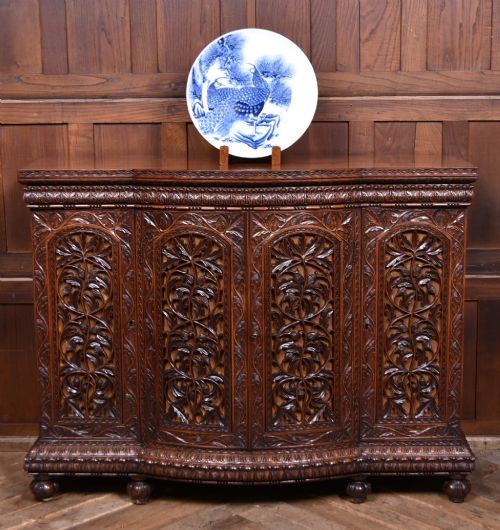
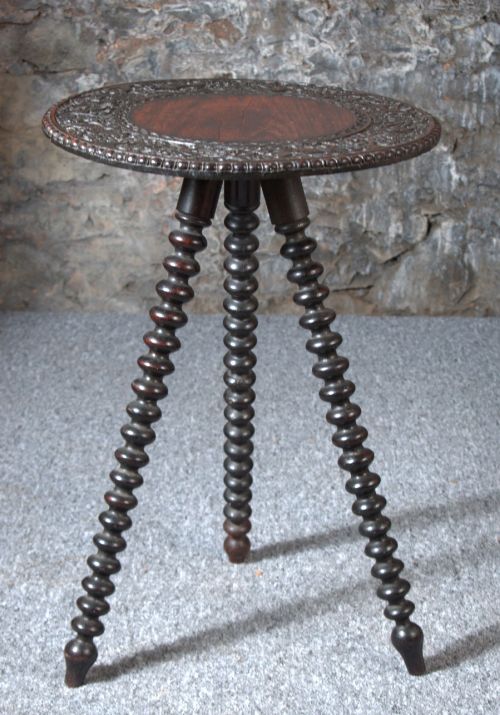
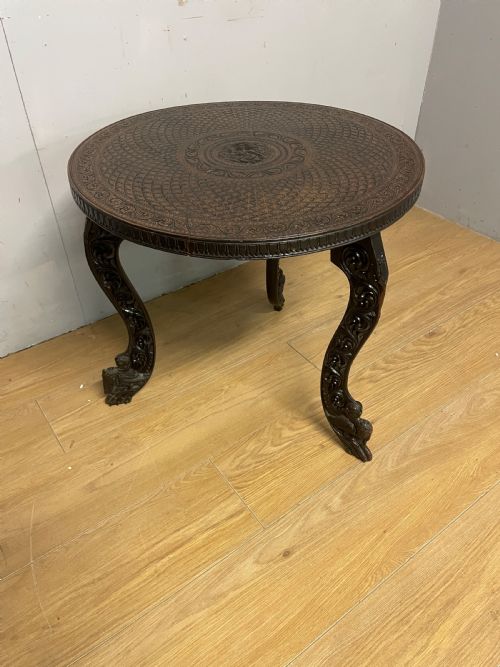
Colonial padouk furniture spans the eighteenth and nineteenth centuries, taking the form of sideboards, side tables, chests of drawers, cellarettes, armchairs, sofas, and bureaux. These pieces emerge from Anglo-Indian, Burmese, and broader colonial contexts, often reflecting Regency or Victorian design influences combined with local carving traditions.
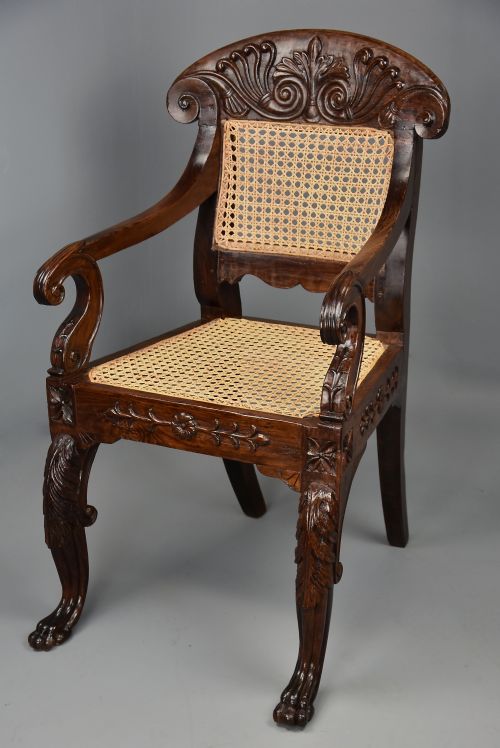
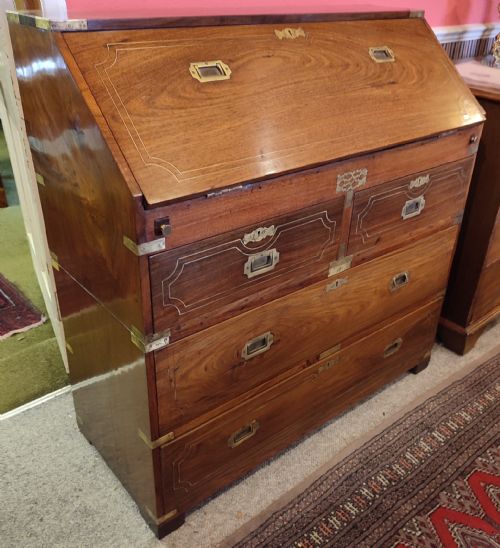
The most common examples on this page are nineteenth-century sideboards, side tables, and campaign chests built from padouk wood. Buyers frequently encounter carved chairs, bookcases, and wine coolers showcasing dense tropical timber and detailed floral or scroll ornamentation.
Materials and construction methods
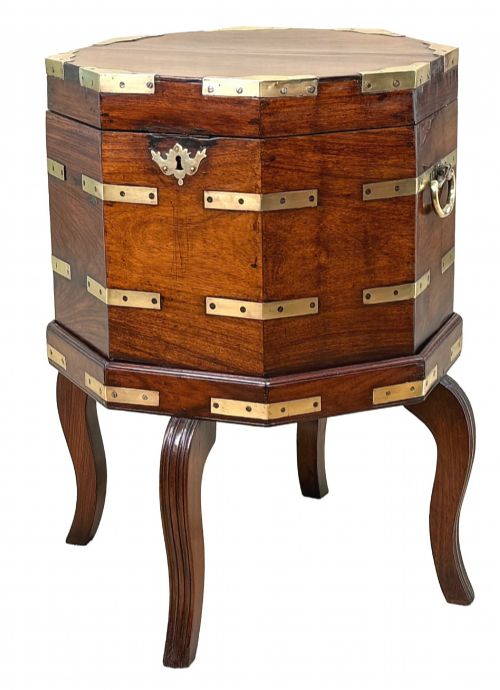
Makers utilised padouk wood and teak as primary structural timbers, valued for their deep red-brown colour and durability in tropical climates. Secondary materials like cane and brass appear frequently, particularly on campaign chests and seating where metal mounts provide structural reinforcement and easy dismantling.
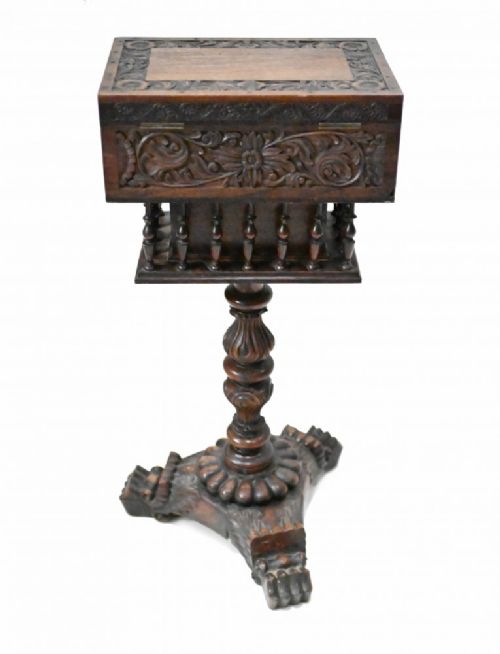
Craftsmen applied deep relief carving and turned elements to surfaces, integrating English furniture forms with regional woodworking expertise. Upholstered items incorporate needlepoint textiles, while specialised pieces utilise brass handles, escutcheons, and corner brackets for transportable military campaign use.
Several items double as portable drink stations, proving that nineteenth-century officers took their evening claret very seriously indeed.
Evaluating quality and execution
The standard of carving determines much of the visual success in these pieces, separating deeply undercut, sharp floral motifs from flat or hastily finished ornamentation. Crisp detailing on foliage and figures indicates skilled workshop output rather than hurried mass production.
Structural integrity and the retention of original brass hardware or campaign fittings govern the functional value of chests and tables. Timber selection also matters, as tightly grained, uniformly coloured padouk displays superior ageing compared to mismatched secondary woods.
The Colonial Padouk Furniture Glossary
- Padouk
- A dense tropical hardwood native to Asia and Africa, possessing a rich red-brown hue that deepens with age. This timber resists pests and warping effectively.
- Campaign chest
- A modular chest of drawers built in two or more sections with recessed brass handles and corner brackets, designed for military transport. These pieces dismantle easily for travel.
- Cellarette
- A lockable container or cabinet used for storing bottles of wine and spirits safely. Examples often feature fitted interior compartments and lead-lined cooling sections.
- Teapoy
- A small pedestal table designed originally for holding tea canisters and brewing equipment. They frequently incorporate lidded compartments and internal caddies.
- Anglo-Indian
- A descriptive term for furniture made in India during the British colonial period, combining European forms with local craftsmanship and materials.
Colonial Padouk Furniture: Frequently Asked Questions
What is colonial padouk furniture?
Colonial padouk furniture comprises household and campaign pieces manufactured in regions like India and Burma during the eighteenth and nineteenth centuries for British residents and export. They merge standard European furniture types with local tropical hardwoods and intricate carving.
Items range from large sideboards and bookcases down to campaign chests and small tables. The style reflects a distinct cross-cultural design exchange.
How do I identify campaign chests?
Campaign chests divide into stacked sections for portability and feature flush brass carrying handles on the sides alongside recessed brass corner reinforcements. The drawers pull out smoothly and the wood displays the characteristic dense grain of padouk.
These pieces were built for officers on the move, so every fitting serves a practical transport purpose. Look for screw-in feet and original brass mounts.
Where were these pieces made?
Workshops across India and Burma produced these items during the British colonial era, often fulfilling commissions for civil servants, military officers, or merchants. The makers combined British furniture catalogues with traditional regional carving techniques.
As a result, forms familiar to Regency or Victorian parlours gained intricate floral relief work executed in durable local timbers.
How should I care for padouk wood?
Padouk timber benefits from stable indoor humidity and protection from direct sunlight, which can alter its deep reddish-brown tone. Regular dusting with a dry cloth keeps the surface clean without stripping natural oils.
Avoid placing these pieces near active heat sources that might dry out the dense hardwood or stress historical joints and brass fittings.