


Colonial Indian Pedestal
A colonial indian pedestal brings substantial timber work and carved ornamentation into a room, offering functional display surfaces created during the nineteenth century.
Colonial Indian Pedestal
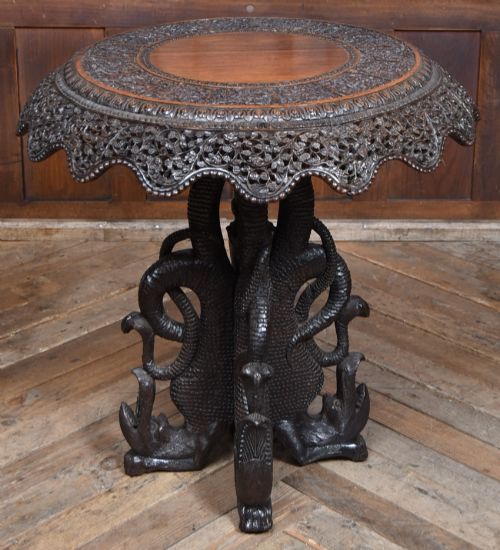
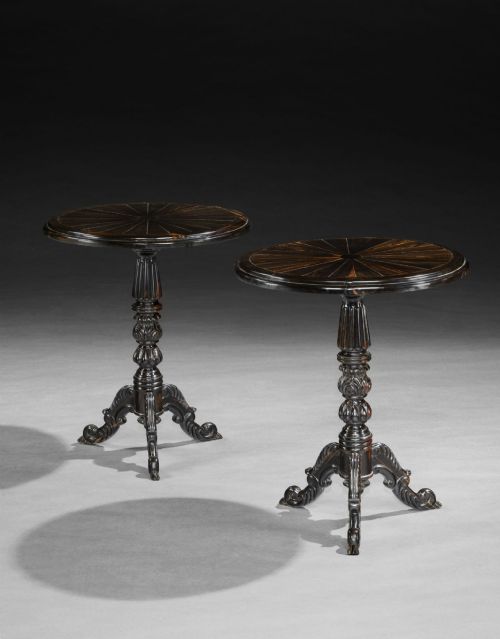
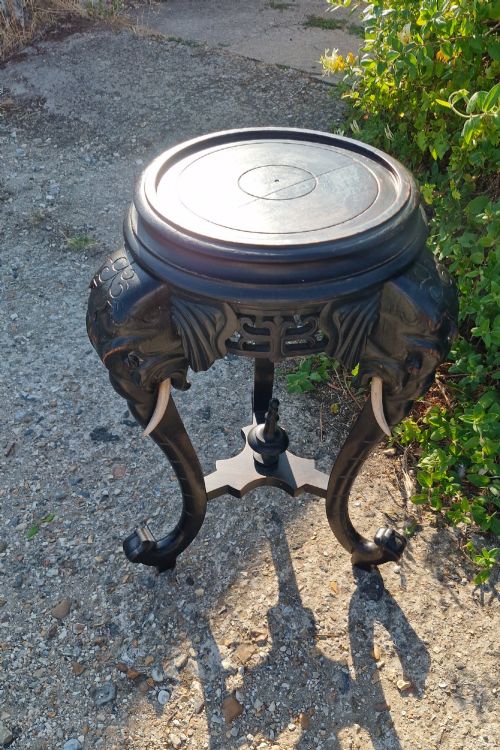
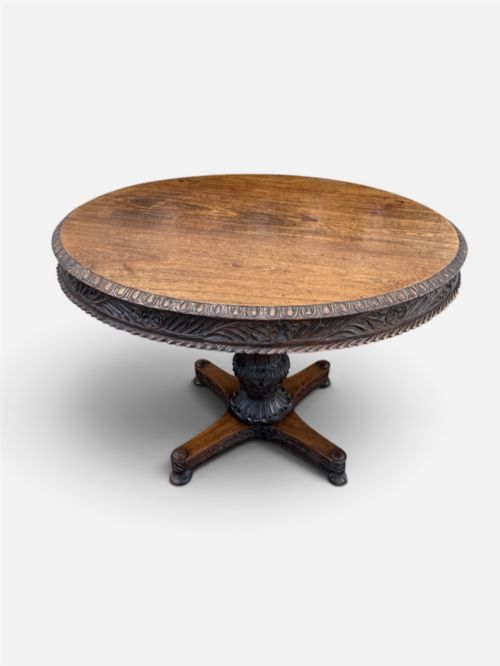
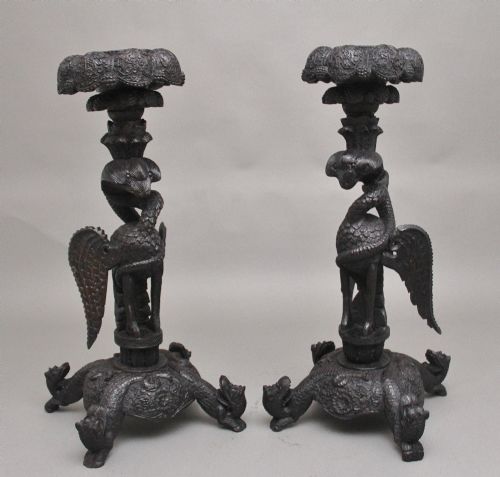
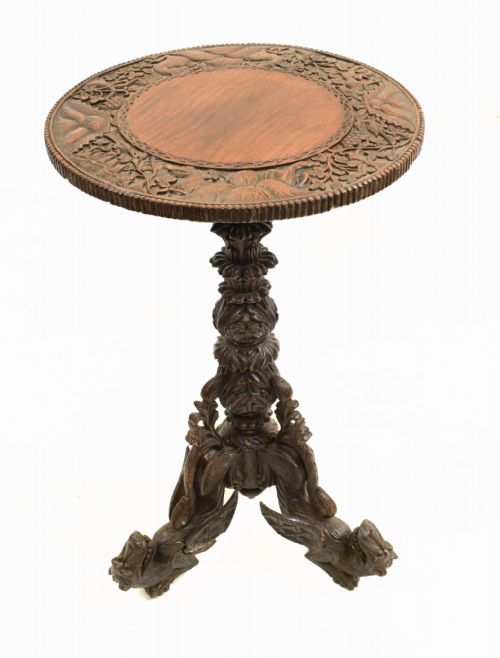
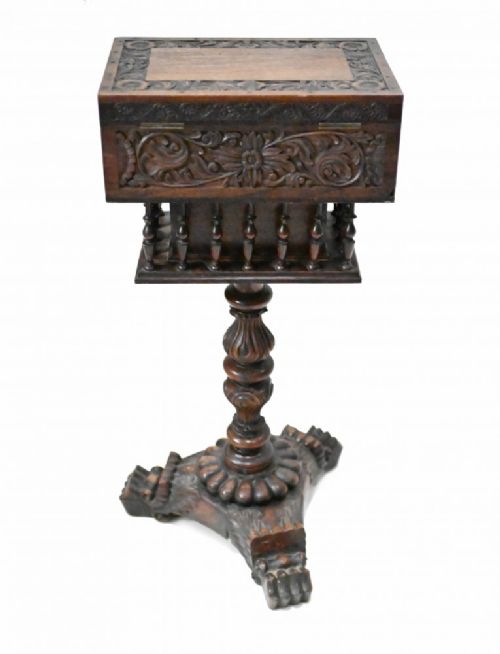
A colonial indian pedestal comprises a range of occasional tables, plant stands, and centre tables produced in South Asia during the nineteenth century under British influence. These items often feature central pillar supports, tripod bases, and carved surfaces displaying regional flora and fauna motifs.
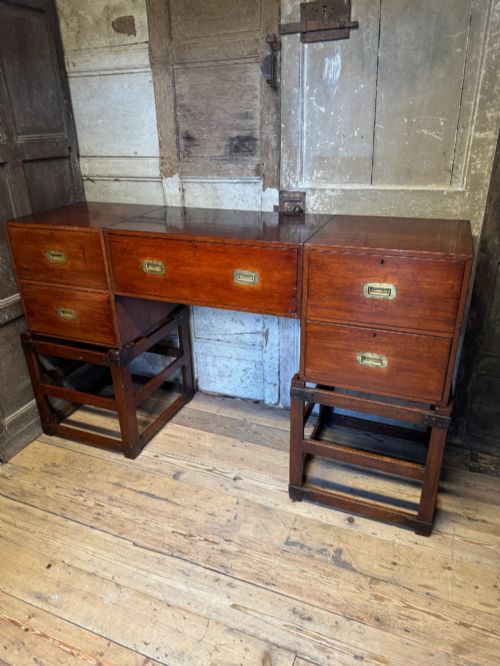
The most frequent examples on this page are carved occasional tables and tilt-top tables executed in dense tropical hardwoods. Buyers encounter pieces associated with specific regional traditions such as Hoshiarpur, Ceylon, and Burma, alongside campaign items and larger partners desks.
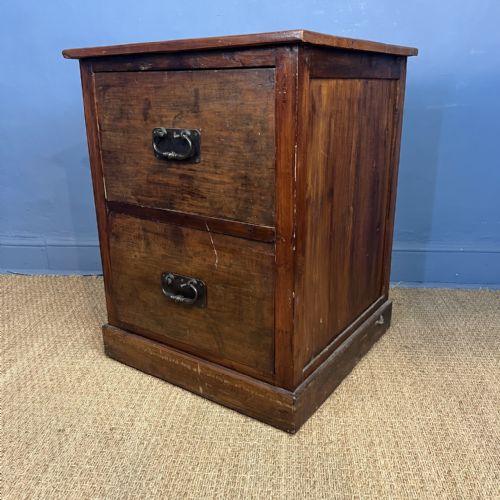
Forms vary from small plant stands and jardinières to substantial sideboards, pedestal desks, and writing furniture. Many items integrate traditional local carving techniques with European furniture forms suited to colonial residences.
How they were made
Cabinet makers utilised dense, durable tropical timbers including padouk, teak, rosewood, ebony, and satinwood, which lent themselves to intricate, deep relief carving. These native woods provided the structural stability required for heavy pedestals and tripods.
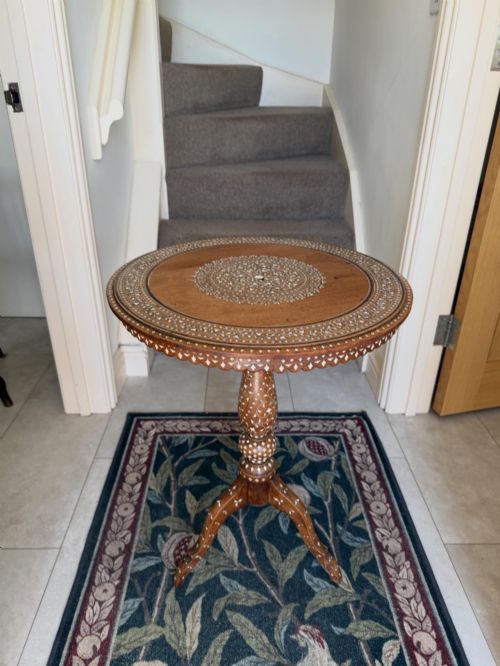
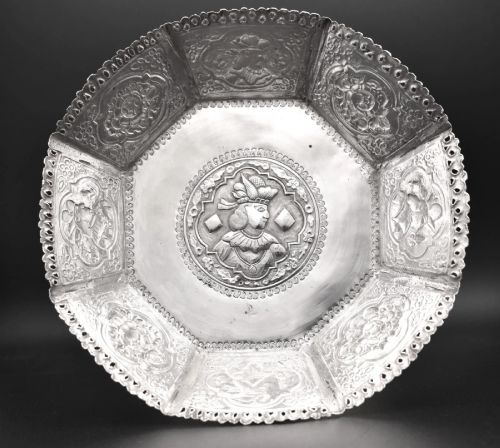
Decoration often involved elaborate hand carving depicting foliage, animals, and geometric patterns, occasionally augmented by mother of pearl inlay or silver repoussé elements. Joinery combined traditional mortise and tenon methods with sturdy central pillar constructions designed to bear weight.
Listings feature items spanning the nineteenth century and early twentieth century, constructed from padouk, teak, rosewood, ebony, and satinwood.
What varies in quality
The standard of a colonial indian pedestal depends upon the crispness and depth of the hand carving, alongside the selection and figuring of the timber. Pieces displaying sharp, well-defined botanical details and harmonious proportions represent higher standards of workshop production.
Stability of the central pedestal and the integrity of the tripod base dictate mechanical excellence. The precision of inlay work, where present, and the retention of original surface finishes further distinguish superior examples from simpler utilitarian items.
Currie And Co Calcutta
The Colonial Indian Pedestal Glossary
- Pedestal table
- A table supported by a single central pillar resting on a footed base. This form provides stable support while maximising legroom around the perimeter.
- Tilt-top table
- A table featuring a hinged top that pivots to a vertical position for storage when not in use. This mechanism is frequently paired with tripod pedestals.
- Repoussé
- Metalworking technique where the design is hammered into relief from the reverse side. This method appears on silver decorative bowls and compotes.
- Jardinière
- An ornamental receptacle designed to hold a plant or floral arrangement. These vessels often feature tripod bases or pedestal supports.
- Teapoy
- A small occasional table traditionally used for holding tea caddies and serving tea. Nineteenth-century examples often incorporate carved pedestals and internal compartments.
Colonial Indian Pedestal: Frequently Asked Questions
What is a colonial indian pedestal table?
A colonial indian pedestal table is a nineteenth-century furnishing produced in regions influenced by British administration, featuring a central pillar support and carved wooden surfaces.
These pieces served various domestic functions in colonial households, ranging from small occasional tables to larger dining and centre tables.
How do I identify Hoshiarpur work?
Hoshiarpur furniture is characterised by intricate, dense surface carving and distinctive inlay work utilising materials such as brass, bone, or contrasting woods.
Originating from the Punjab region, these items display elaborate geometric and floral patterns covering every available surface of the pedestal and top.
What woods were used for these tables?
Cottage and workshop makers relied on heavy native hardwoods including padouk, teak, rosewood, ebony, and satinwood. These dense timbers resisted tropical climates and supported deep relief carving.
Specimen woods were frequently combined in single tables to create contrasting borders and patterned top surfaces.
How do I care for antique tropical hardwood?
Maintain stable indoor humidity levels and keep wooden furniture away from direct heat sources to prevent timber splitting. Regular dusting with a soft cloth preserves the original polish.
Avoid applying modern silicone polishes, as these can build up on heavily carved surfaces and alter the appearance of the antique finish.