




Colonial Document Box
These colonial document box pieces are sturdy travel chests and writing containers built for administration across distant territories.
Colonial Document Box
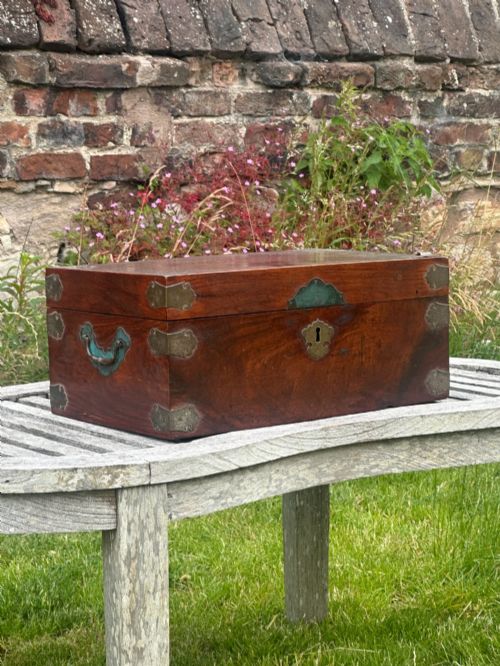
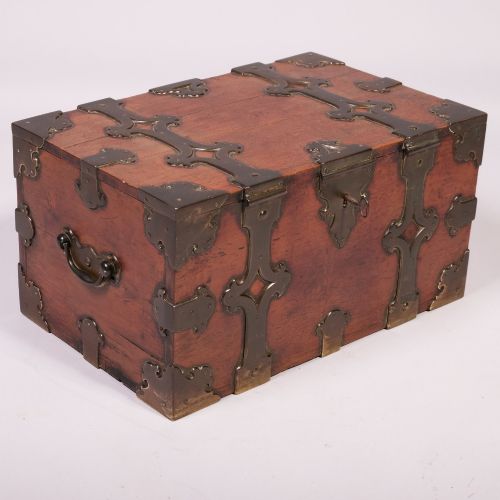
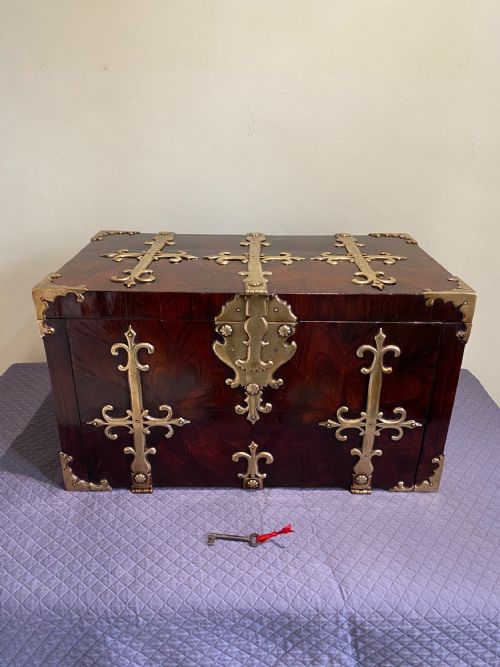
When you search for a colonial document box, you encounter sturdy containers designed to safeguard papers and valuables in transit across distant territories. These pieces range from compact stationery boxes and writing slopes to miniature campaign trunks and deed boxes.
The examples available here primarily stem from the nineteenth century and the Victorian era, alongside earlier eighteenth-century items. Regional origins span Anglo-Indian, Ceylonese, Spanish, and Burmese workshops, reflecting global administrative networks.
Forms vary from domed caskets and rectangular storage chests to sophisticated writing slopes fitted for correspondence. Each object served the practical need to organise and protect documents against humidity, travel, and wear.
Materials and construction
Maker workshops utilised dense regional timbers such as ebony, padouk, teak, camphor wood, and walnut, often combined with secondary woods. These hardwoods resisted warping and the rigours of long-distance transport.
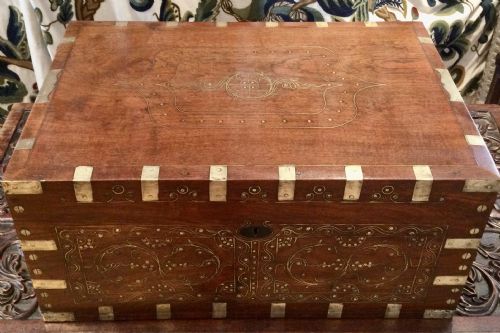
Construction typically incorporated structural brass banding, corner mounts, and recessed carrying handles to reinforce joints during travel. Artisans also applied intricate carved decoration, bone inlay, and porcupine quill work to enrich the exterior surfaces.
Listings feature items spanning the seventeenth century through to the early twentieth century, utilising camphor wood, teak, ebony, and bone.
Assessing quality and execution
Quality rests upon the selection of timber and the precision of the joinery rather than mere age or ornamentation. Dense hardwoods like solid ebony or well-figured padouk indicate superior craftsmanship compared to simpler secondary woods.
Execution shows in the flush fitting of brass mounts, the integrity of internal compartments, and the refinement of surface carving or bone inlay. Pieces retaining original working locks and fitted interiors demonstrate higher initial cost and careful preservation.
The Colonial Document Box Glossary
- Writing slope
- A portable desk featuring a slanted hinged lid designed for holding paper and writing implements. Inside, compartments organise inkwells, pens, and correspondence.
- Campaign trunk
- A robust chest built in sections with recessed brass hardware for military officers or administrators on the move. These pieces prioritise durability and ease of transport.
- Padouk
- A heavy, durable tropical hardwood showing rich red-brown tones, favoured in Anglo-Indian cabinetmaking. It provides exceptional stability for furniture exposed to varied climates.
- Sadeli work
- A form of intricate micro-mosaic inlay utilising horn, bone, and metal wire arranged in geometric patterns. This technique appears on nineteenth-century boxes from western India.
- Campaign style
- Furniture design characterised by modular construction, folding elements, and protective brass corners. The style enabled efficient packing and transit during colonial deployment.
Colonial Document Box: Frequently Asked Questions
How were these boxes used?
Owners utilised them for writing letters, storing legal deeds, and keeping personal records safe from moisture and rough handling. Fitted interiors often included small compartments for ink, stamps, and nibs.
Many doubled as portable desks featuring slanted lids and lockable compartments to maintain privacy while away from established offices.
How do I identify Anglo-Indian boxes?
Anglo-Indian pieces typically feature dense regional timbers like padouk, teak, or ebony combined with detailed carved decoration or bone inlay. The use of robust brass banding is also common.
Regional workshops often integrated local decorative traditions with British cabinet forms to supply administrators operating abroad.
How do I care for antique wood?
Keep wooden boxes away from direct sunlight and sudden temperature shifts to prevent timber shrinkage and cracking. Maintain stable indoor humidity levels to protect natural materials.
Apply a light application of appropriate wax polish occasionally to nourish the hardwood surface without building up heavy residues.