
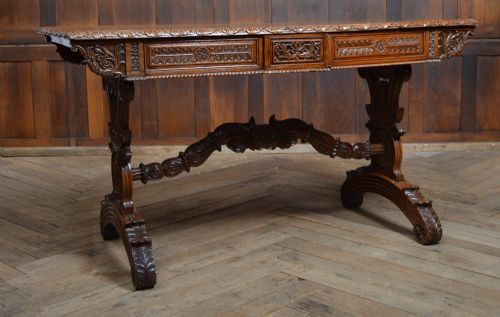
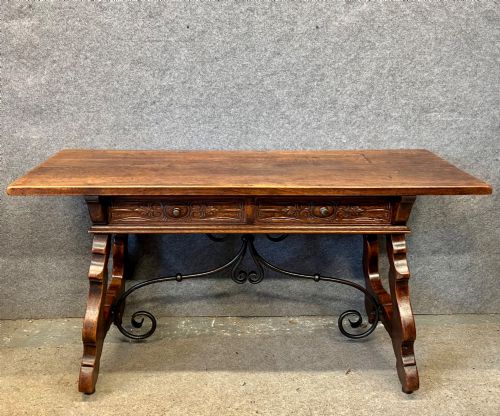


Colonial Console Table
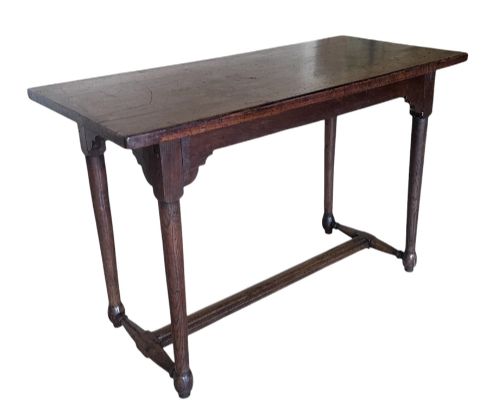
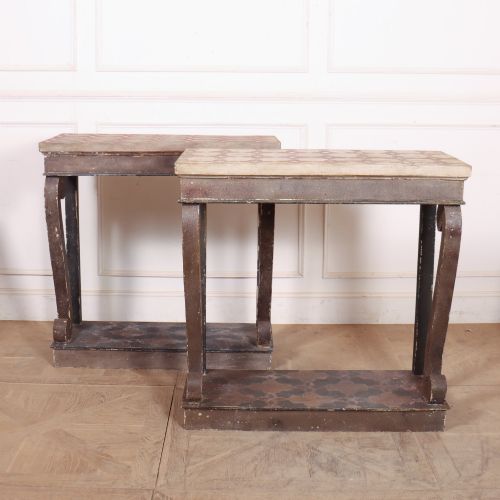
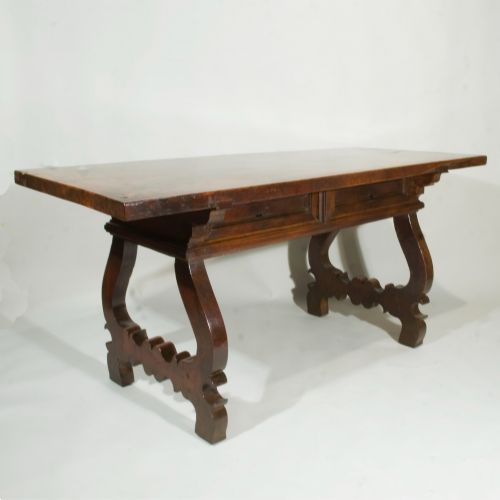
These colonial console table examples combine dense tropical hardwoods with regional carving traditions, offering striking surface space and historic character.
Colonial Console Table
A colonial console table bridges European furniture forms with the woodworking traditions of regions influenced by trade and empire. You will frequently encounter styles such as Anglo-Indian, Spanish Colonial, and Portuguese Baroque across these listings.
The inventory spans from the seventeenth century through the Victorian era and into the early twentieth century. Forms range from dedicated console and pier tables to side tables, centre tables, and library tables.
Makers often adapted traditional European architectural bases to suit local tastes and materials. The resulting pieces reflect the specific craftsmanship of British India, Burma, Spain, and Portugal.
Materials and construction
Carpenters utilised dense imported and native timbers including rosewood, teak, padauk, walnut, and oak. These heavy woods provided the structural stability required for substantial carved decoration without warping.
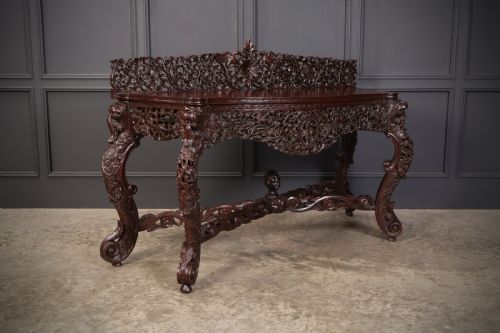
Surface ornamentation relies on deep relief carving, often featuring floral motifs, scrolls, or figural elements such as elephants. Iron and brass fittings occasionally secure joints or reinforce structural elements on larger serving and console tables.
Several unusual nineteenth-century tables incorporate carved elephants into their structural supports, offering a distinct departure from standard European furniture motifs.
Evaluating craftsmanship and condition
Quality rests in the crispness and depth of the hand carving across the timber. Superior pieces exhibit confident relief work that integrates smoothly into the structural frame of the table.
The integrity of the timber joints and the preservation of the original polished or painted surface finishes dictate the overall standing of an example. Finer specimens maintain their original patination and dense grain structure without excessive modern intervention.
The Colonial Console Table Glossary
- Padauk
- A heavy tropical hardwood prized for its reddish-brown colour and durability. It was frequently utilised by Burmese and Anglo-Indian cabinetmakers for heavily carved tables.
- Pier table
- A table designed to stand against a wall, typically positioned directly beneath a wall mirror or between windows. These pieces often share structural similarities with console tables.
- Anglo-Indian
- A stylistic classification describing nineteenth-century furniture produced in India under British influence. These works combine British domestic forms with intricate local carving techniques.
- Rosewood
- A dense, dark timber featuring pronounced grain patterns, commonly employed in Portuguese and Indian furniture production. Its weight and hardness made it suitable for elaborate surface decoration.
- Console table
- A table supported by wall brackets or console legs rather than four independent vertical posts. This form became a staple of formal European and colonial interiors.
Colonial Console Table: Frequently Asked Questions
Where should I place a console table?
These tables suit hallways, living rooms, and dining spaces where surface space is required against a wall. Their narrow profile ensures they do not obstruct narrow walkways.
Pairing a console with a mirror or hanging artwork above it creates a balanced focal point in a reception room.
How do I clean antique tropical hardwood?
Dust the timber regularly with a dry, soft cloth to prevent particulate buildup in the carved recesses. Avoid silicone-based sprays and excess water.
Apply a traditional beeswax sparingly to maintain the natural moisture and sheen of woods like rosewood and padauk.
Are these tables sturdy enough for daily use?
Constructed from dense hardwoods such as teak, oak, and walnut, these tables possess robust foundational frames. They handle normal decorative objects and everyday placement reliably.
Care should be taken with heavy loads or unlevel flooring, as many antique tables benefit from careful placement rather than heavy industrial usage.
How can I tell Spanish colonial from Anglo-Indian styles?
Spanish colonial pieces often feature seventeenth and eighteenth-century walnut or oak construction with Baroque architectural lines. They tend to rely on panel construction and restrained moulding.
Anglo-Indian and Burmese examples typically date to the nineteenth century, utilising padauk or rosewood with dense, deep-relief floral or animal carvings.