
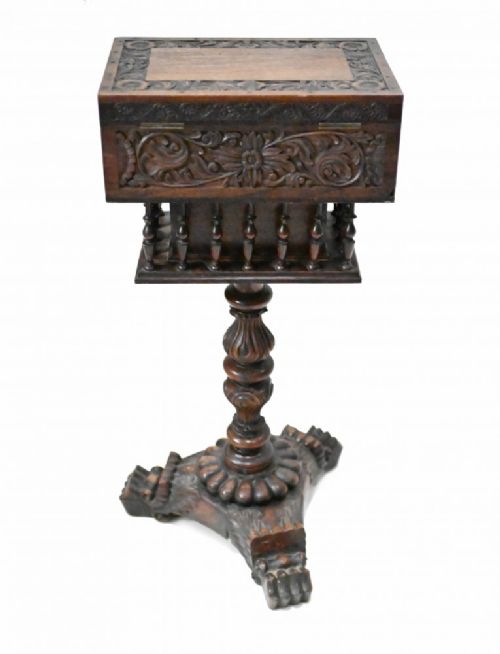
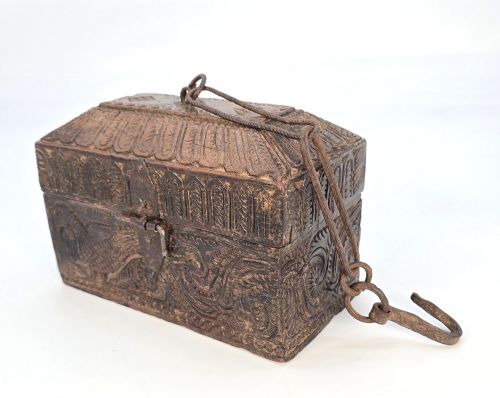


Colonial Carved Wooden Chest
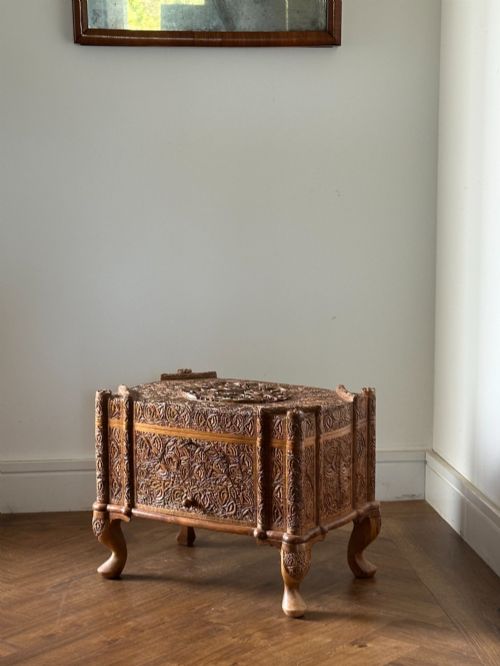
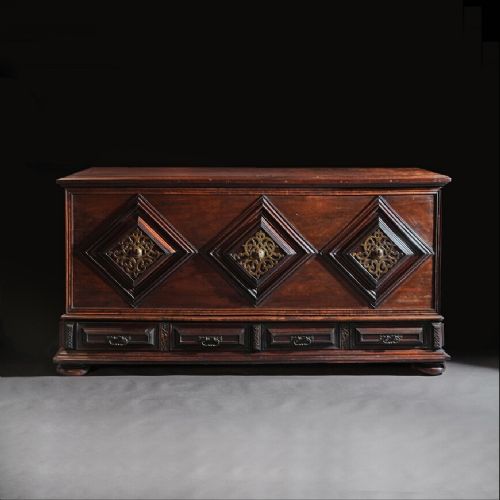
These pieces of colonial carved wooden chest offer solid storage and dense regional carving spanning centuries of global trade.
Colonial Carved Wooden Chest
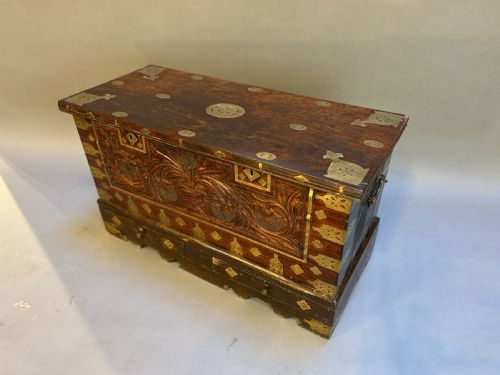
A colonial carved wooden chest represents the intersections of European forms and local craftsmanship across global trade routes from the seventeenth century onward. You encounter regional variants including Anglo-Indian, Portuguese Colonial, Dutch Colonial, and Spanish Colonial pieces designed for storage and travel.
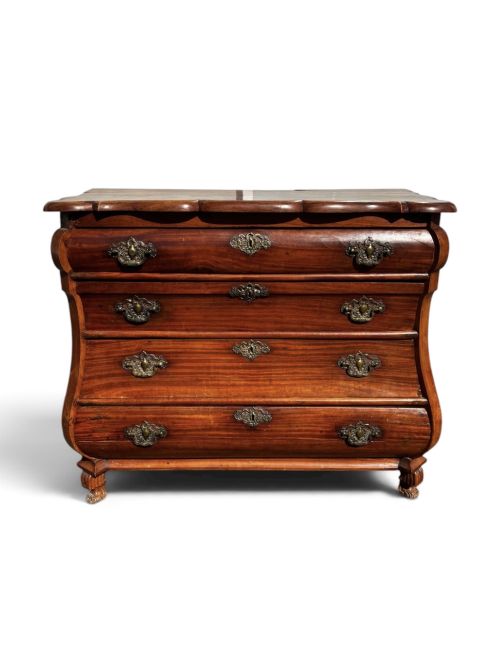
The selection here encompasses heavy blanket boxes, iron-bound coffers, spice boxes, and larger chests of drawers. Woods such as teak, padouk, satinwood, and camphor predominate, often paired with brass mounts for durability during long sea journeys.
Dating ranges from the seventeenth century through the Victorian era and into the early twentieth century. These domestic and campaign containers served households, merchants, and officers abroad before finding their way into modern interiors.
How they were made
Craftsmen utilised dense tropical hardwoods such as teak, ebony, padouk, and satinwood, which resisted humidity and insect damage during transport. These timbers were carved in relief with intricate foliage, geometric patterns, or figural motifs specific to the region of production.
Metal reinforcement played a structural role alongside carpentry joints, with brass studs, heavy iron strapwork, and corner brackets securing the heavy plank construction. Lined interiors sometimes incorporated camphor wood to protect stored textiles and papers from pests.
Camphor wood chests retain their natural medicinal scent after centuries, continuing to repel moths from stored blankets just as they did on merchant ships.
What varies in quality
Depth and crispness of the hand-carved detail separate standard utilitarian boxes from finer commission pieces. The choice of timber also dictates quality, with solid ebony, figured satinwood, and scented camphor commanding greater regard than plain utility hardwoods.
The integrity of original brass and iron hardware, including strapwork, hinges, and lockplates, marks the distinction between intact survivors and heavily restored examples. Superior construction employs substantial dovetail joints and thick panels that maintain stability over centuries of atmospheric shift.
The Colonial Carved Wooden Chest Glossary
- Bombe
- A bulging, convex shape found on the front and sides of eighteenth-century case furniture. This profile requires advanced joinery to curve solid timber.
- Campaign chest
- A modular set of drawers or a trunk built for military officers on the move. These pieces typically feature brass corner brackets and inset carrying handles.
- Coffer
- A large, heavy box used historically for storing valuables, documents, or textiles. Coffers often feature hinged lids and reinforced metal bindings.
- Padouk
- A heavy, durable tropical hardwood with a reddish hue used extensively in colonial furniture making. It accepts fine carving without splintering.
- Satinwood
- A light-coloured, lustrous timber derived from tropical trees, prized for its golden sheen and smooth grain. It appears frequently in fine nineteenth-century cabinetwork.
Colonial Carved Wooden Chest: Frequently Asked Questions
Where were these chests made?
These pieces originated in various global territories under European influence, including regions of India, Ceylon, South Africa, and parts of Southeast Asia and the Caribbean. Local artisans combined European furniture forms with indigenous carving traditions and native timbers.
Production centres adapted designs to suit both local use and export trade, resulting in distinct styles such as Anglo-Indian, Portuguese Colonial, and Dutch Colonial furniture.
How do I care for a camphor wood chest?
Camphor wood requires stable indoor humidity and protection from direct heat sources to prevent the timber from drying out or splitting. Dust the carved surfaces regularly with a soft, dry cloth rather than applying heavy liquid polishes.
Keep the interior clean and dry to preserve the natural aromatic properties of the wood, which traditionally protected stored garments from moths.
What is an iron bound coffer?
An iron bound coffer is a heavy storage box reinforced with metal straps, bands, and corner plates for secure transport and protection. The ironwork provides structural rigidity to the solid wood panels during long-distance shipping.
These utilitarian boxes were essential for merchants and travellers carrying valuable goods across sea and land routes.
How can I date a colonial chest?
Dating relies on examining construction techniques, wood species, and stylistic traits associated with specific periods from the seventeenth to the early twentieth century. Early seventeenth- and eighteenth-century examples often feature heavier plank construction and distinct regional carving motifs.
Later Victorian and early twentieth-century pieces may incorporate factory-made hardware alongside traditional hand-carved panels, reflecting evolving production methods.