
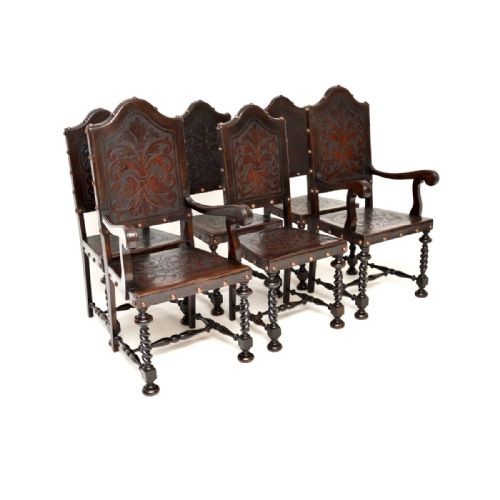
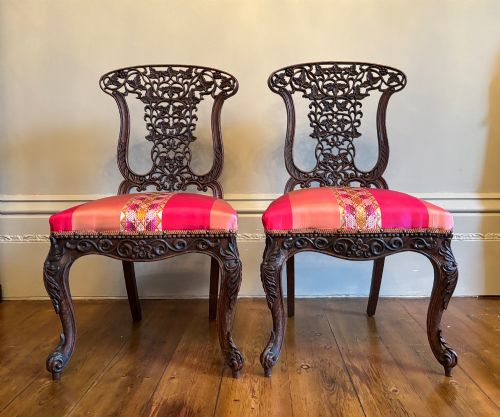
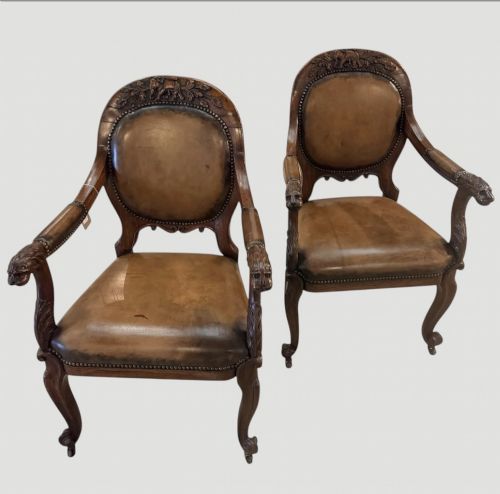
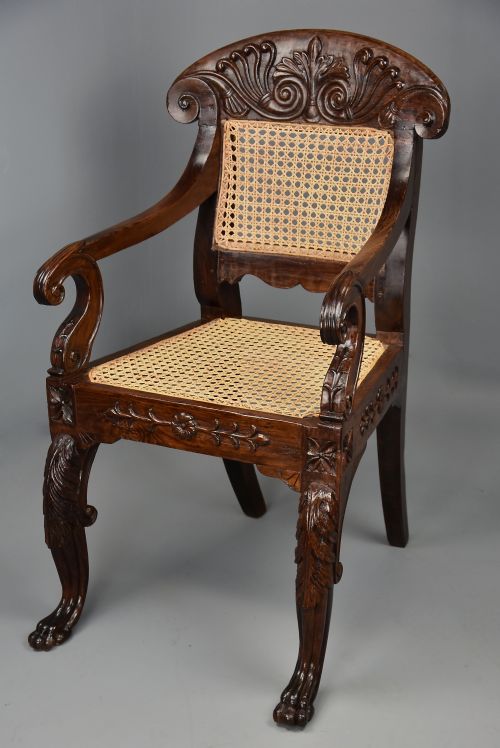
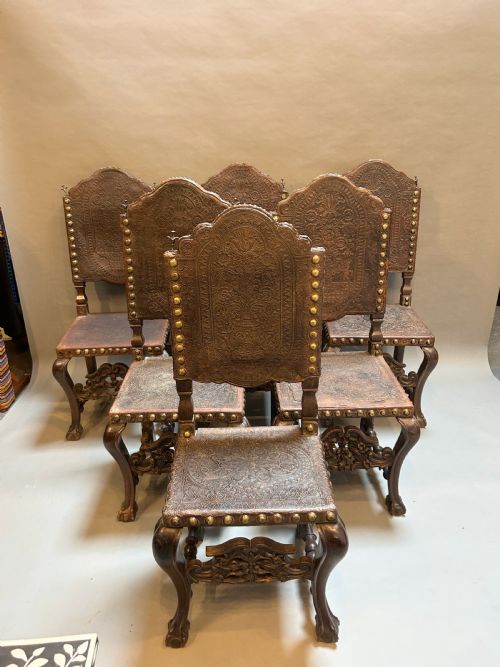
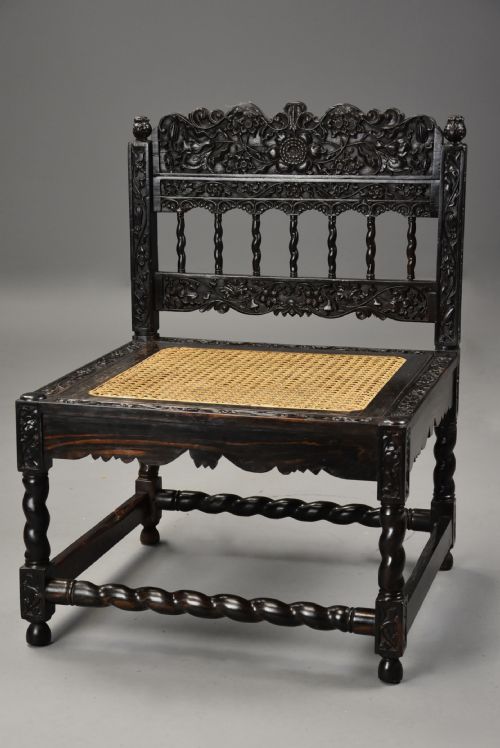


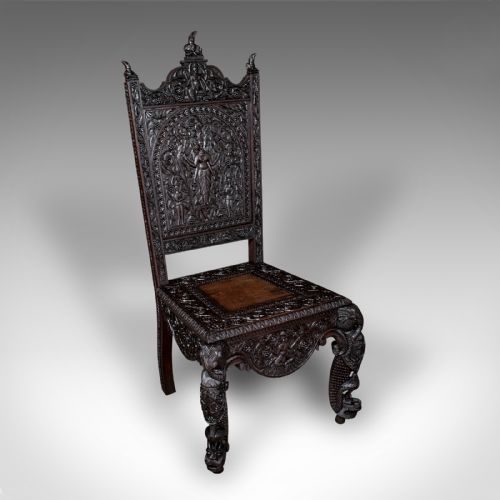


Colonial Carved Side Chair
These colonial carved side chair examples bring dense tropical timbers and regional motifs straight into European interiors.
Colonial Carved Side Chair
A colonial carved side chair combines European seating formats with the native craftsmanship and deep relief carving of regions such as India, Ceylon, South Africa, and Portugal.
The selections here span centuries of design, with particular emphasis on nineteenth-century Anglo-Indian production alongside Portuguese, Spanish, and Cape Dutch iterations.
Buyers encounter various forms ranging from solid ebony low chairs originating from the Coromandel Coast to satinwood hall chairs and rosewood dining sets.
Materials and Construction
Workshops utilised dense exotic timbers including padouk, rosewood, teak, ebony, and satinwood, which allowed carvers to execute intricate and deep relief ornament without splintering.
Many examples incorporate traditional supporting elements like cane seating or fitted leather upholstery, often fastened with brass details alongside joinery suited to humid climates.
The inventory includes regional styles such as Anglo-Indian, Indo-Portuguese, and Cape Dutch across various seating formats.
Assessing Quality
Quality rests upon the depth, sharpness, and continuity of the hand carving across the timber framework, separating routine work from exceptional sculptural execution.
The choice and density of the primary wood, whether solid ebony or heavy padouk, alongside the integrity of the original joints, dictate the durability and visual weight of the piece.
The Colonial Carved Side Chair Glossary
- Padouk
- A heavy, durable tropical hardwood with a reddish hue used extensively in Anglo-Indian furniture making. It provides a stable base for deep relief carving.
- Cane
- Woven rattan material used for seats and backs in tropical seating. It offers ventilation in warmer climates.
- Coromandel Coast
- The southeastern coast of India known for producing distinctive carved ebony furniture during the seventeenth century. Pieces from this region display dense floral and figural motifs.
- Savonarola chair
- A folding chair of X-frame construction originating in the Italian Renaissance and adapted in various colonial traditions. It uses intersecting curved slats to form the base.
Colonial Carved Side Chair: Frequently Asked Questions
What is a colonial carved side chair?
It is a seating piece made in European colonies or trading posts that merges traditional European chair forms with local indigenous carving techniques and tropical timbers.
These pieces reflect the cultural exchange and trade networks operating across the Indian Ocean and other global routes during past centuries.
Where were these chairs made?
Production locations include various regions across India, Ceylon, South Africa, and Portuguese territories overseas.
Local workshops adapted imported European design books to suit native aesthetics and available dense hardwoods.
How do I care for exotic wood furniture?
Maintain stable indoor humidity levels and keep the timber away from direct heat sources to prevent the wood from splitting.
Apply occasional appropriate wax or polishing treatments recommended for antique dense hardwoods to preserve the finish.
How should I live with these chairs?
Place them as accent seating in hallways, libraries, or dining spaces where their detailed carving remains visible.
Pair them with complementary antique tables or let them stand alone as sculptural focal points in a room.
Can I use them for daily dining?
Many sets are robust enough for regular use provided the structural joints and cane or leather seats remain sound.
Assess the physical stability of each individual frame before subjecting antique seating to heavy daily wear.